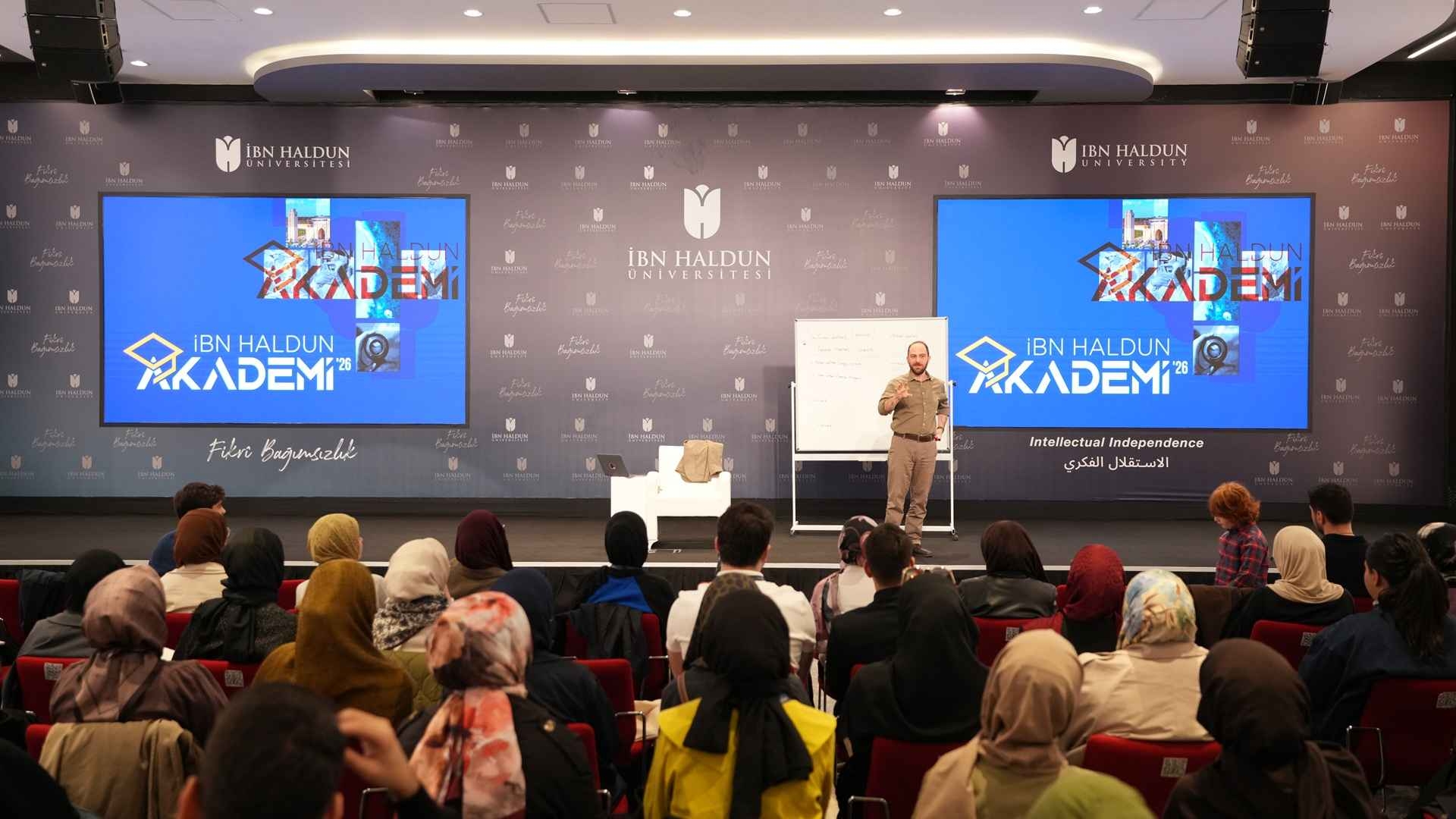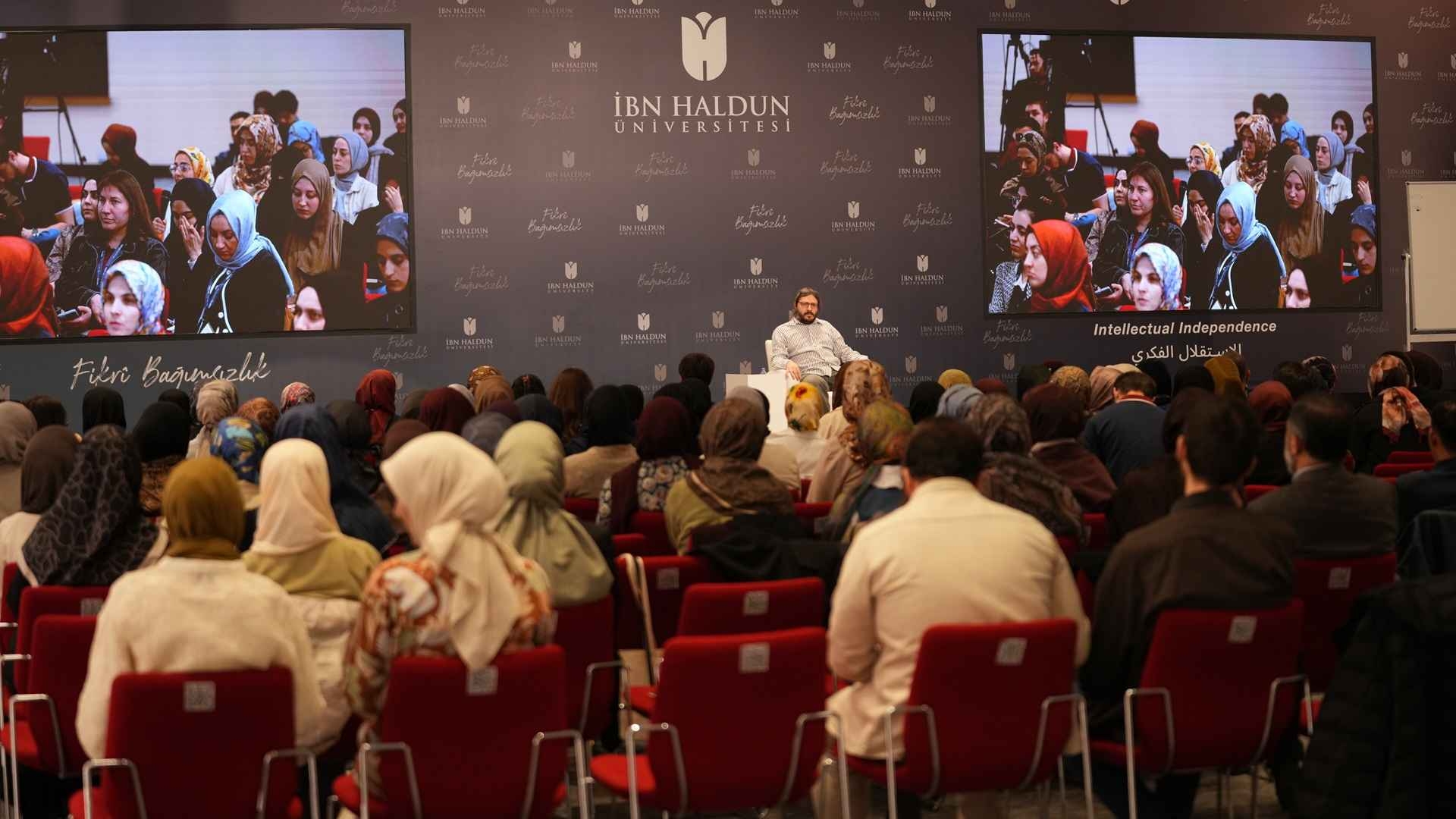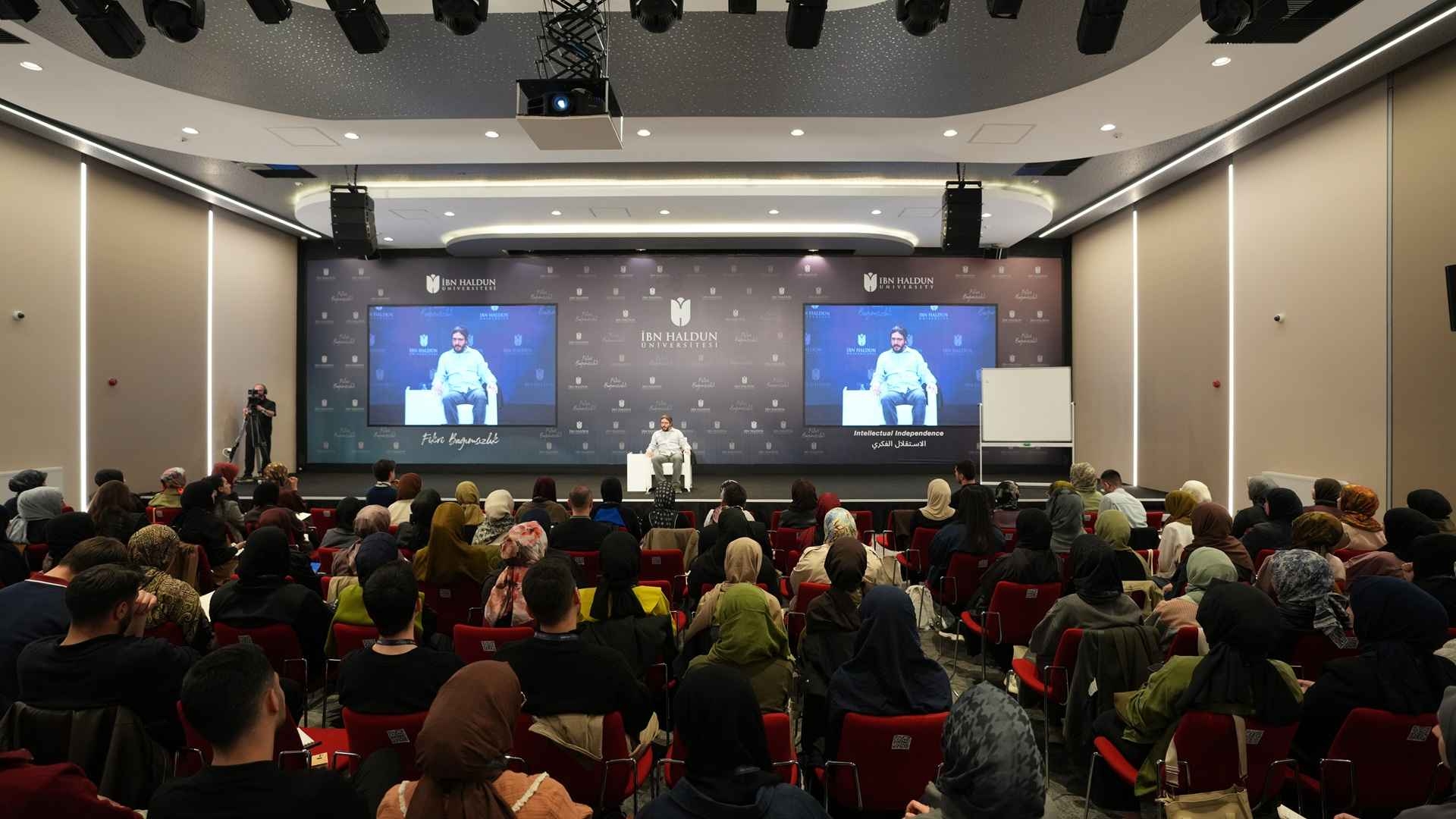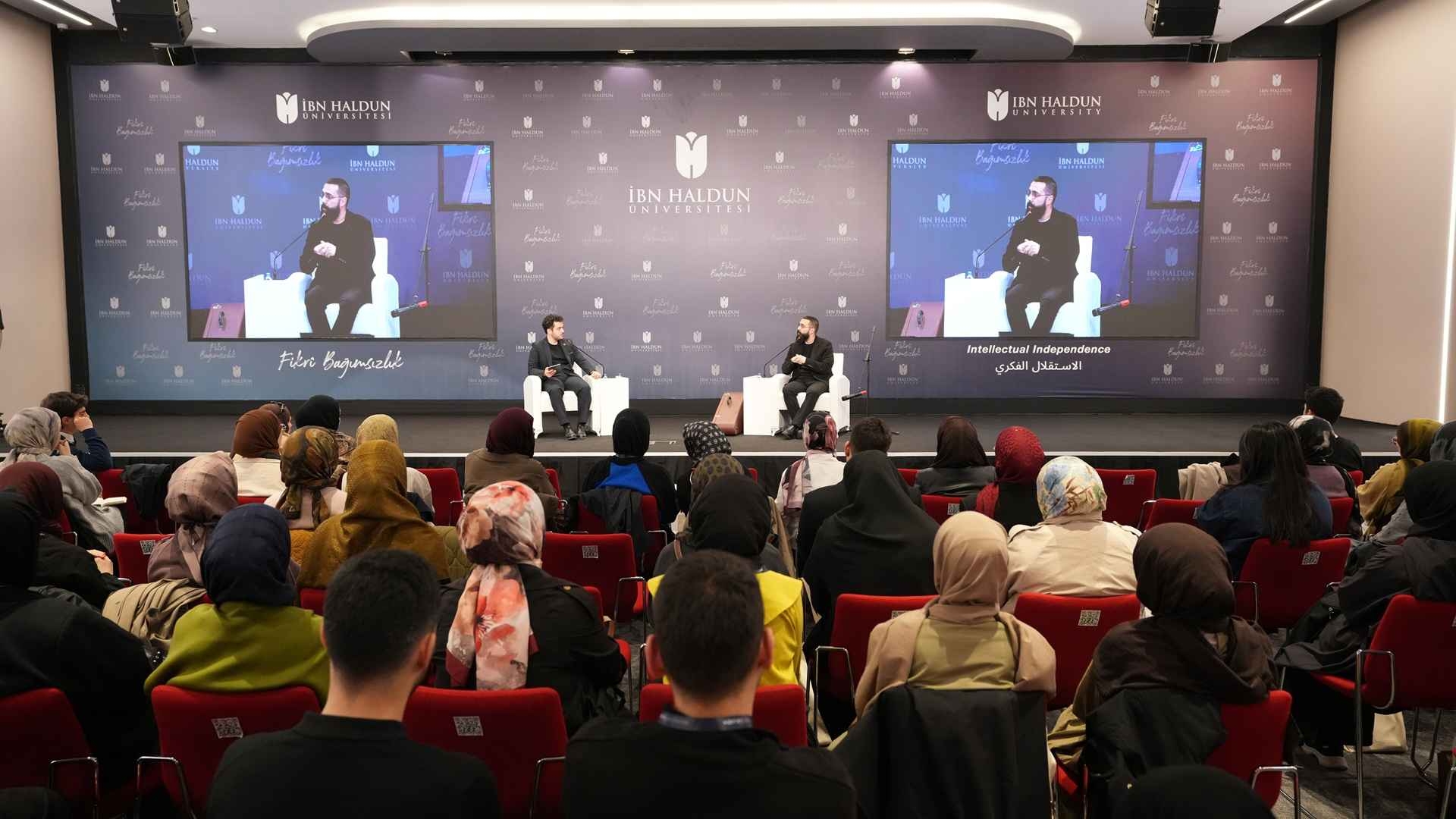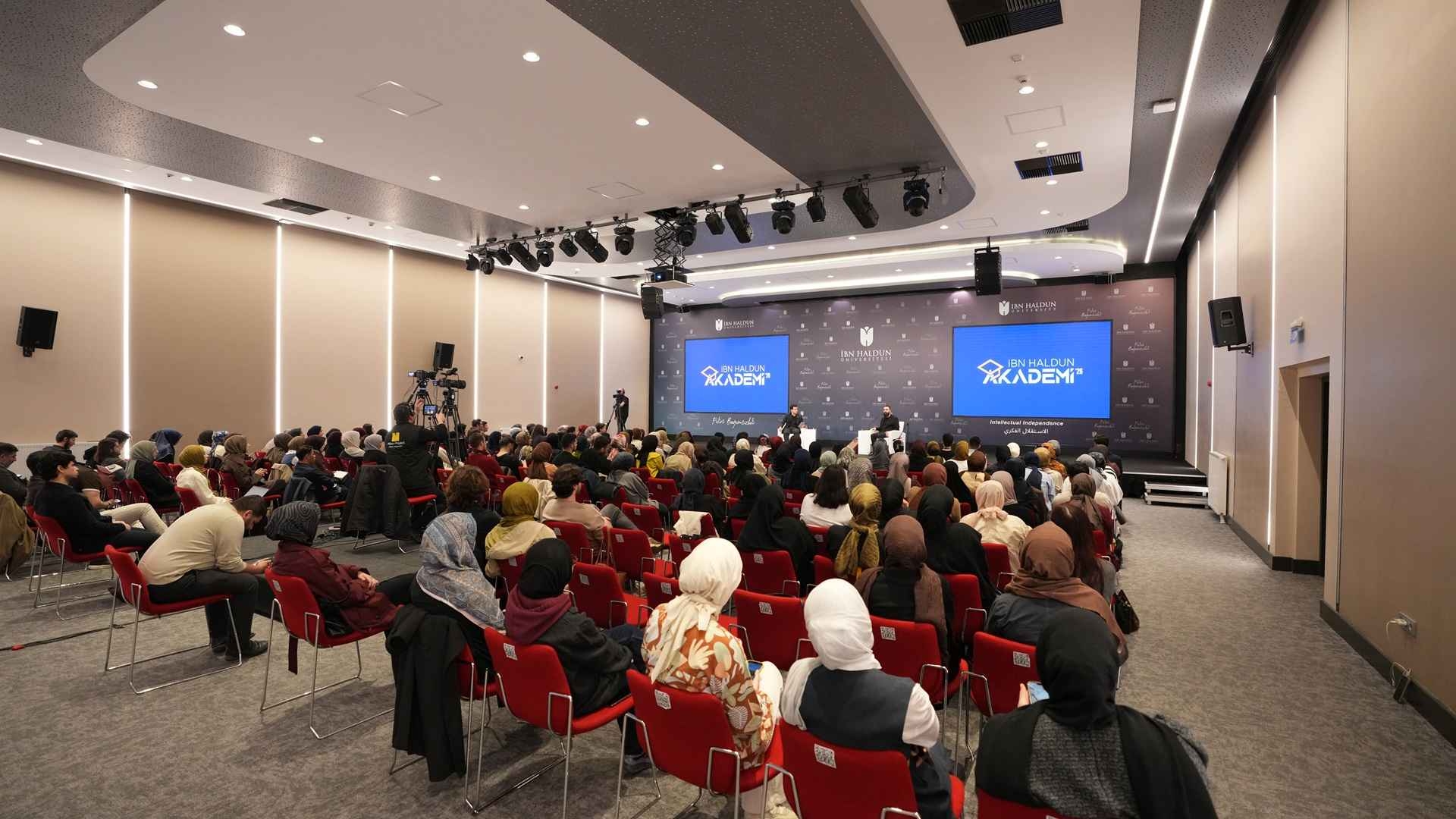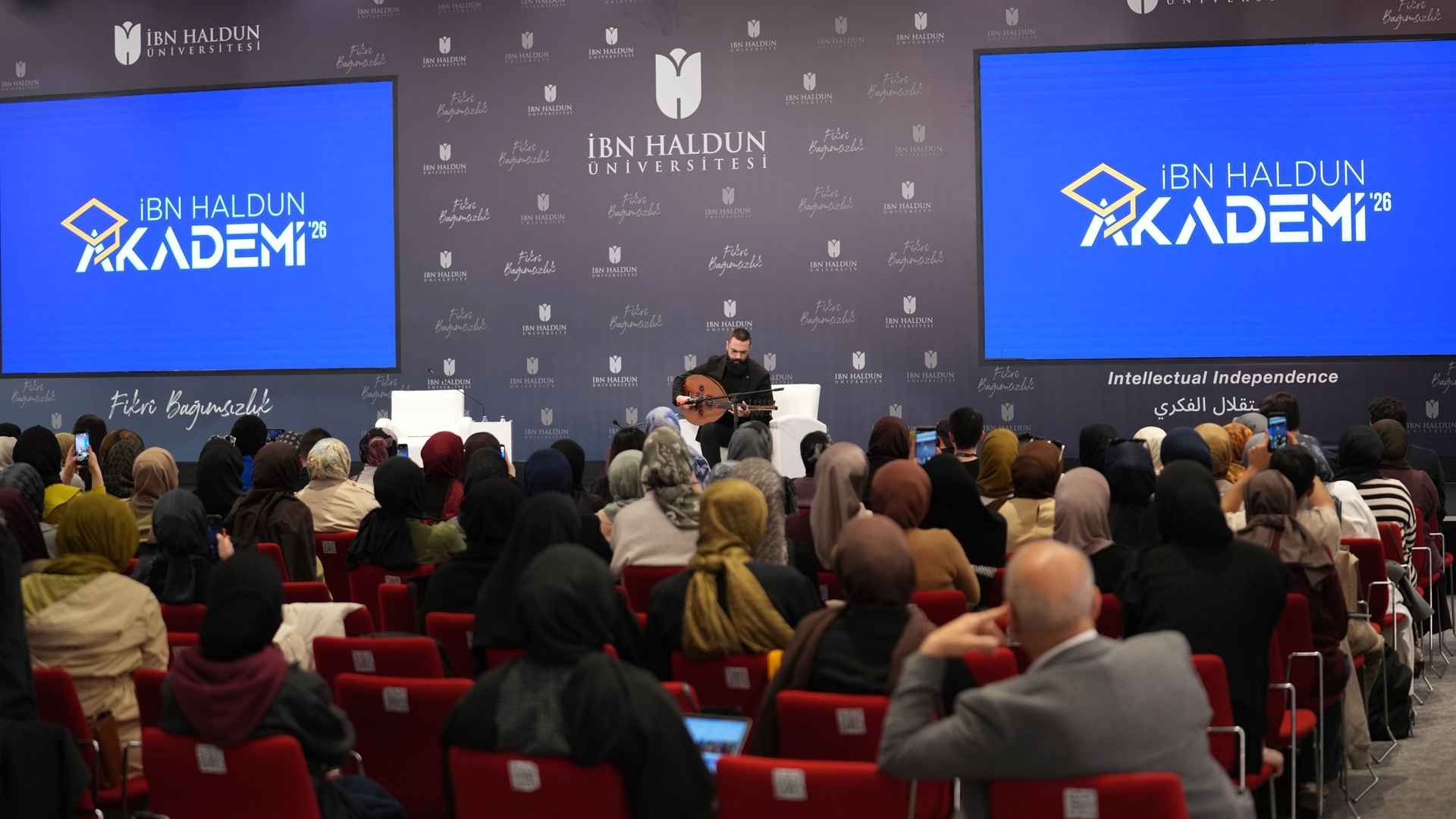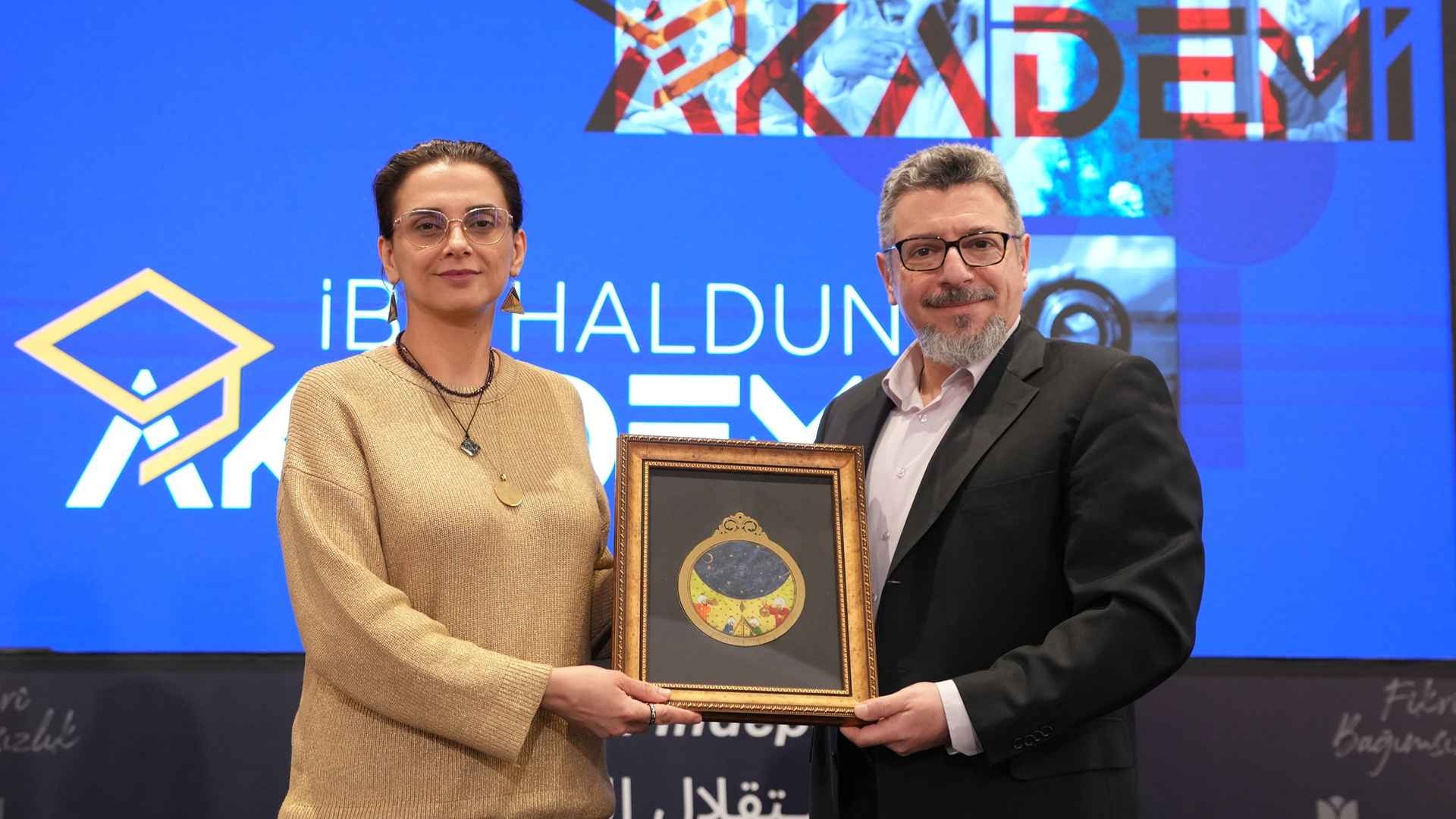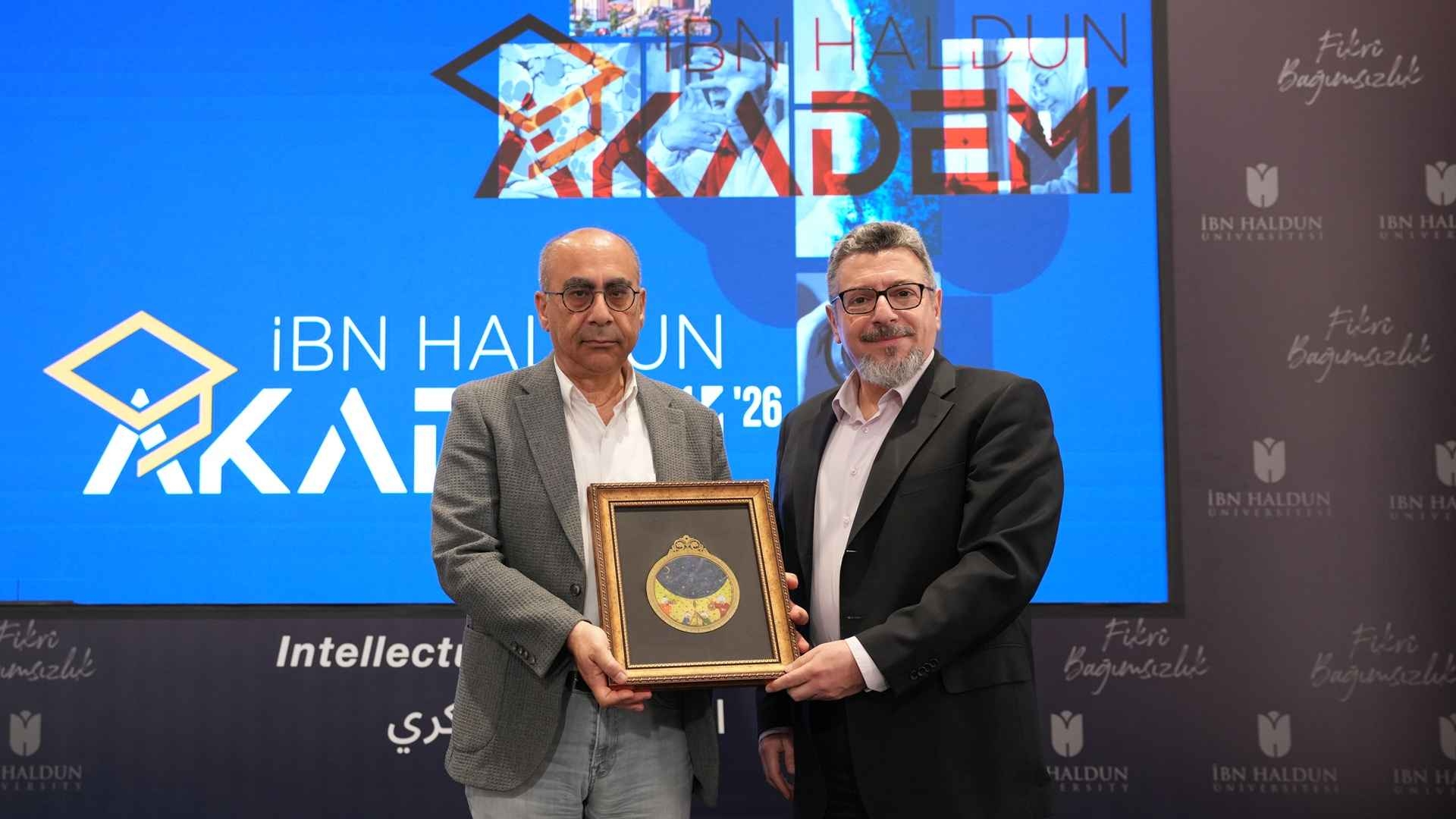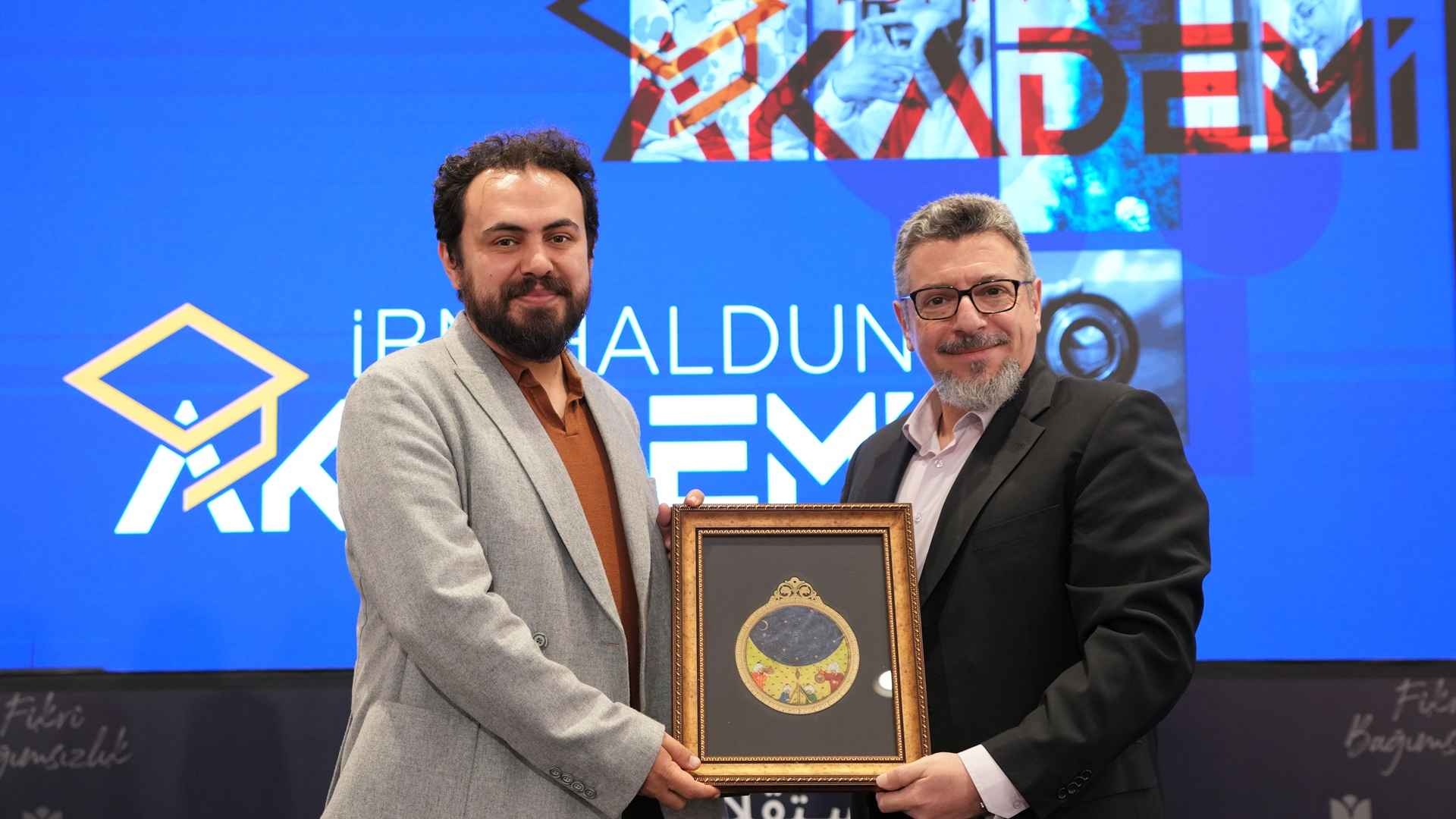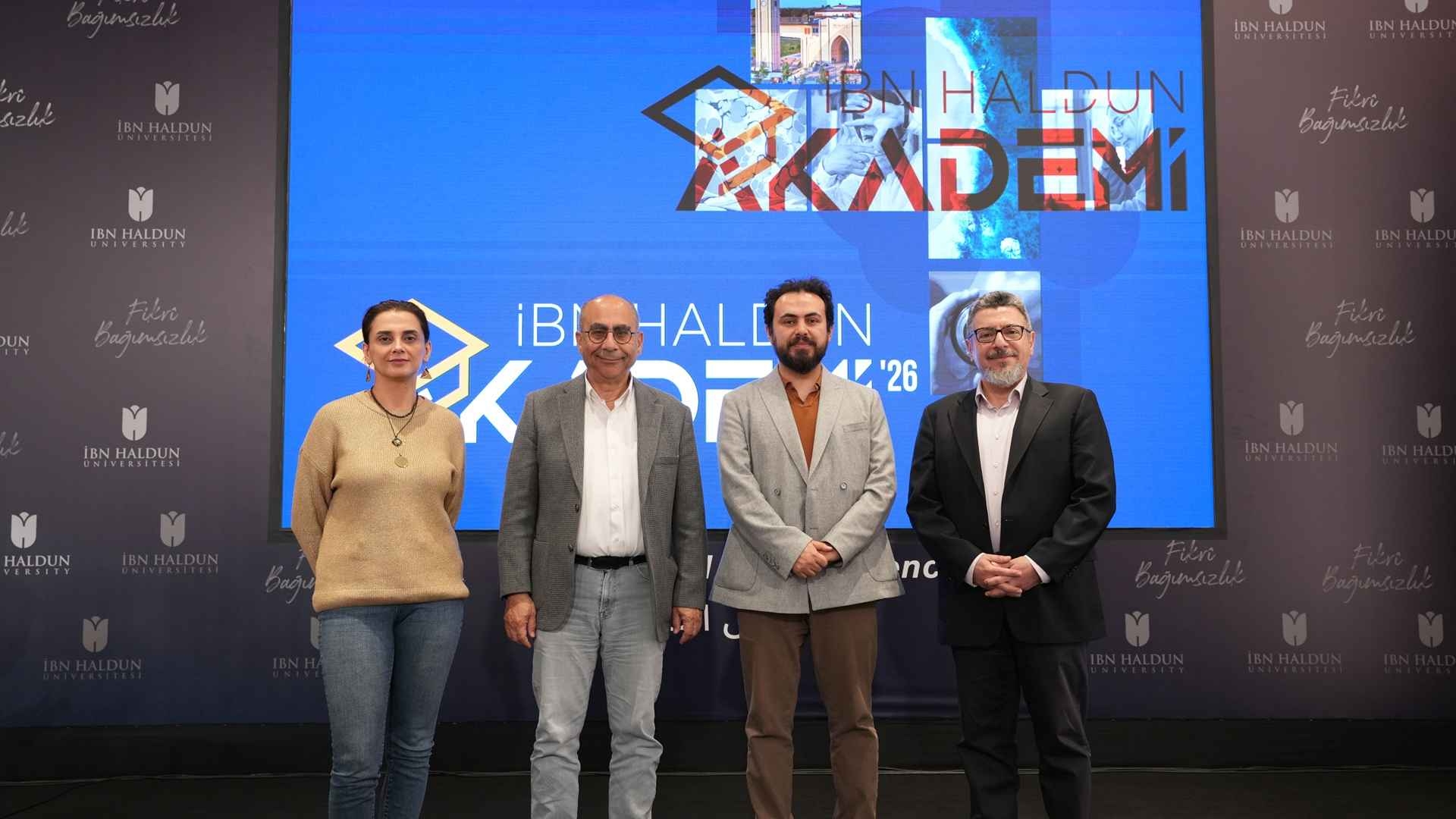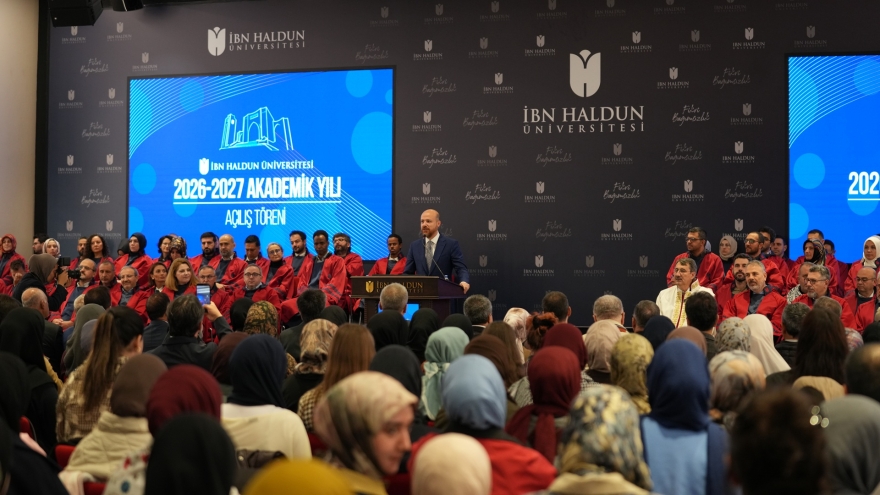
Organized under the theme "The Limits of Vision and Beyond," Ibn Haldun Academy ‘26 completed its third week on Saturday, April 25, 2026, covering the disciplines of psychology, music, physics, philosophy, and cinema.
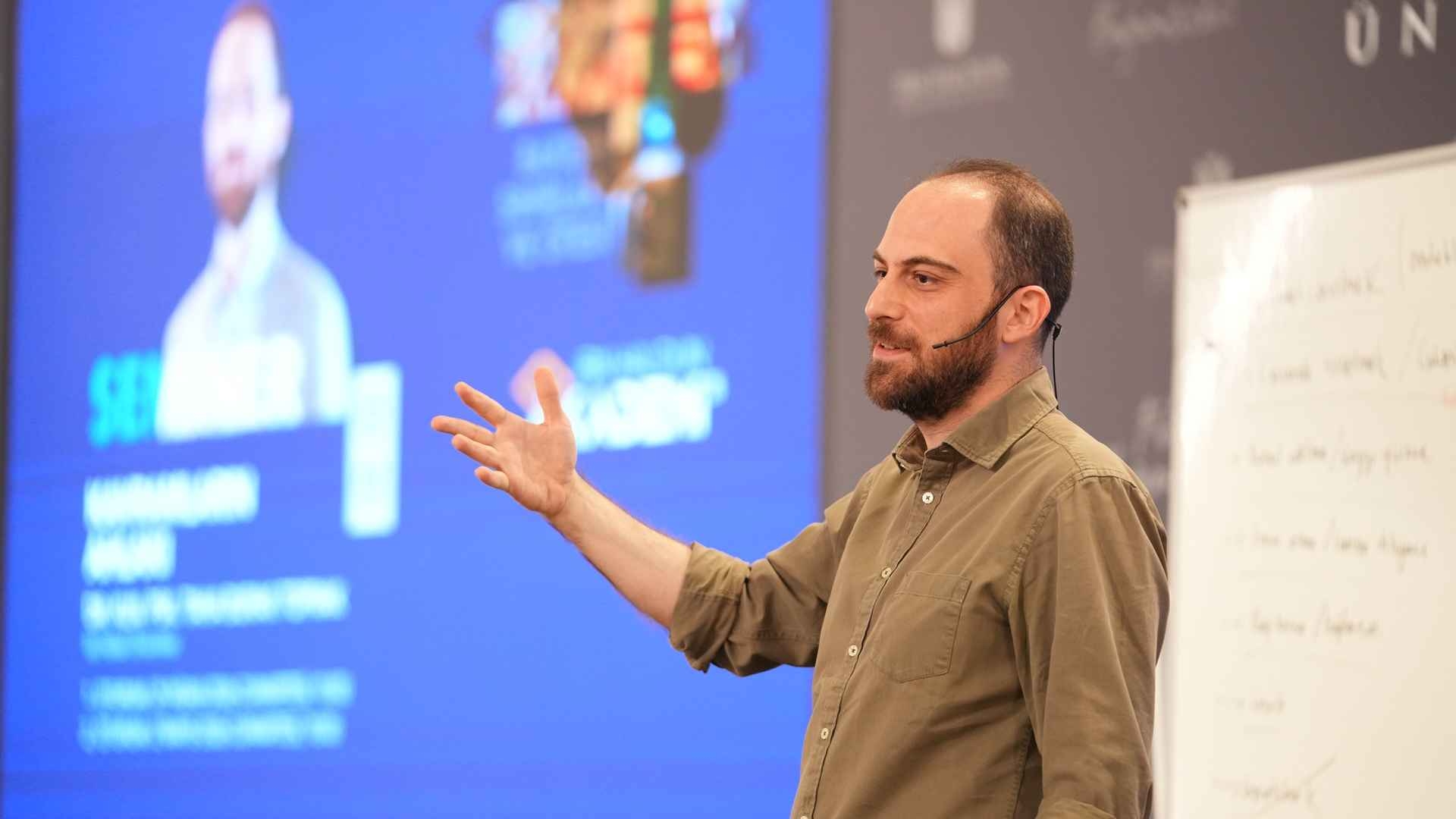
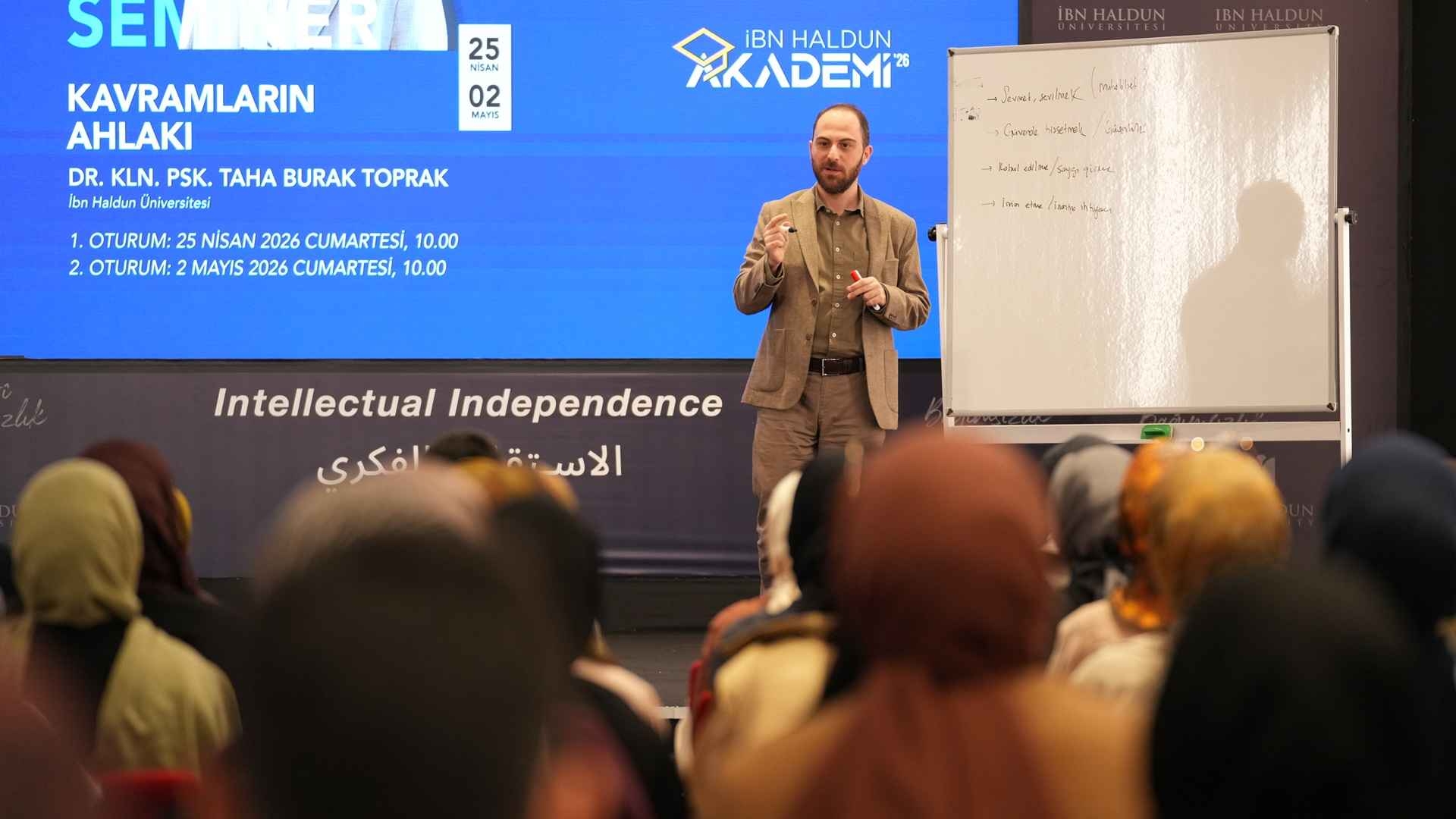
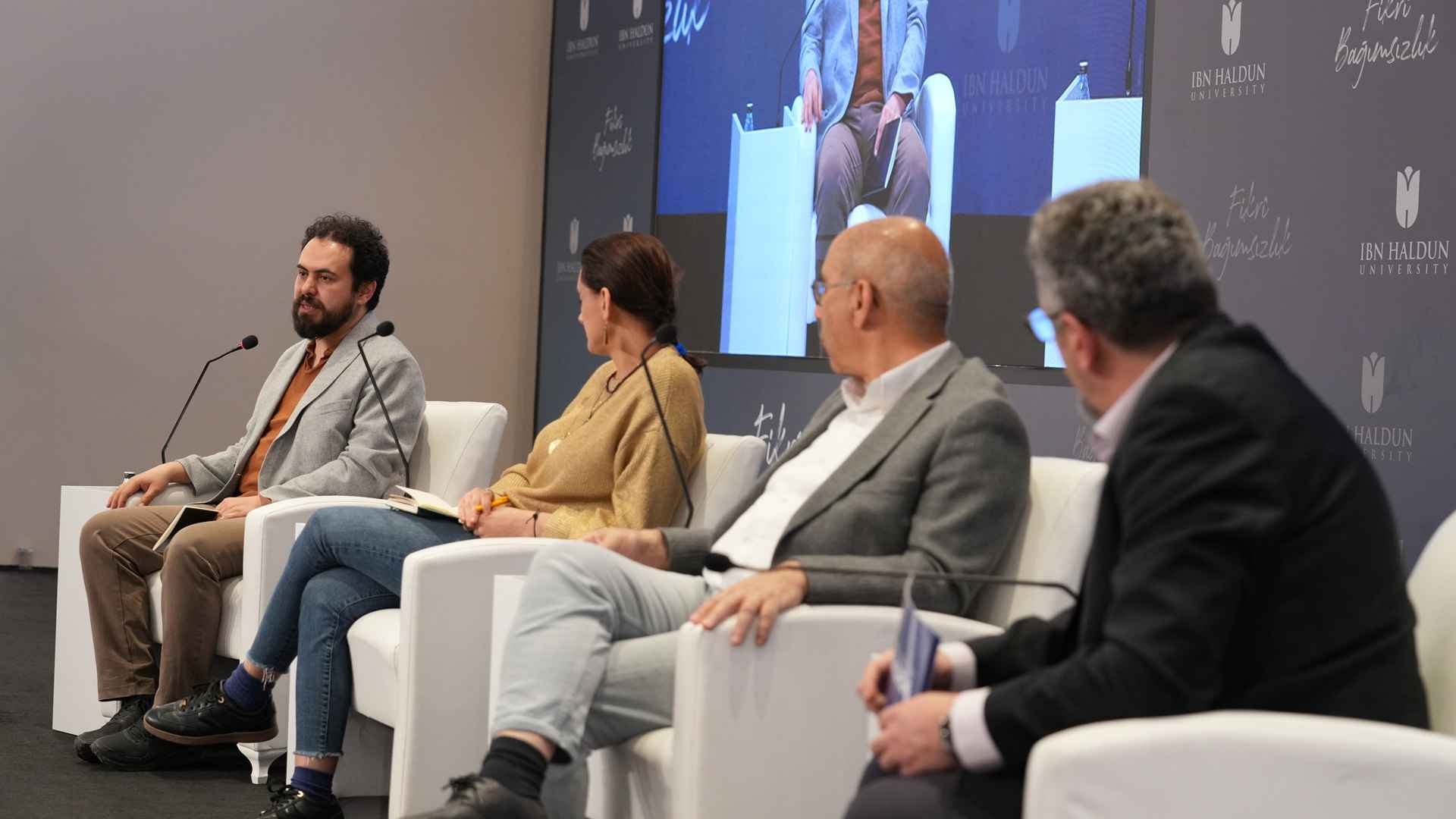
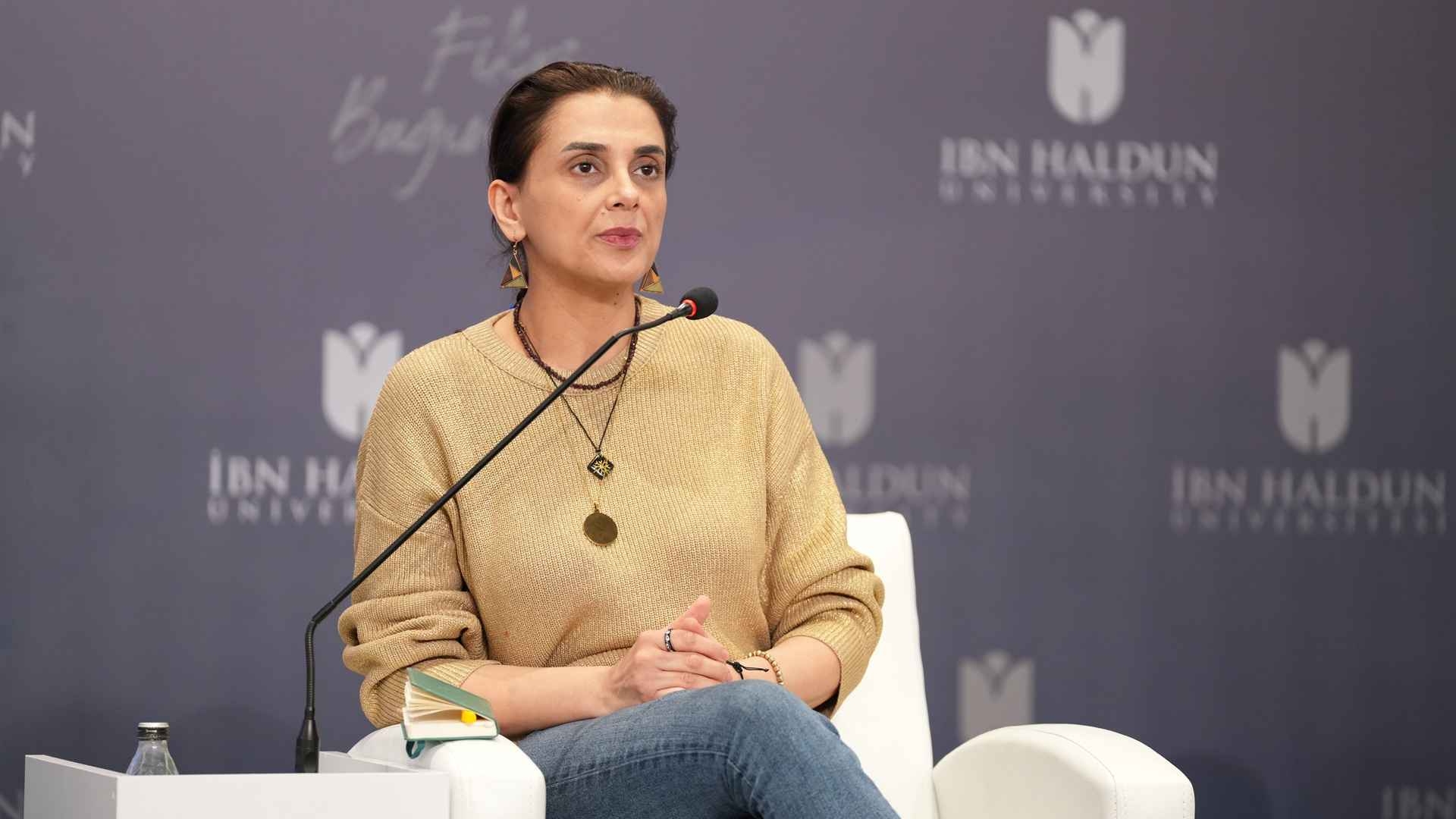
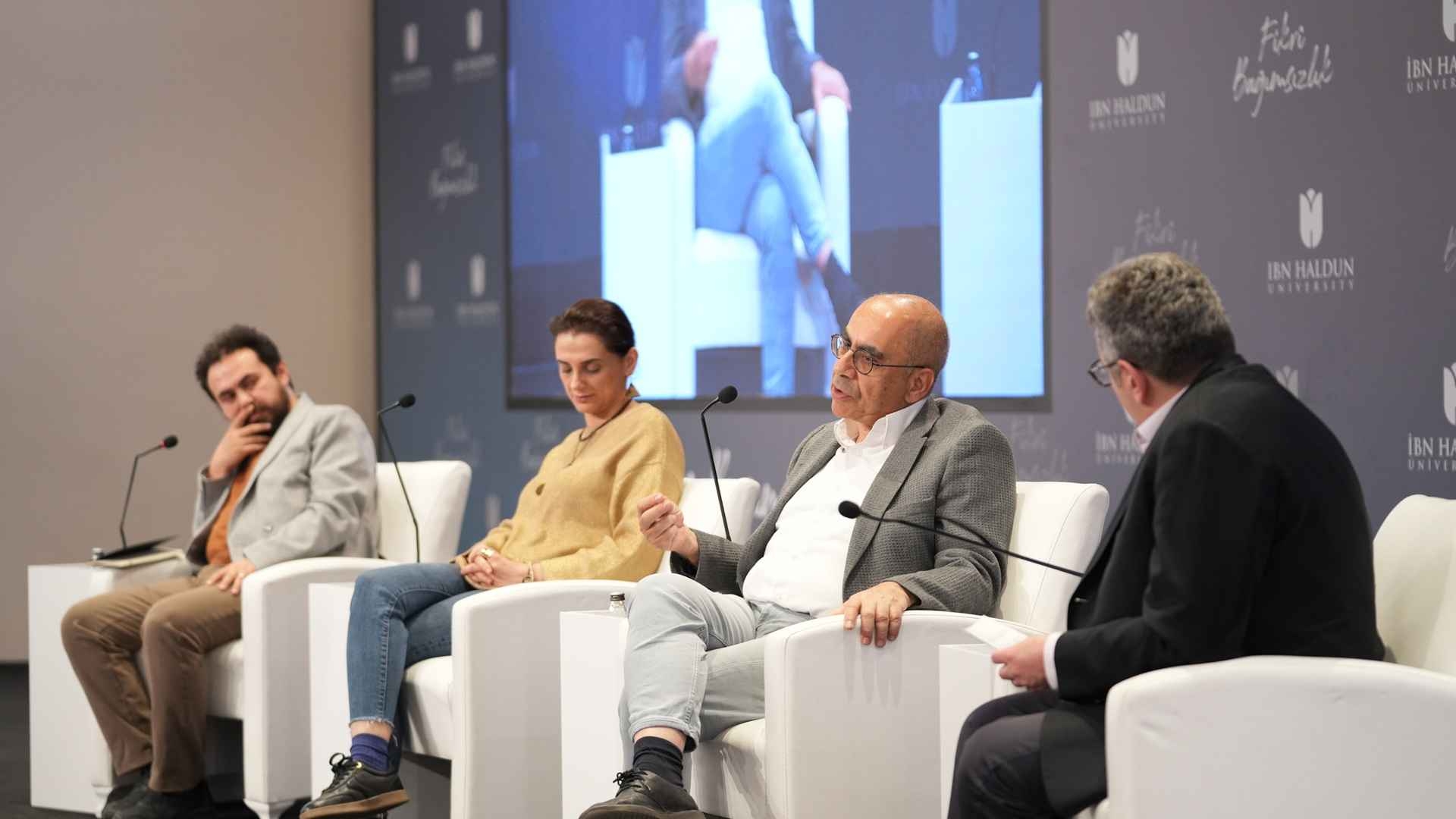
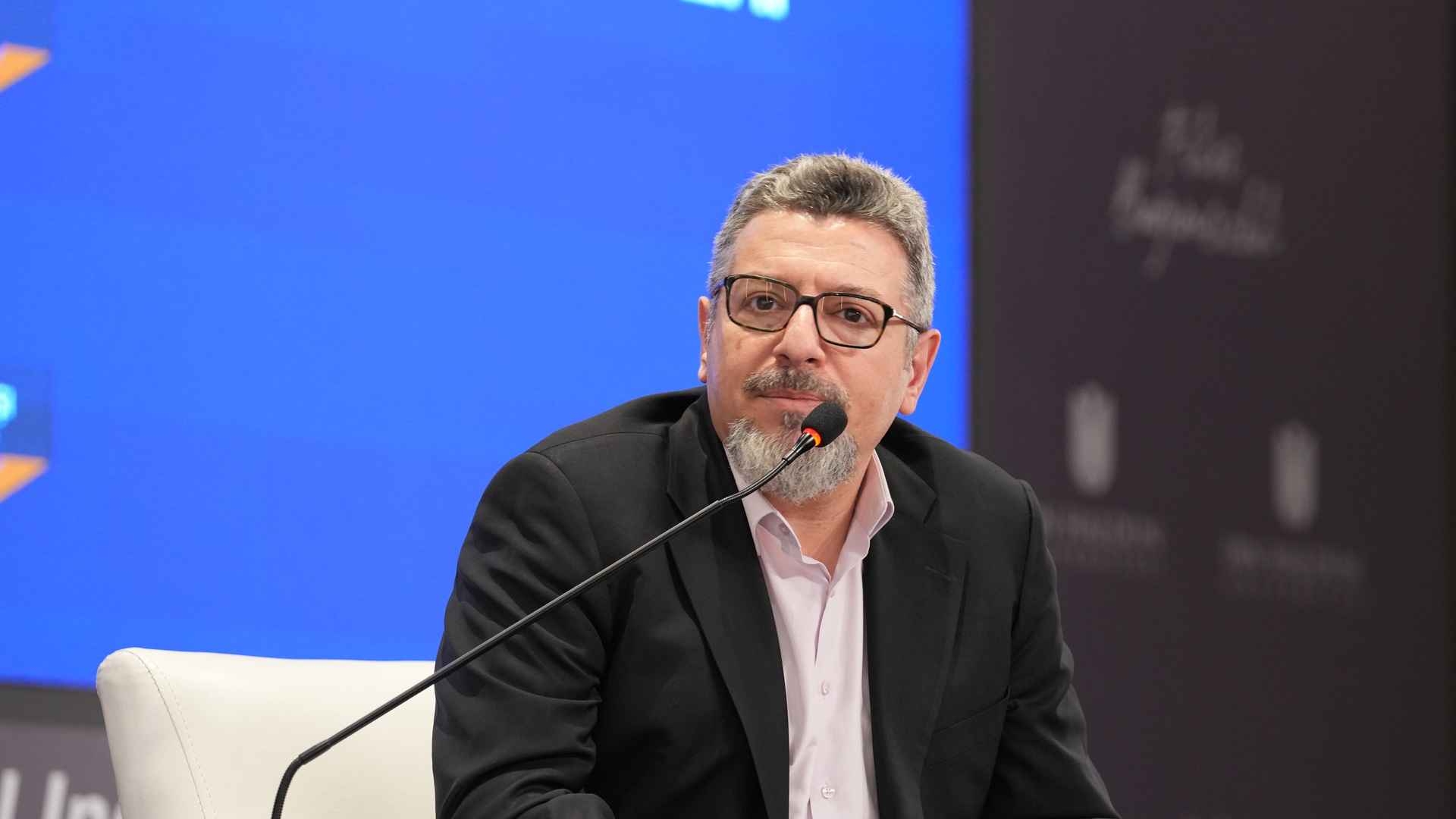
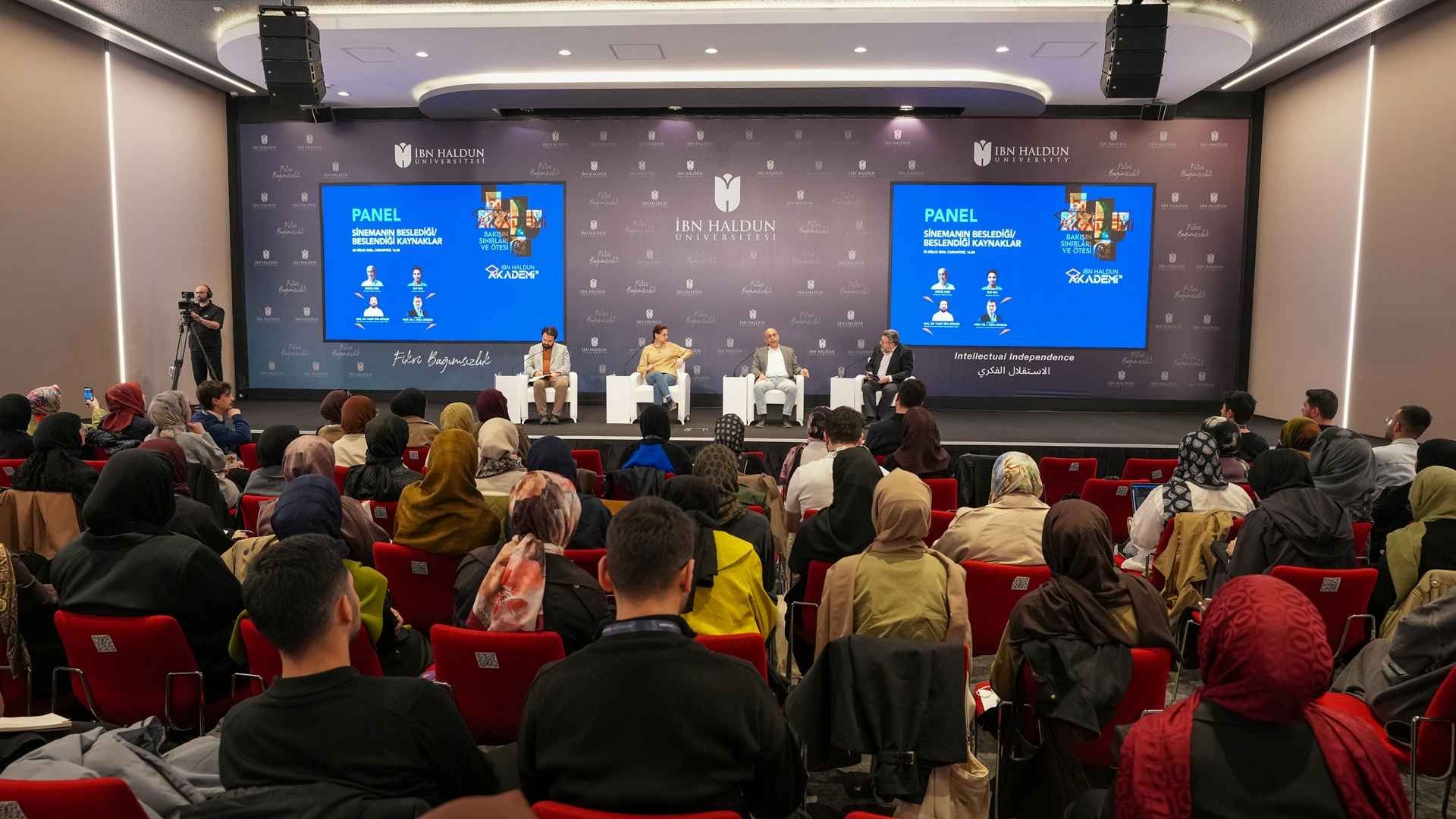
During the session, director and screenwriter Derviş Zaim, Elif Eda, and Assoc. Prof. Yusuf Ziya Gökçek participated in a panel titled "Sources That Feed and Are Fed by Cinema," moderated by Prof. İsmail Arda Odabaşı. Musical artist Yüce Gümüş joined the talk "Expanding the Horizons of the Soul Through Music", sharing insights that encouraged interpreting humanity and the human soul through the tradition of music. Prof. Enis Doko examined the relationship between philosophy and physics in his seminar "Films Speaking Physics and Philosophy", analyzing movies whose scripts unfold under the light of these two disciplines. Additionally, Dr. Taha Burak Toprak discussed the fundamental needs of the soul in an interactive seminar titled "The Morality of Concepts."
The interactive seminar "The Morality of Concepts" began with the question: "What are the basic psychological needs of a human being?" Participants provided numerous answers, focusing on concepts such as tefekkür (contemplation), muhasebe (self-reckoning), tövbe (repentance), and tevekkül (trust in God). In addition to innate psychological concepts, the discussion touched upon characteristics and needs arising from the "climates" of the heart, body, and mind.
Dr. Toprak shared his valuable insight, stating: "Concepts do not enter our lives from a moral dimension; however, they acquire moral meaning after they have entered." The concept of respect was also analyzed through both psychological and ethical lenses.
Prof. Enis Doko discussed issues such as human communication, the perception of time and the future, and the impact of language on these phenomena, using the sci-fi films Arrival and Solaris—where physics and philosophy intertwine—as examples.
According to Prof. Doko, language is a structure that influences how a person perceives events, time, and their environment, as well as what they focus on. Furthermore, he noted that according to Einstein’s Special Theory of Relativity, the way we perceive time and where we position the future on our life path varies from person to person and society to society. Prof. Doko enriched the discussion with examples from the Myth of Sisyphus, Nietzsche, and various philosophical approaches.
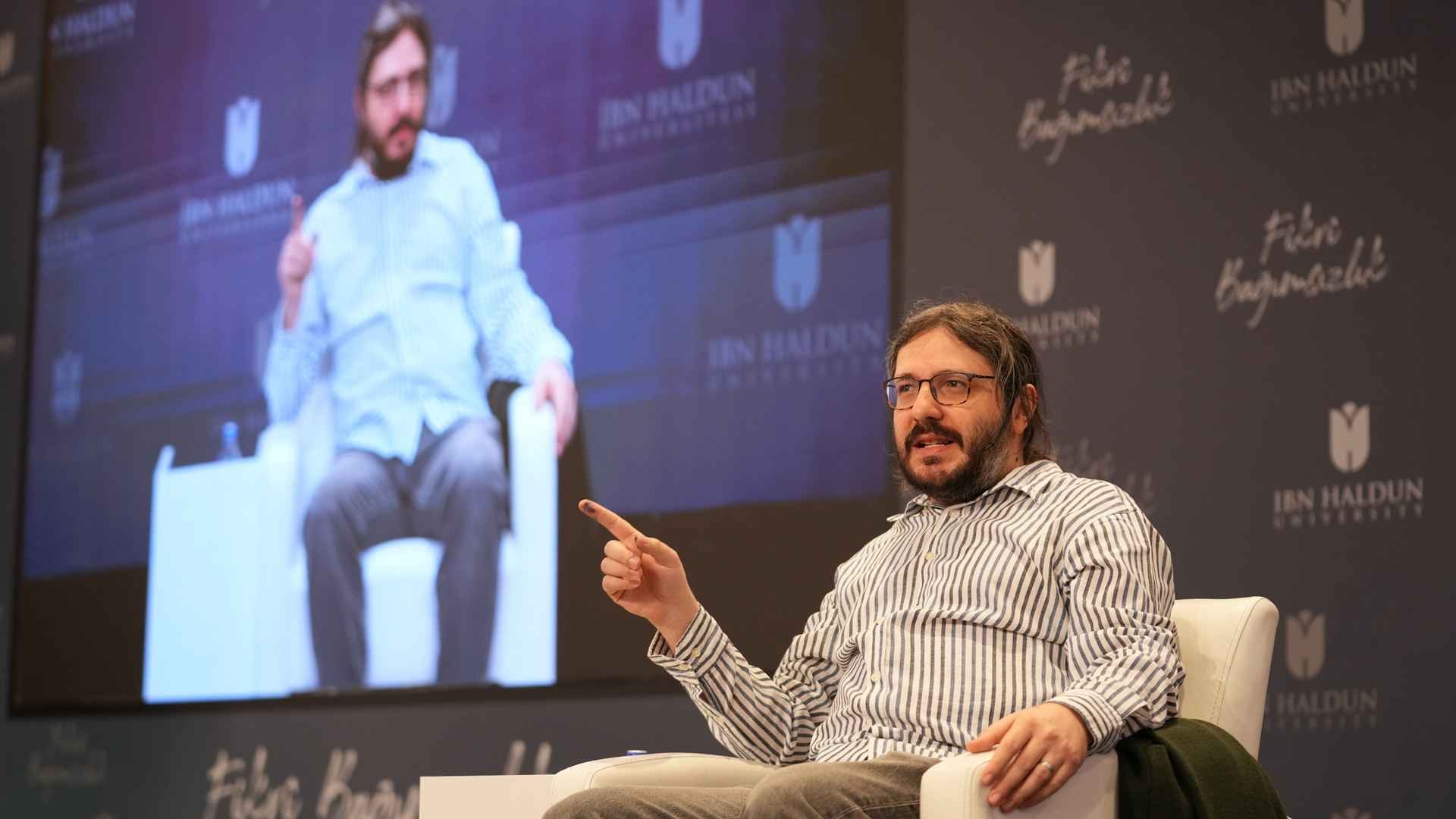
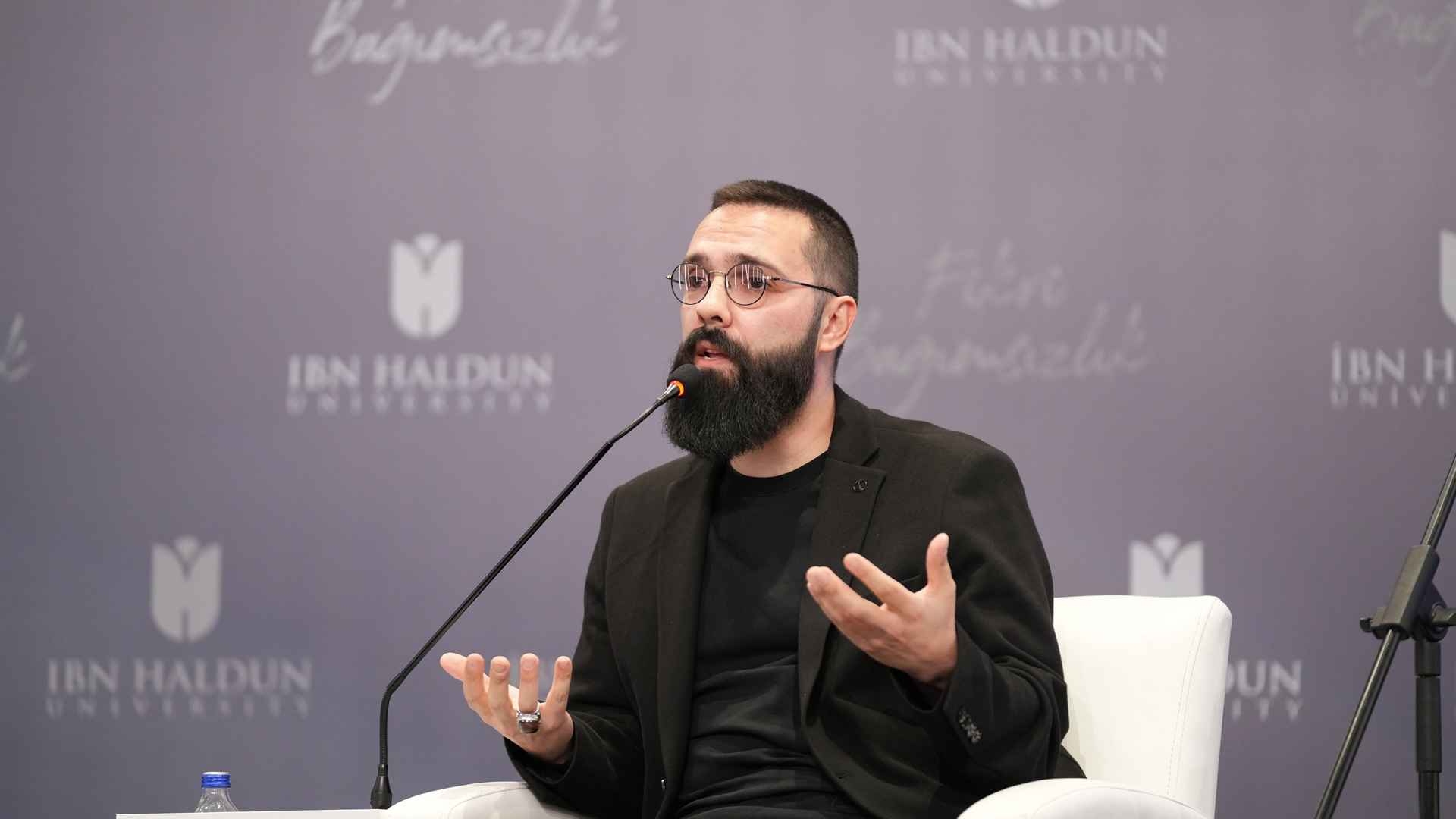
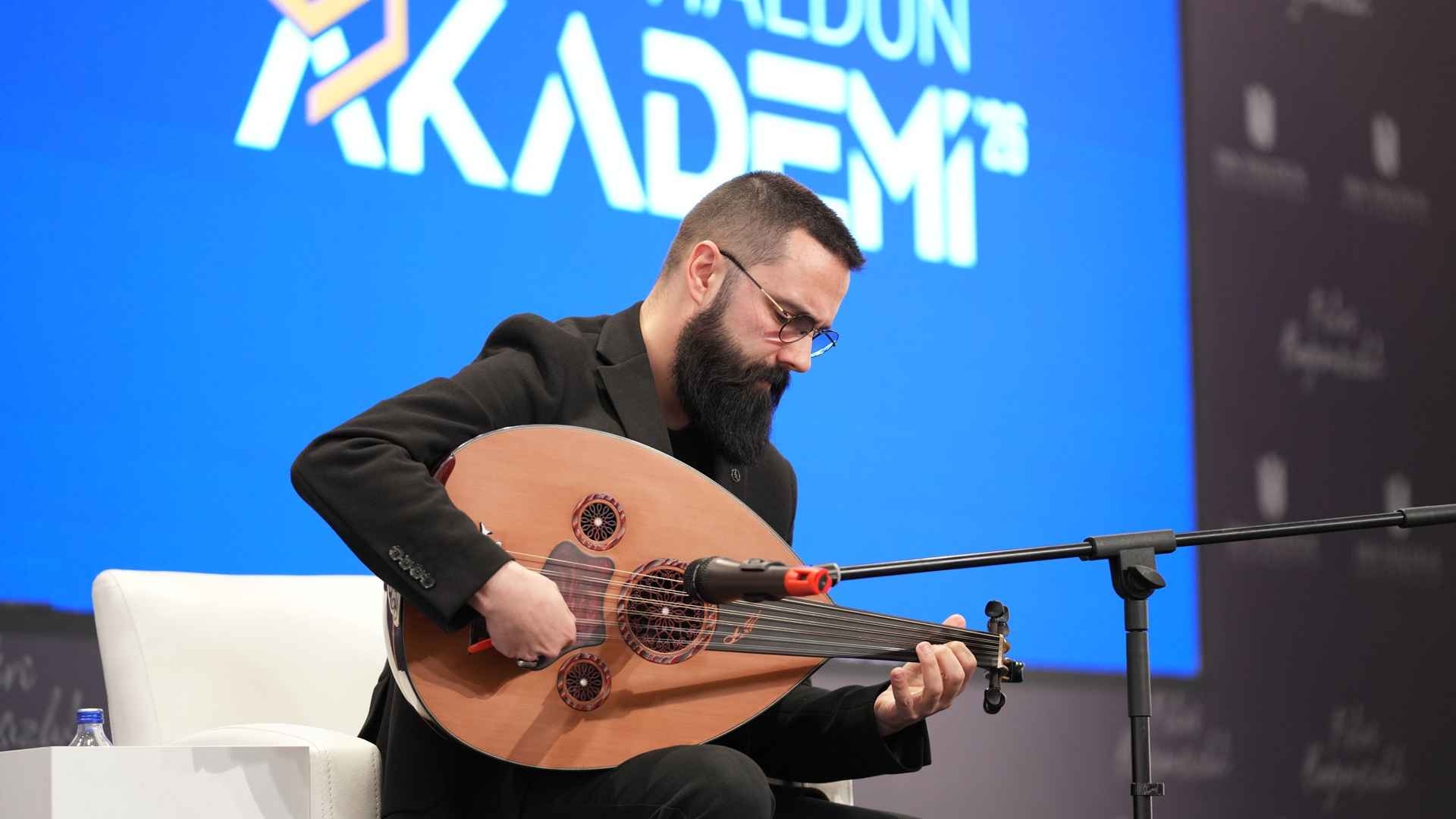
Musical artist Yüce Gümüş spoke about the importance of Turkish music, its effects on the mind and body, and the intellectual stance of its performers. The talk emphasized that music is a vital medium for the soul and culture, yet only a few individuals can truly reflect this significance. It was noted that musicians who only play instruments while neglecting intellectual development fail to properly represent music and musicianship.
Gümüş, who is also the founding representative of Palet Schools, addressed the problem that despite having a highly developed musical culture, Turkey lacks schools providing music education for younger age groups—a gap they aim to fill with Palet Schools.
In the panel featuring renowned filmmakers Derviş Zaim and Elif Eda, alongside Assoc. Prof. Yusuf Ziya Gökçek, participants discussed the influential role of cinema on societal habits, cinema in the context of colonialism, the relationship between literature and cinema, and the concept of originality.
The panel highlighted the long-standing persistence of a Western-centric, colonialist mindset in cinema. Building on this, the possibility of creating an authentic and indigenous cinema using materials offered by Turkish culture was discussed. It was emphasized that by granting "the other" the necessary freedom in cinema, more original and diverse works could be produced. Otherwise, the continuation of current uniformity would limit the potential of both filmmakers and the medium itself.