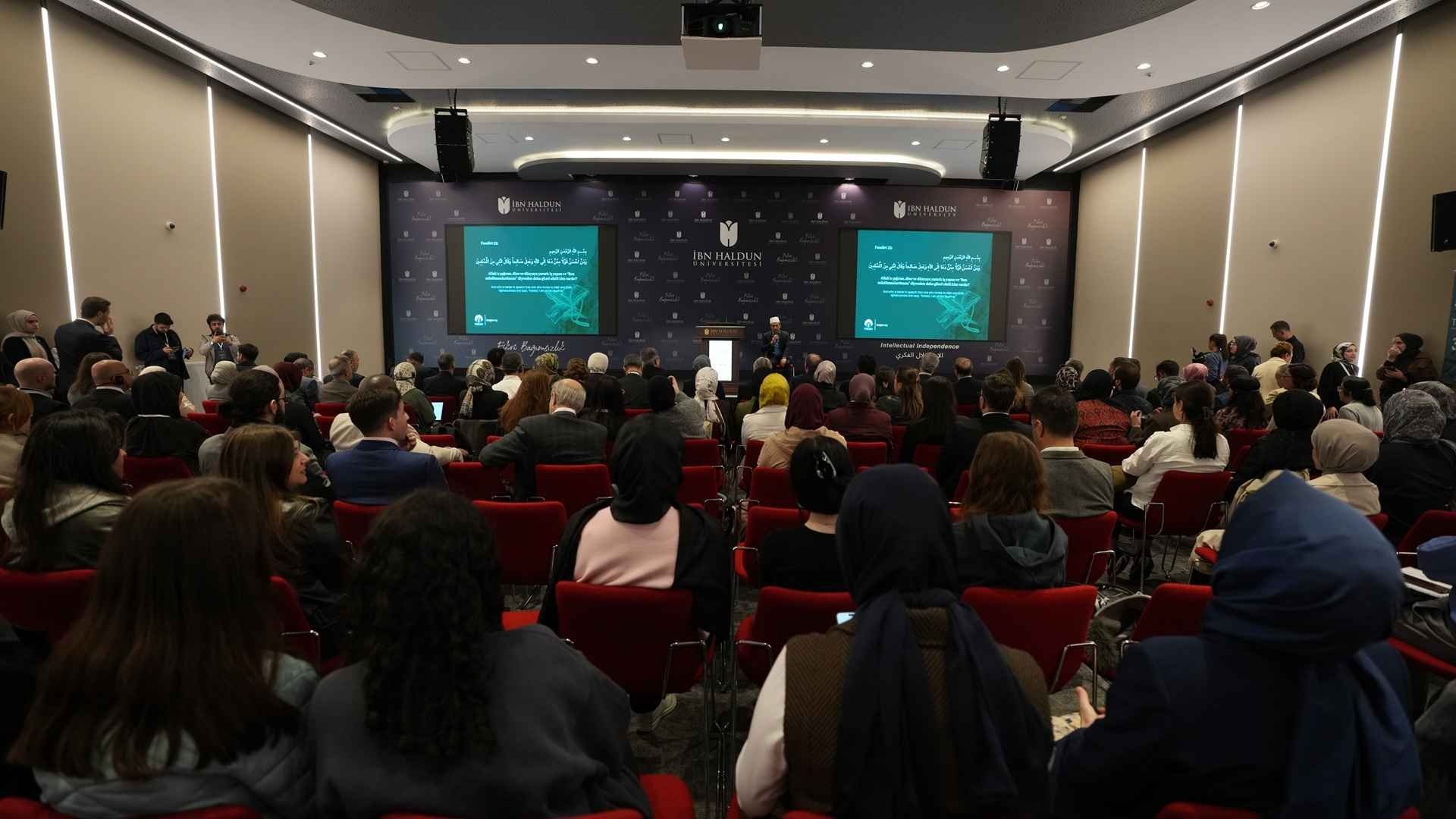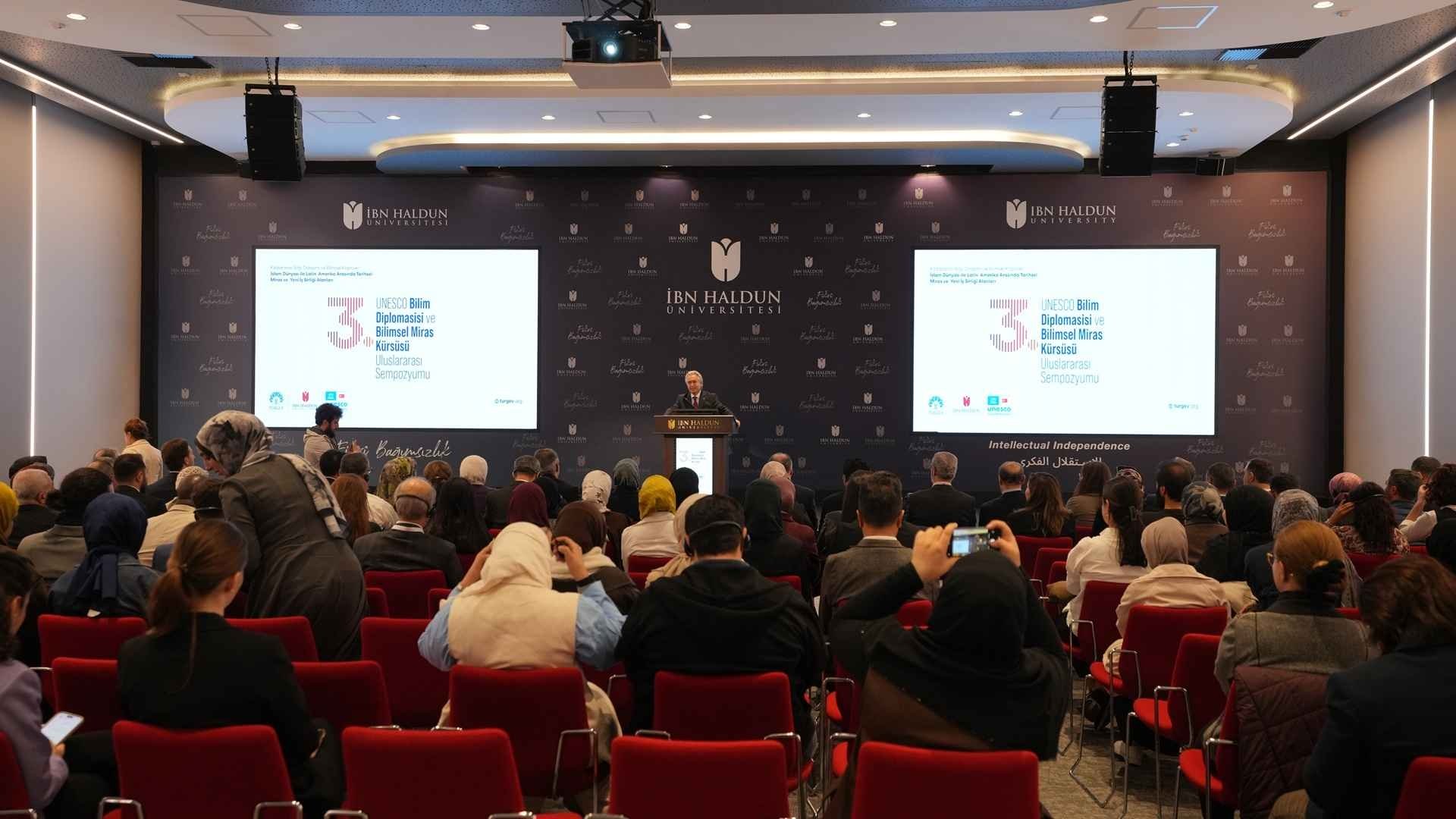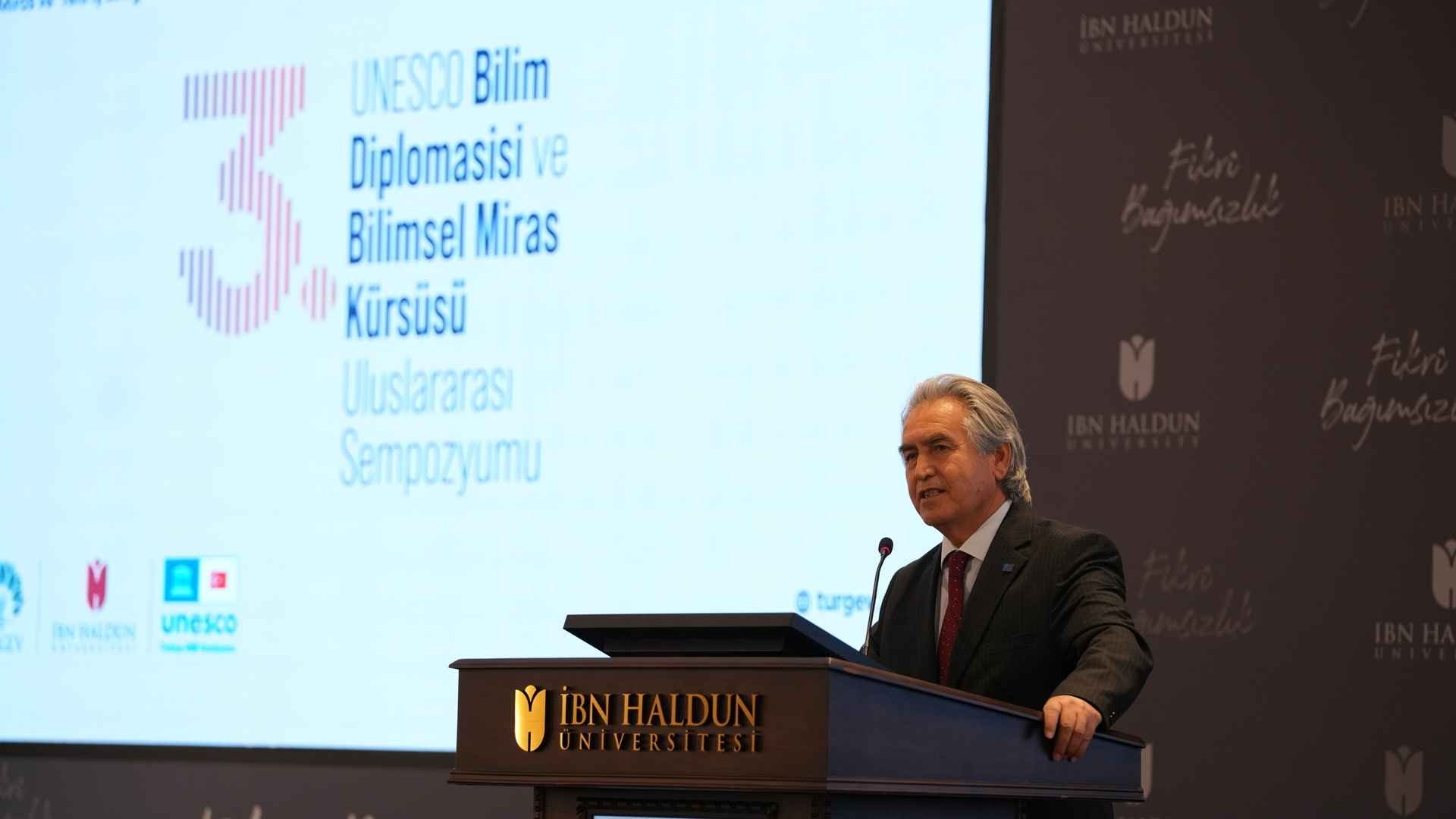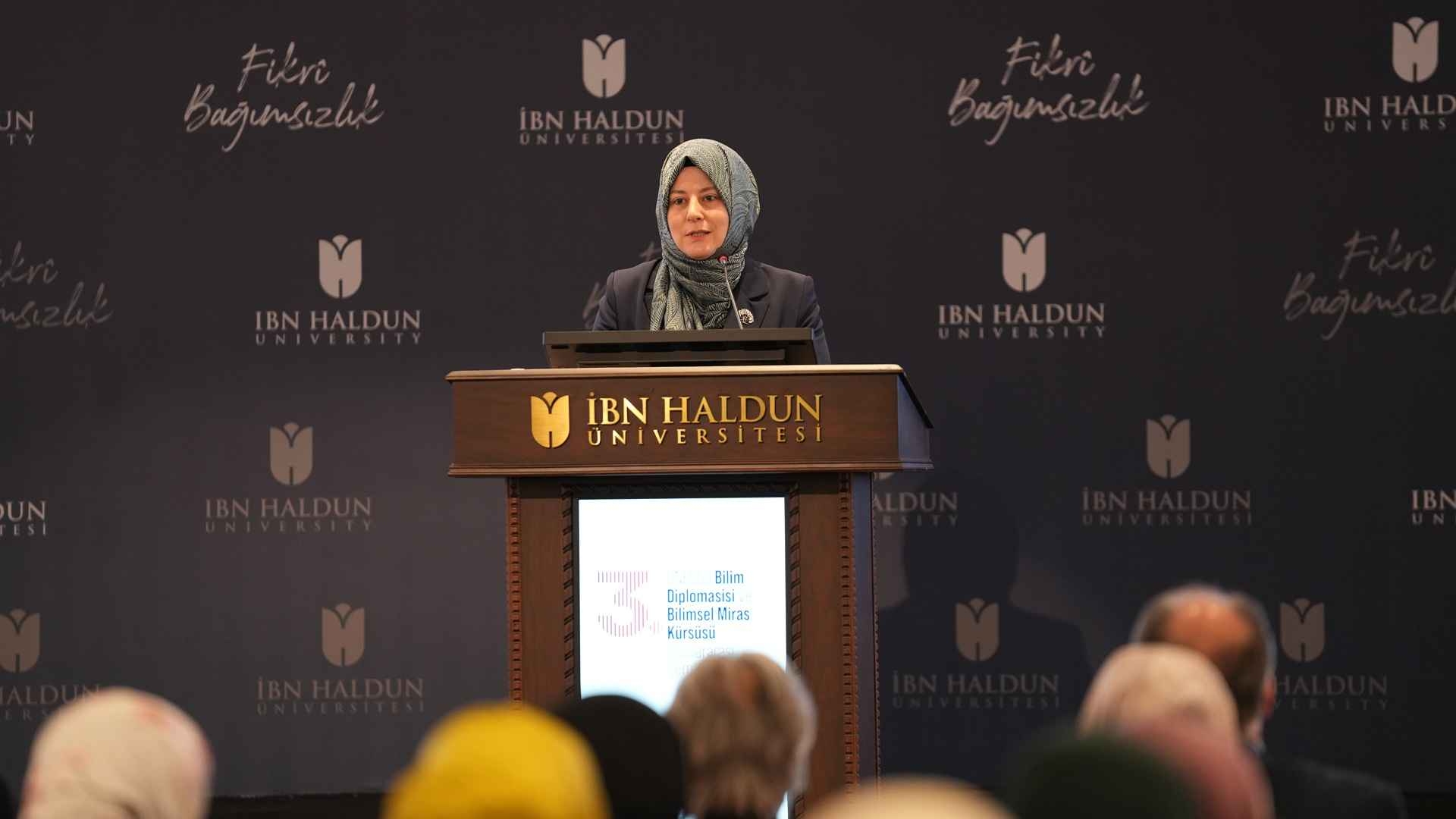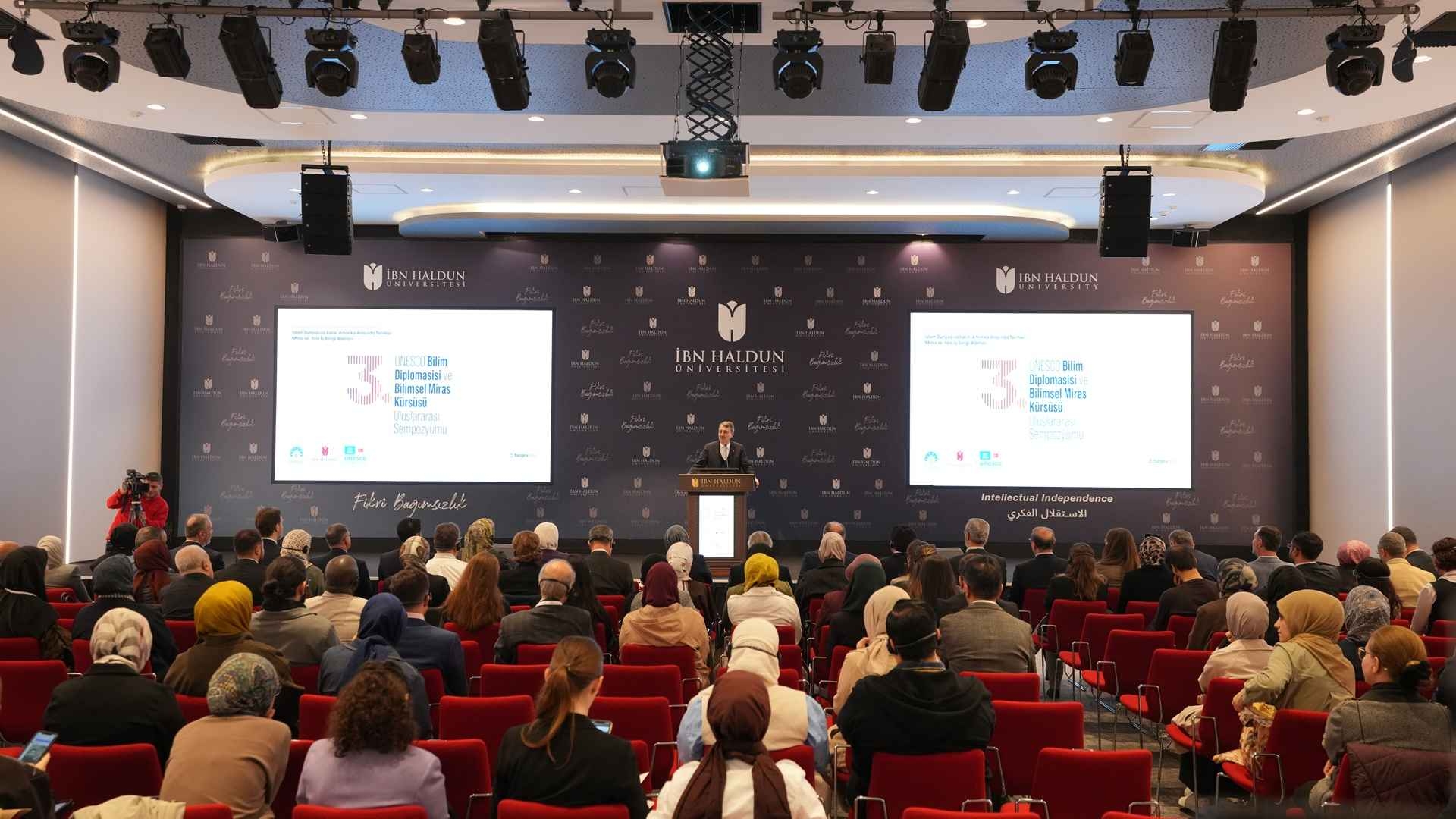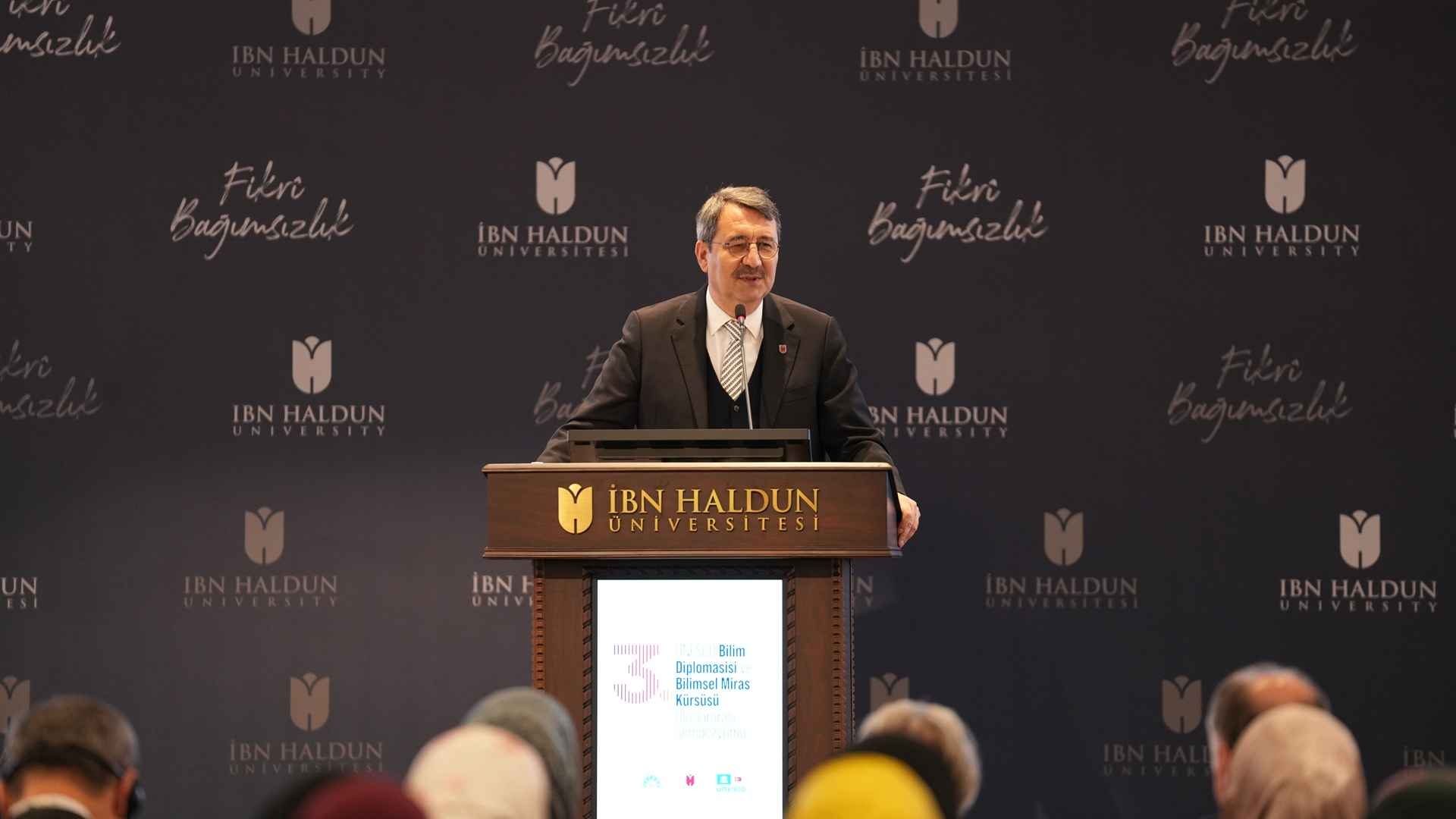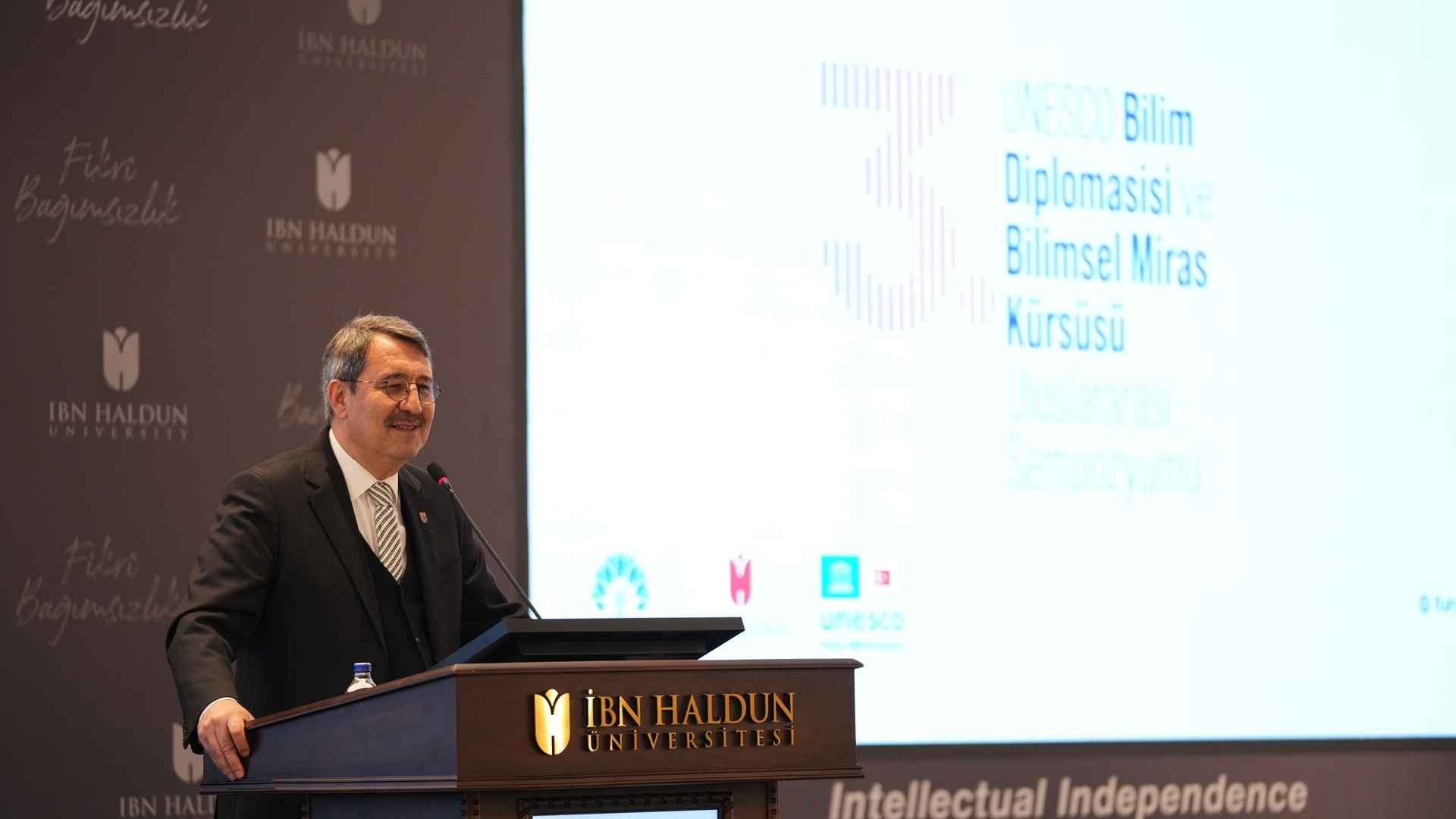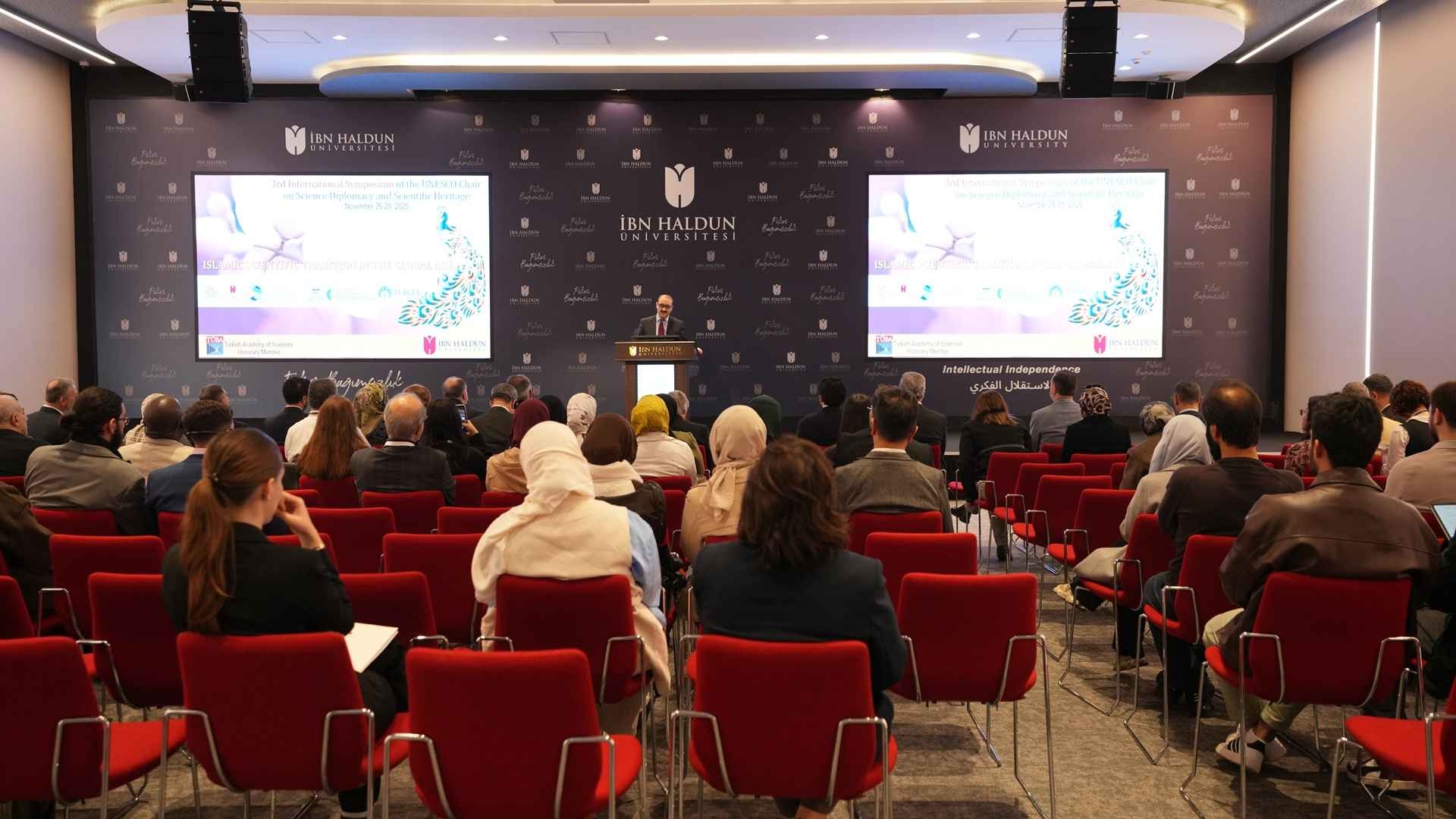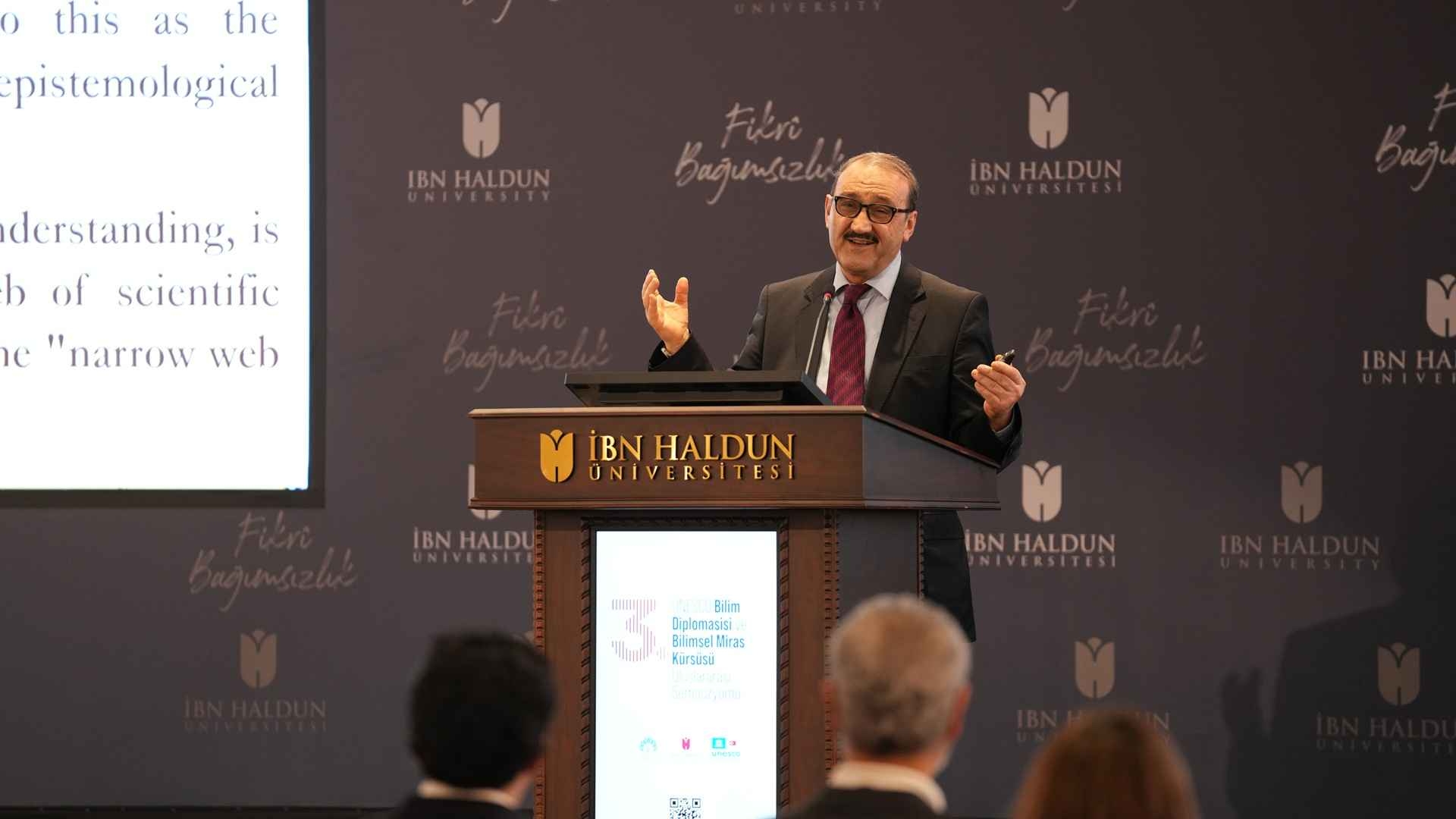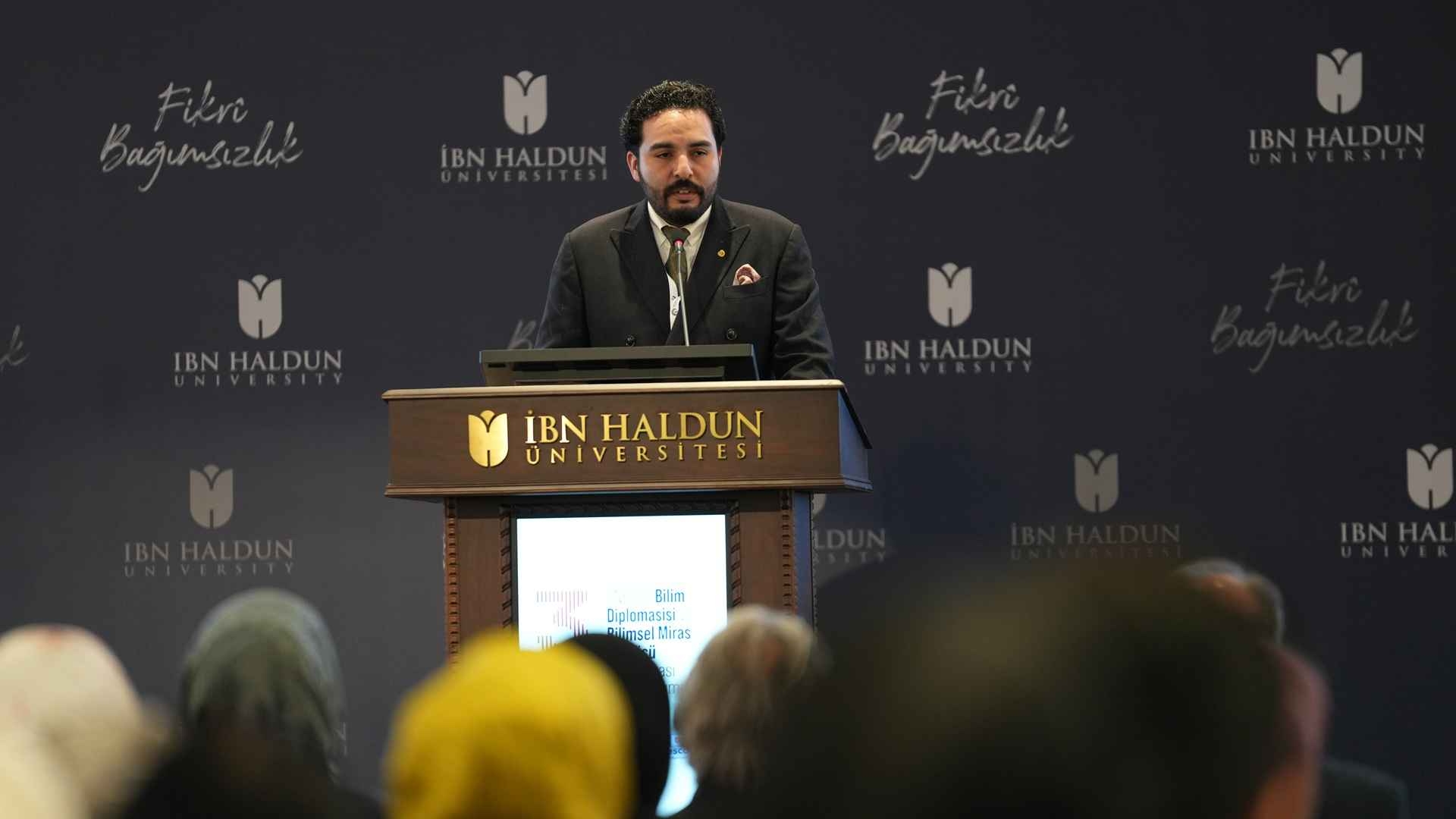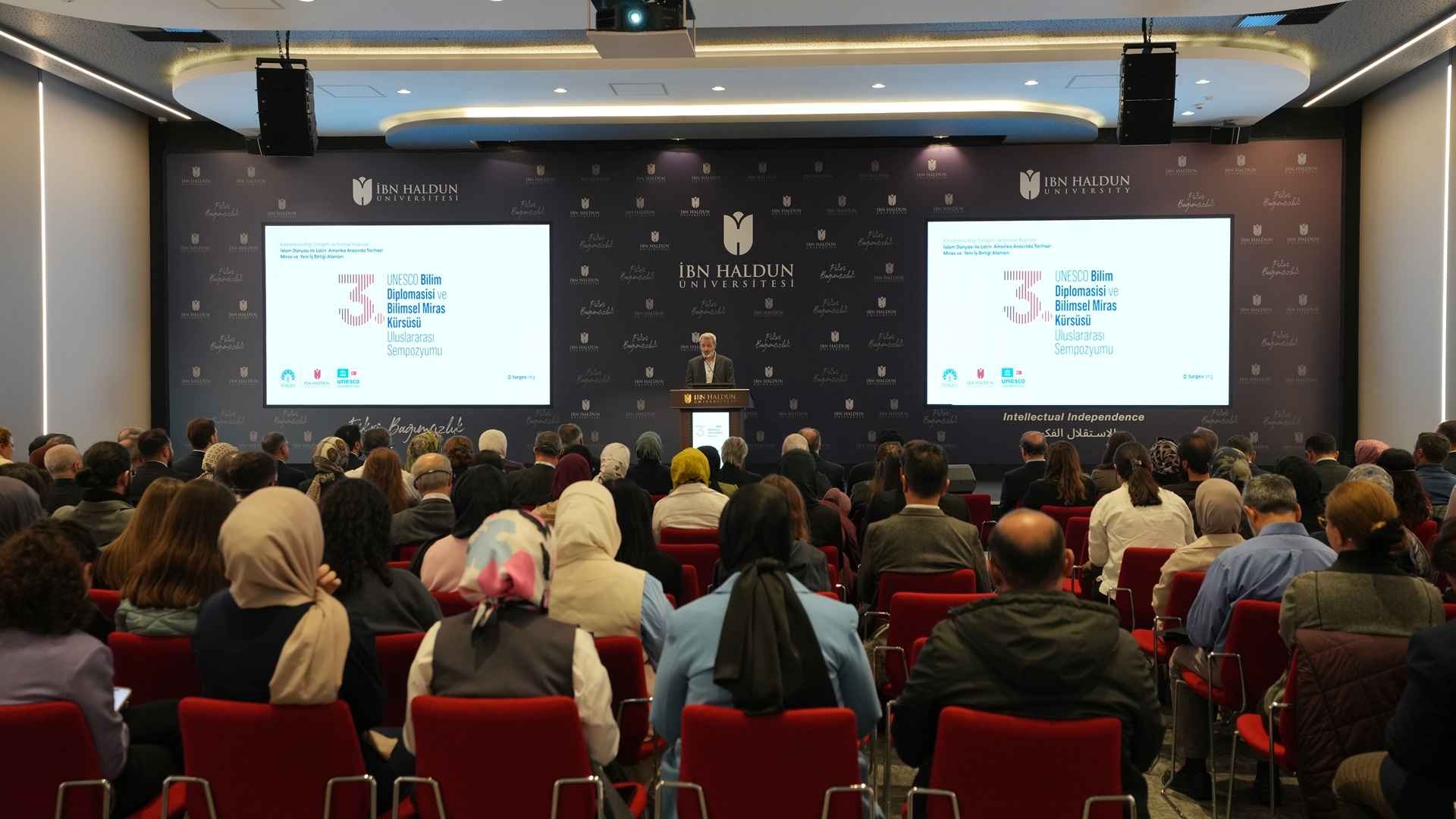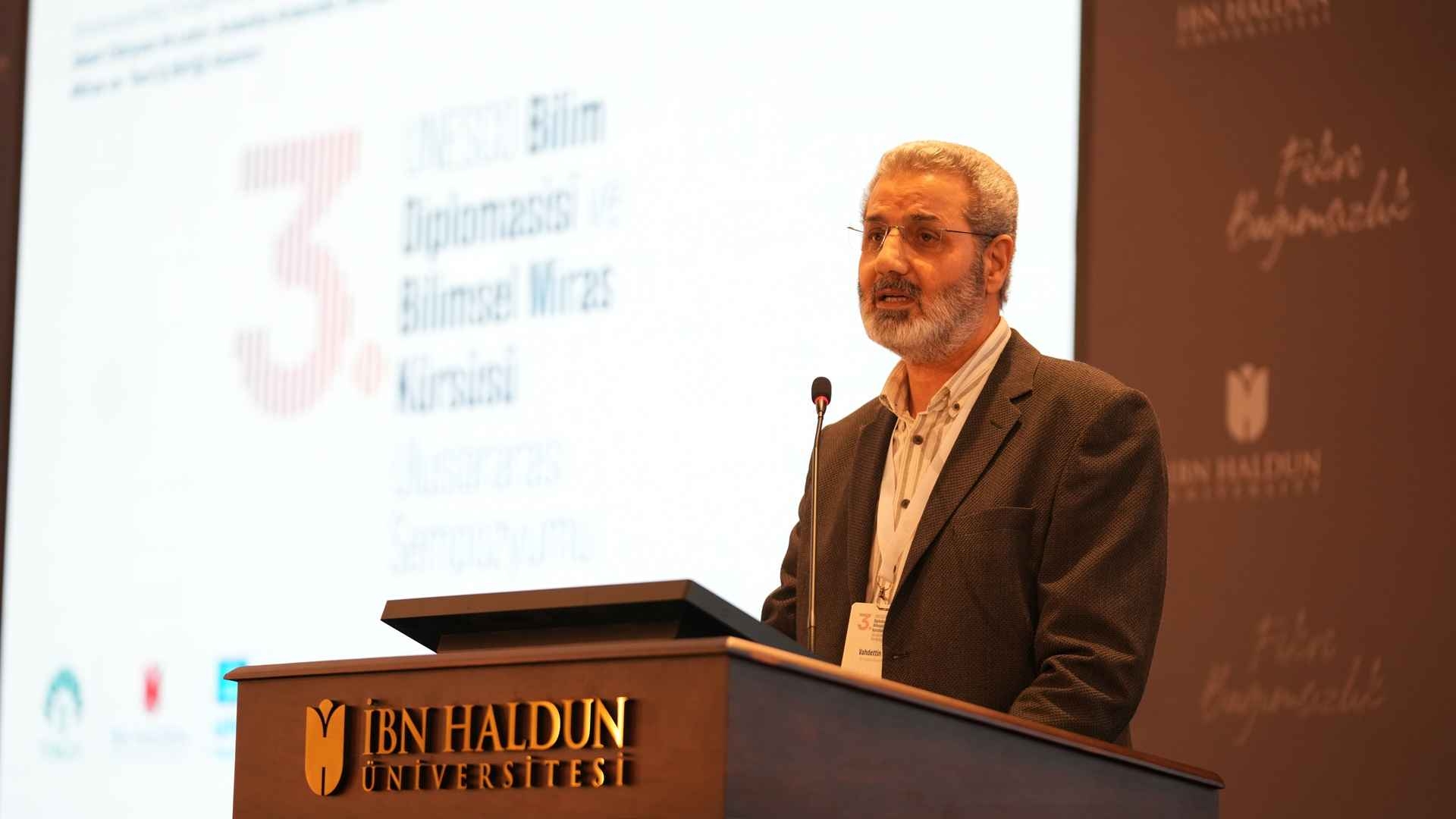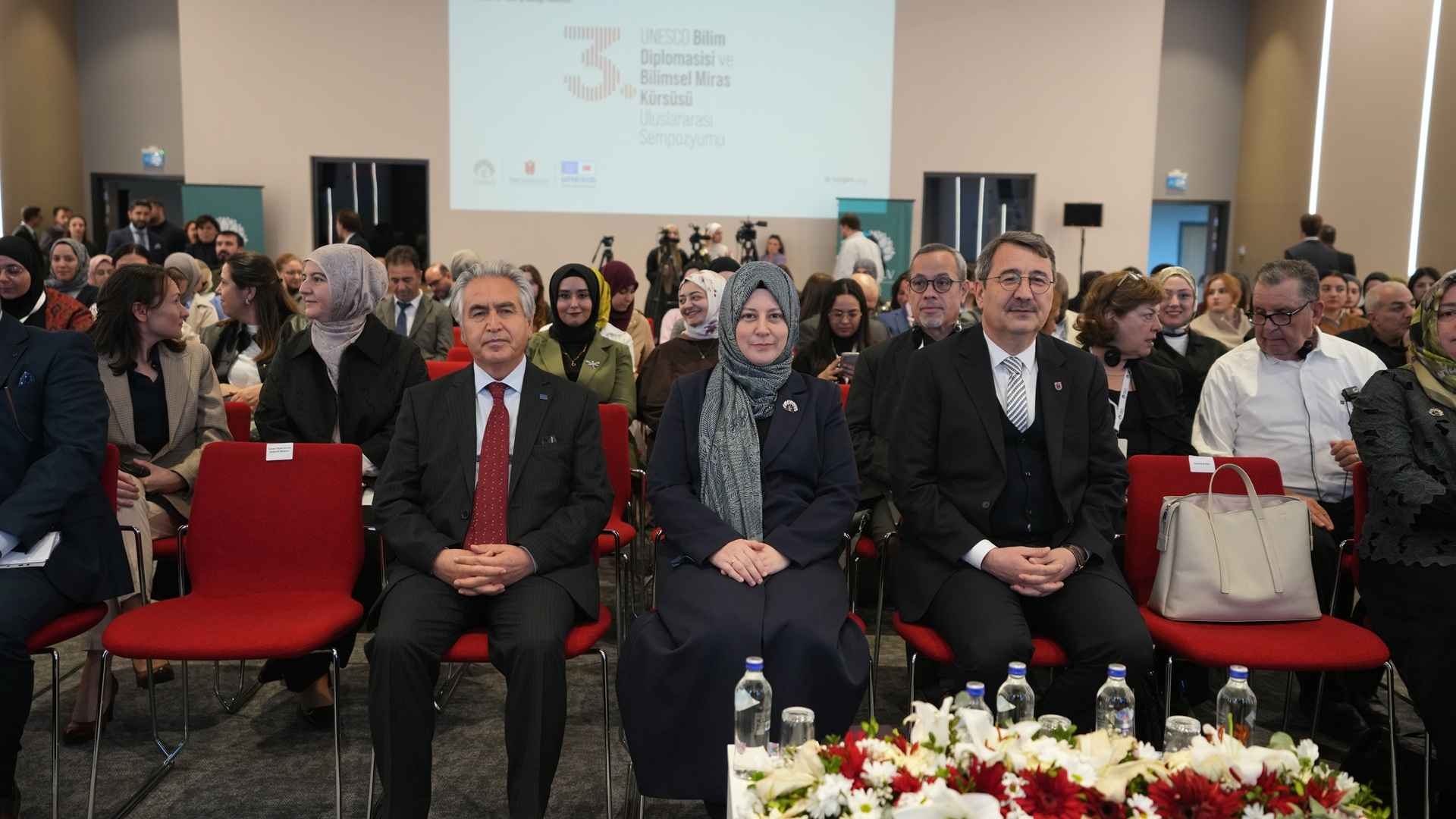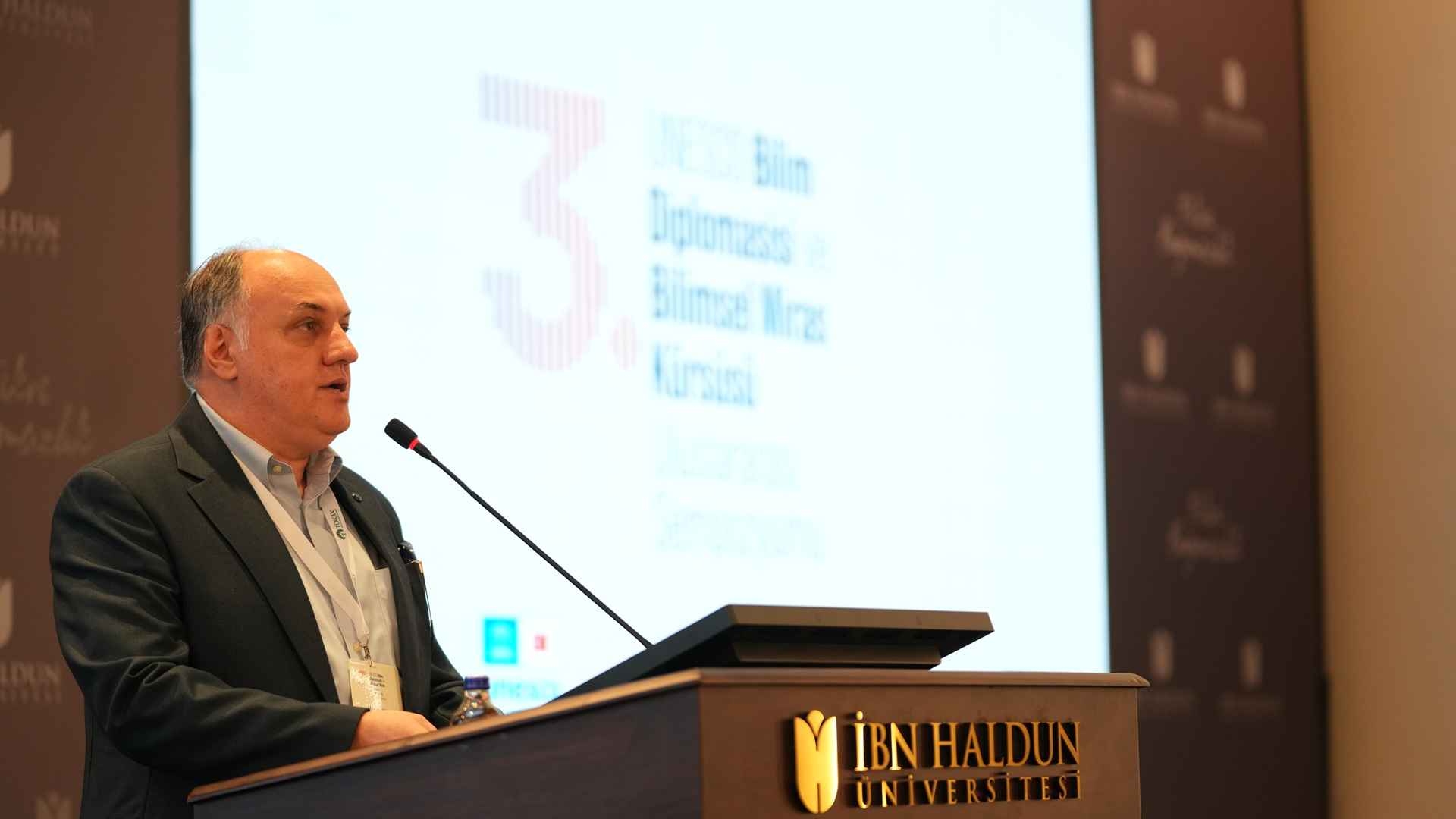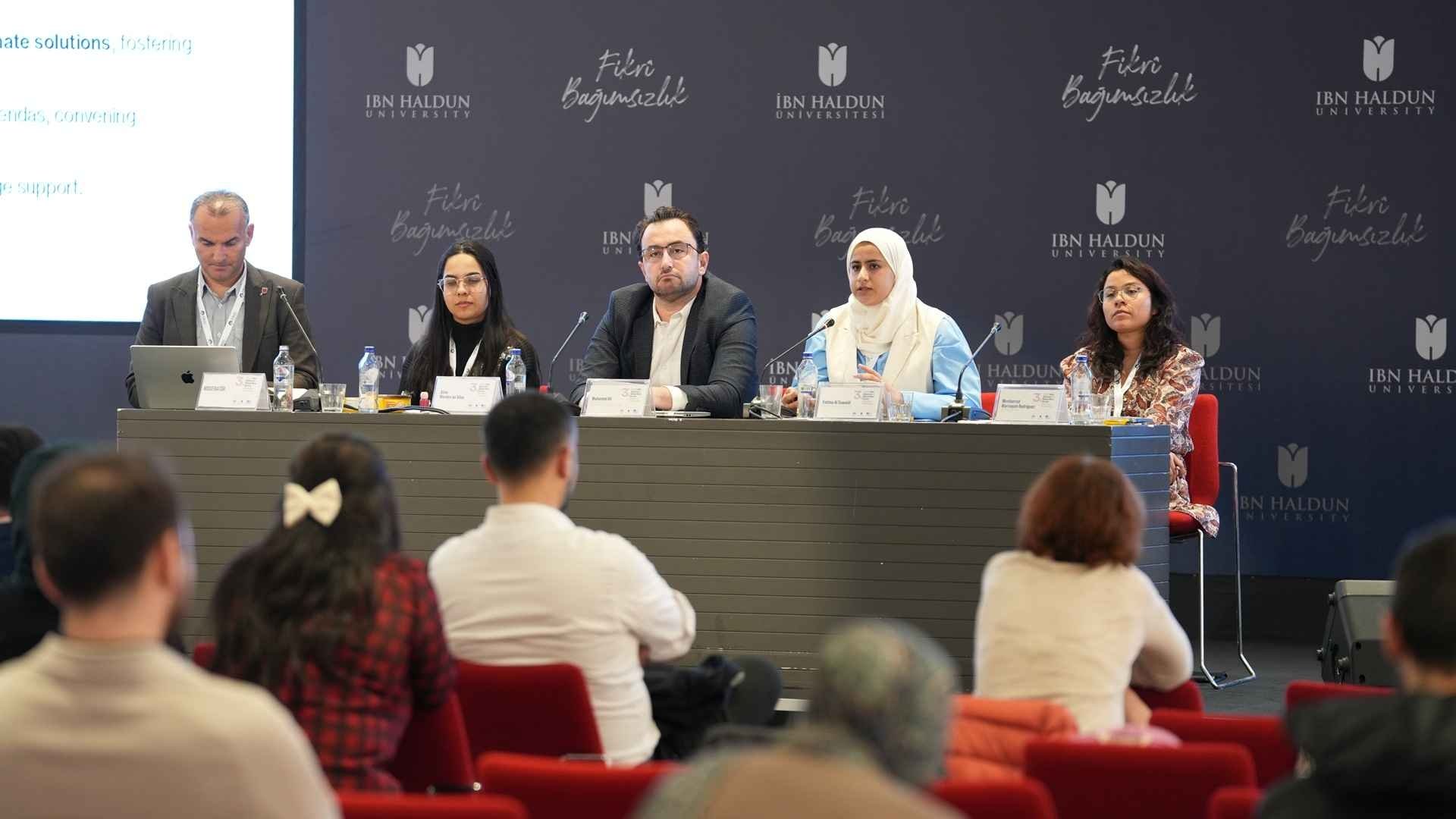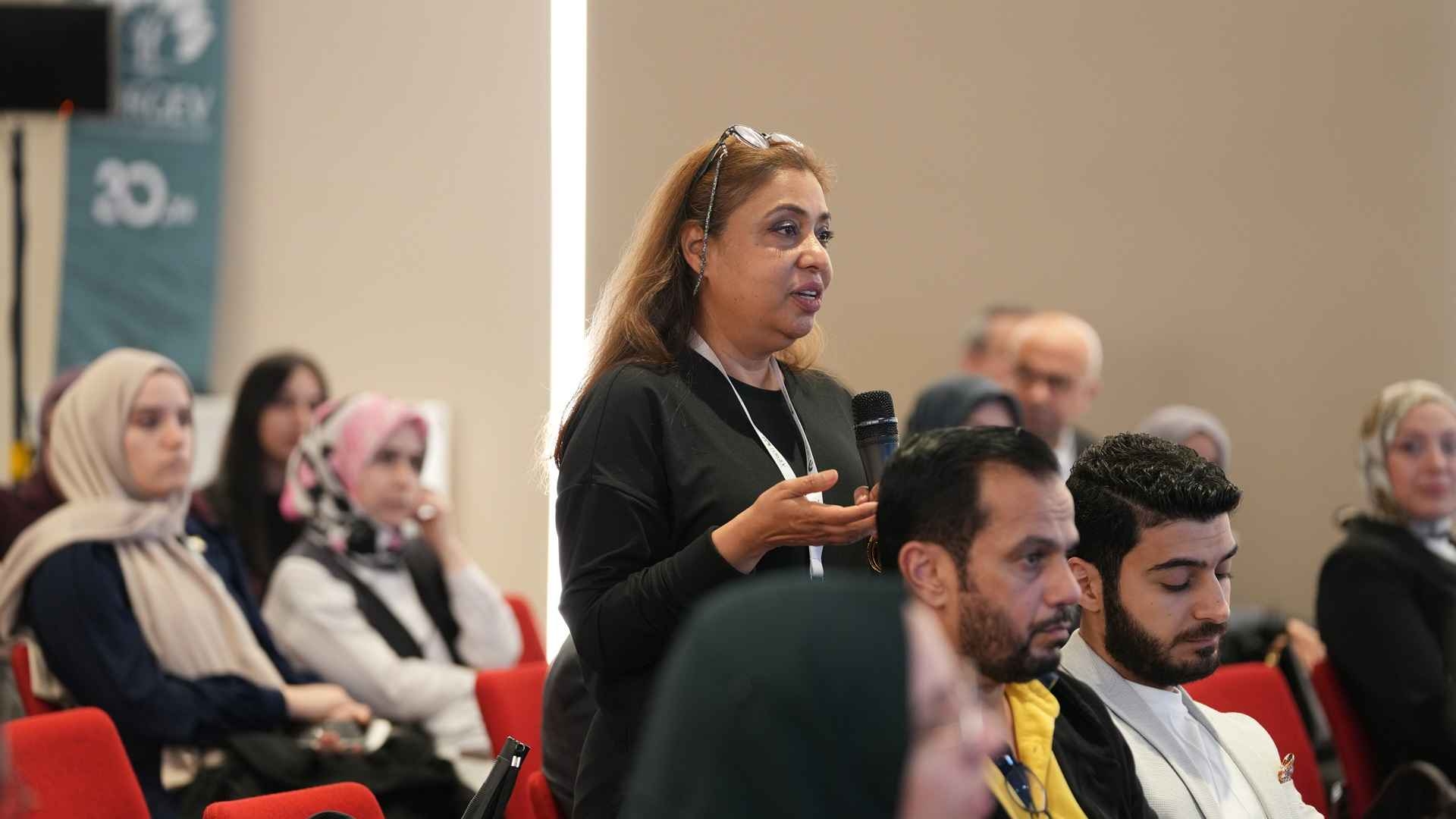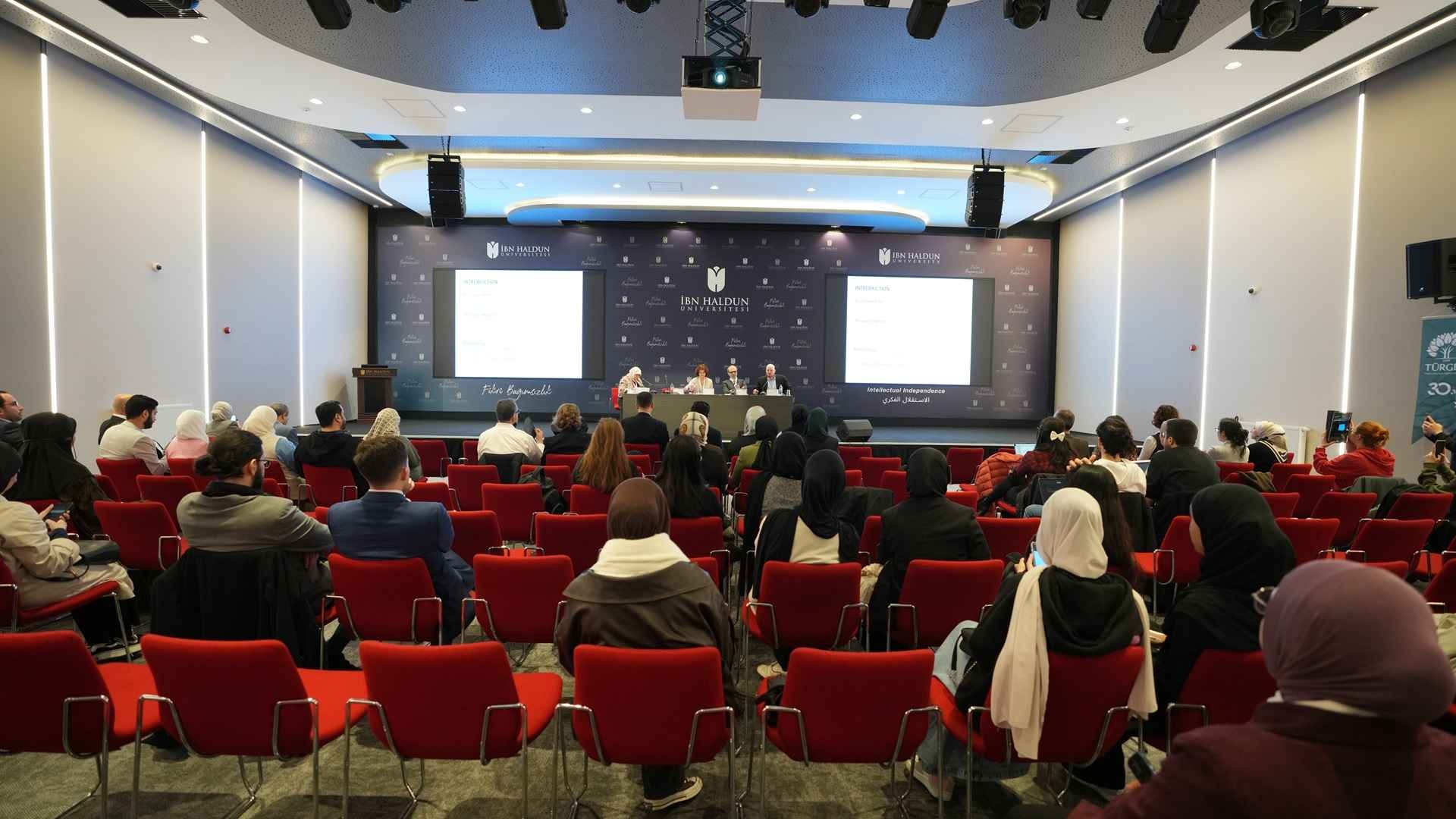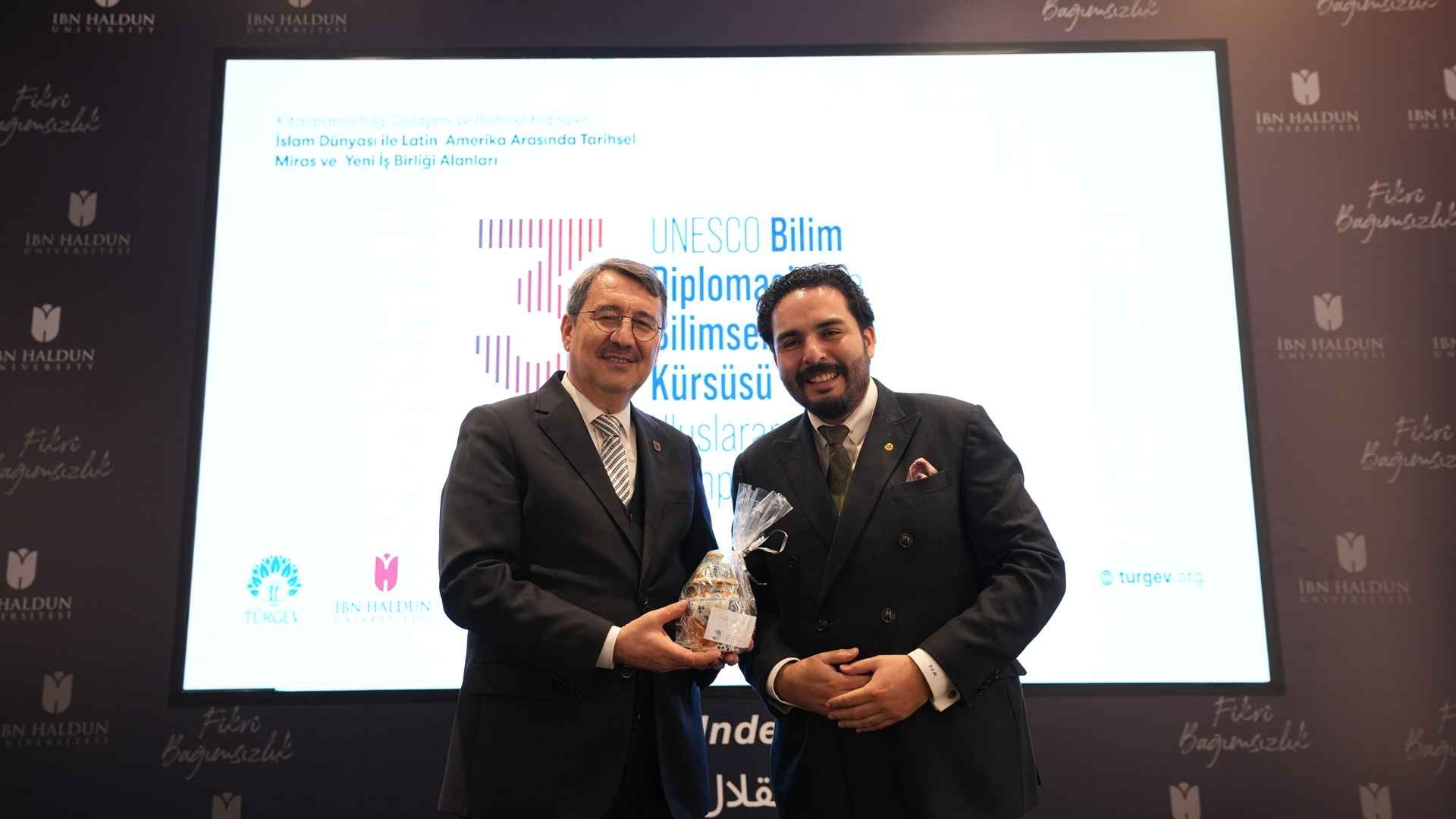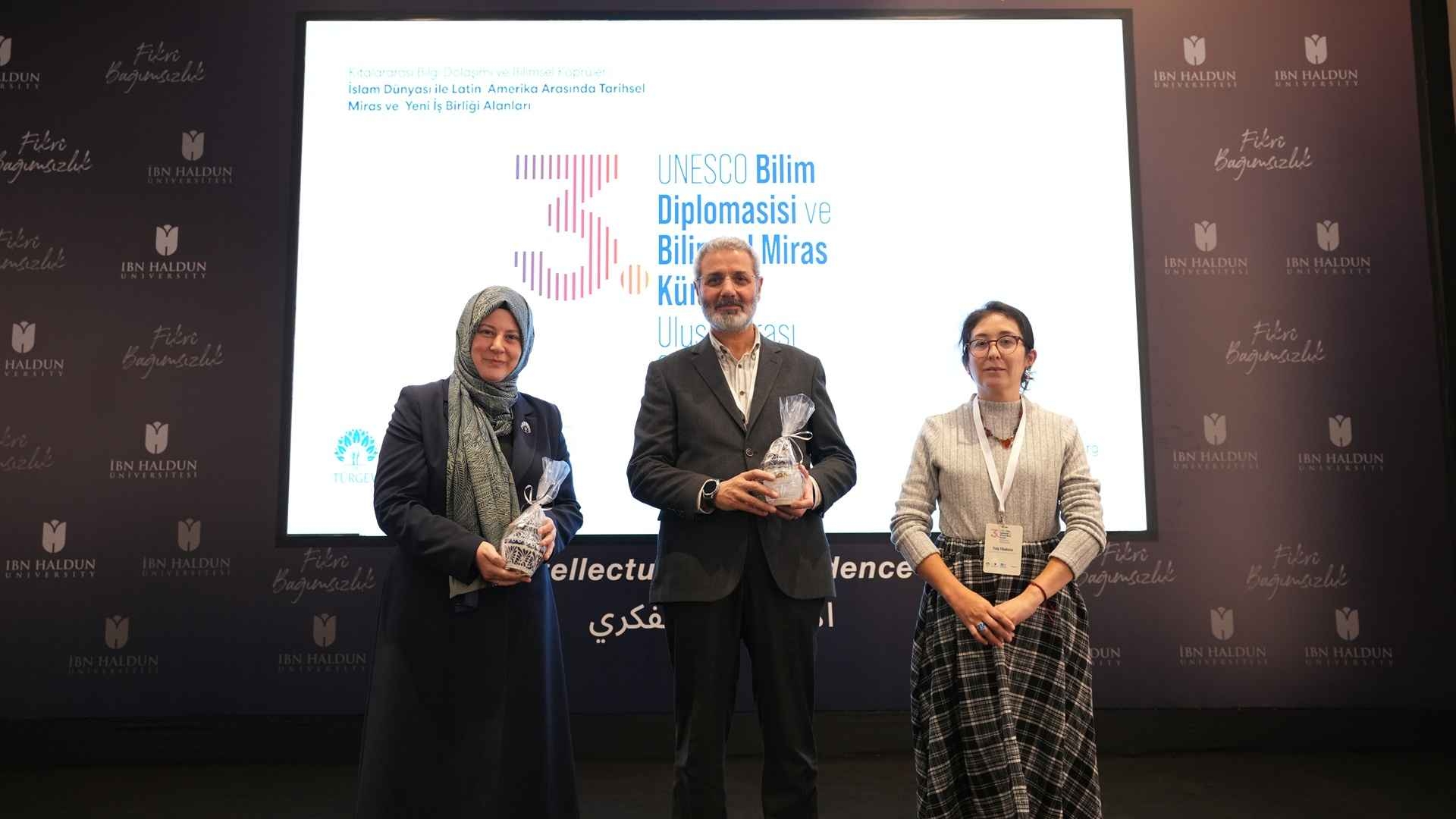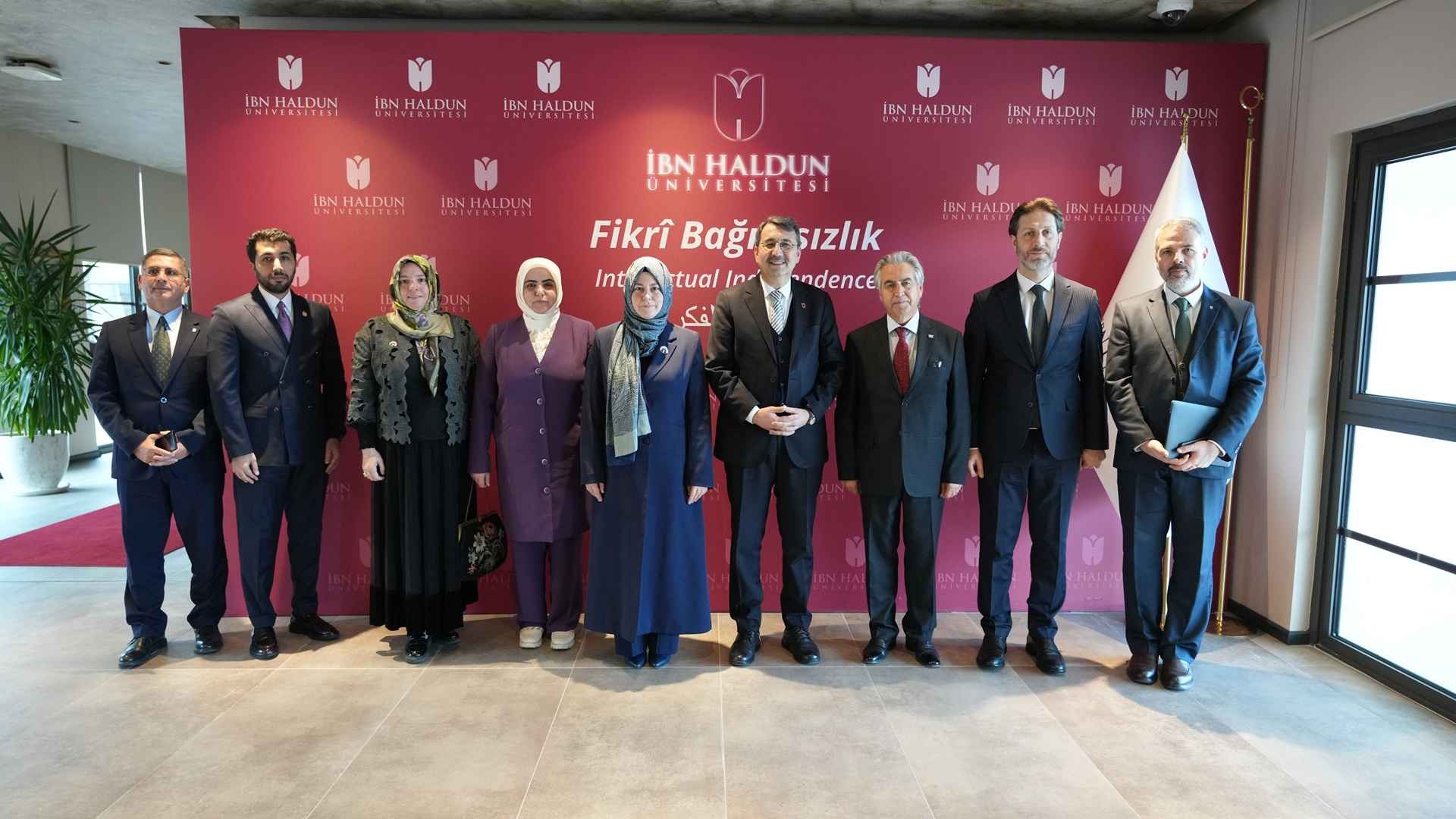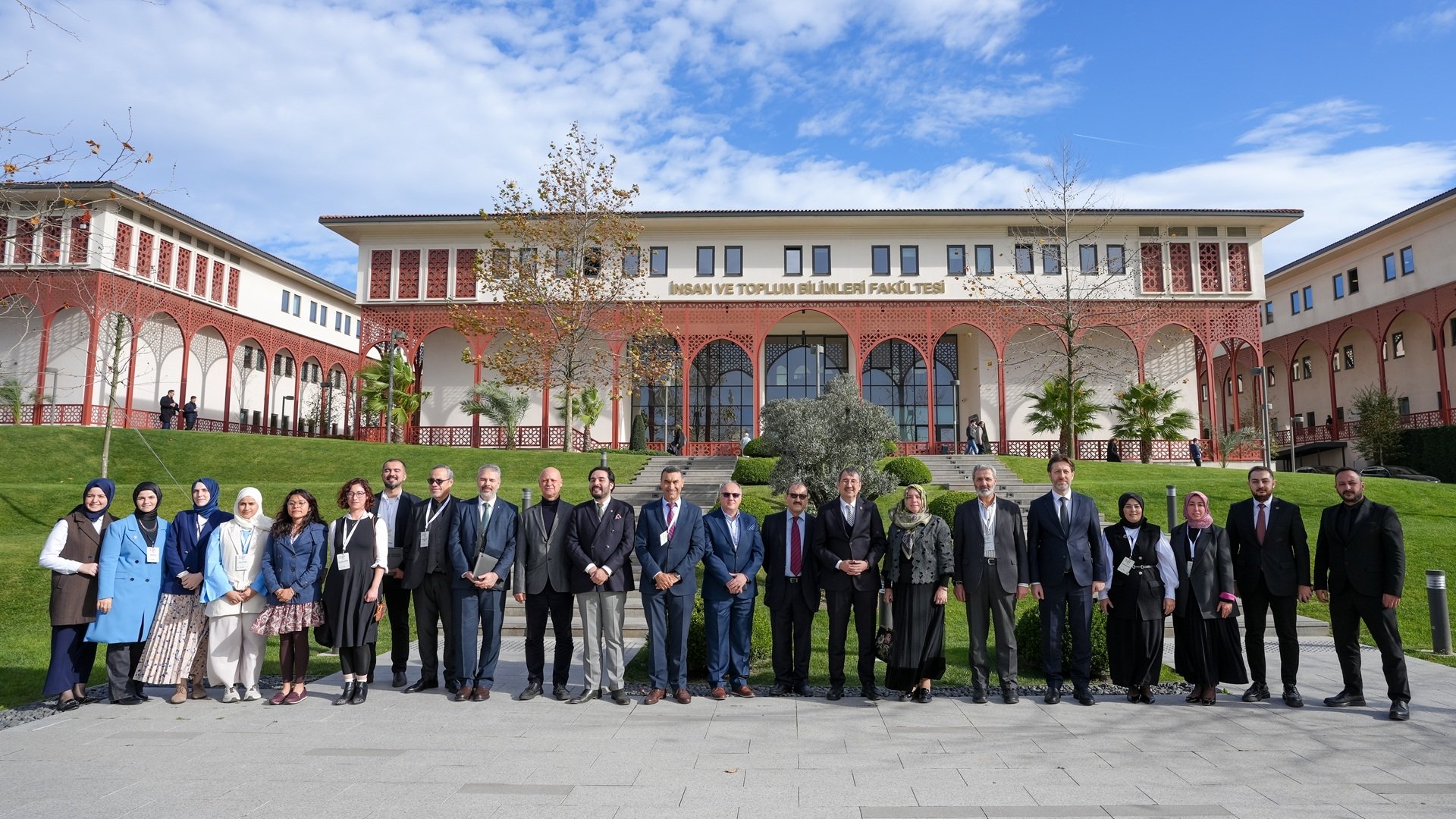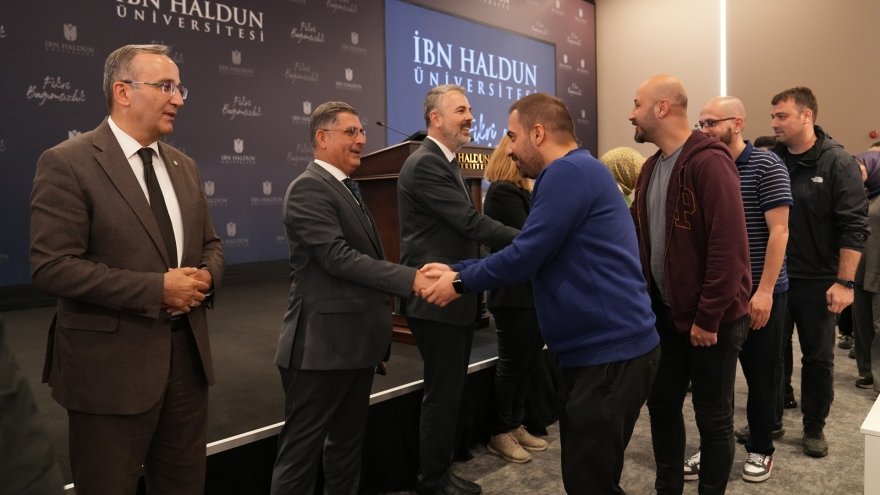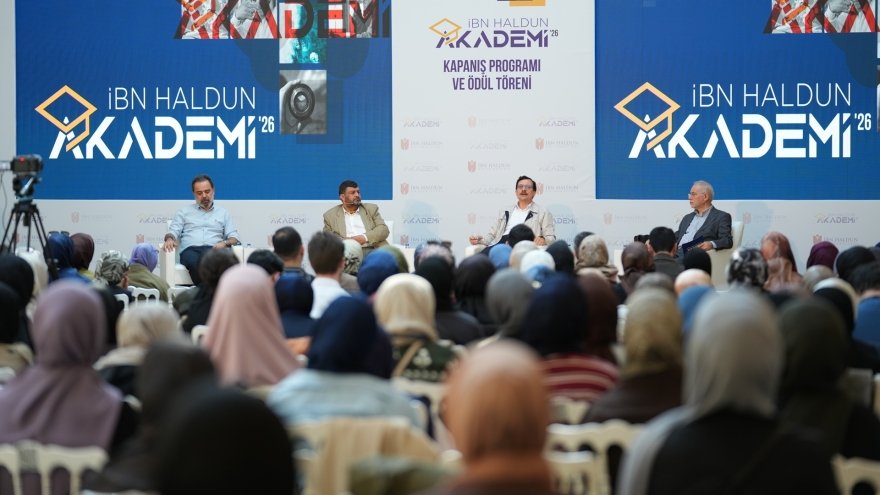
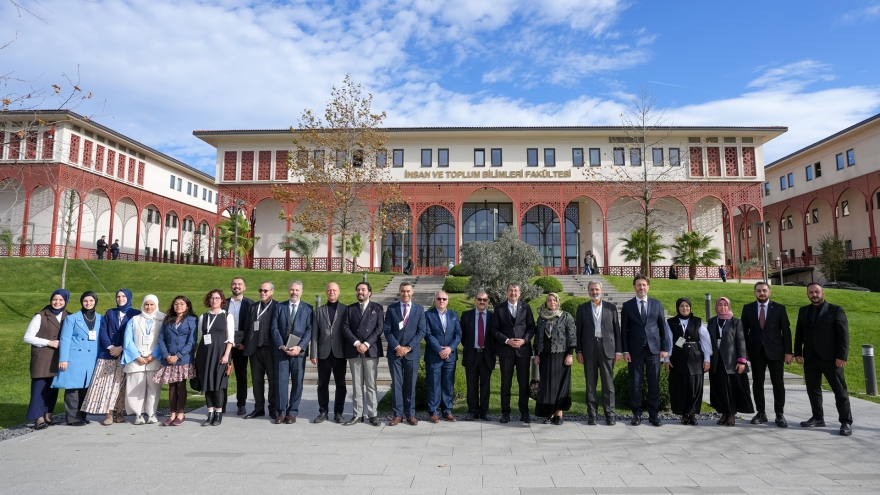
Organized under the leadership of the UNESCO Chair on Science Diplomacy and Scientific Heritage and hosted by Ibn Haldun University, the 3rd International Symposium on Science Diplomacy and Scientific Heritage was held between 26–28 November 2025 at the Ibn Haldun University Başakşehir Campus with the theme “Cross-Continental Circulation of Knowledge and Scientific Bridges: Historical Legacies and Emerging Collaboration Between the Muslim World and Latin America.” This year's symposium, which brought together participants from 14 different countries, was organized in cooperation with the Ibn Haldun University Alliance of Civilizations Institute (MEDİT), the Türkiye Youth and Education Service Foundation (TÜRGEV), the National Autonomous University of Mexico (UNAM), and the University of Sharjah.
The symposium, which commenced with opening remarks, began with the inaugural lecture delivered by Prof. Alparslan Açıkgenç titled “Islamic Scientific Tradition in the Global Age,” and concluded with the closing address by Prof. Ana María Cetto, Chair of the UNESCO Open Science Steering Committee, titled “Opening Science to the World: Tensions Between Local Knowledge and International Science.”
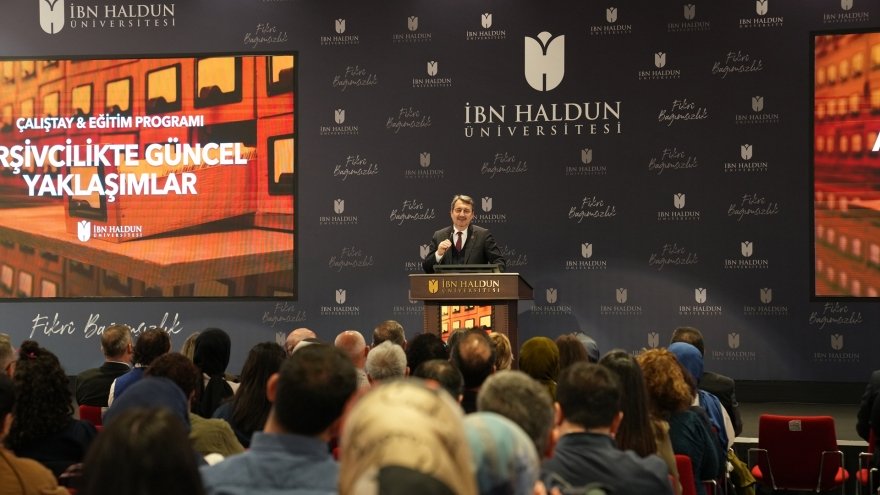
President of Ibn Haldun University, Prof. Atilla Arkan, emphasized in his speech that the world is not solely composed of dominant hegemonic powers, but that humanity forms a great family bound together in a mystical unity. He noted that the presence of Islam in Latin America is one of the important indicators of this. Highlighting the significance of such initiatives amid global chaos, uncertainty, and conflict, Prof. Arkan underlined that peace can only be achieved through mutual understanding and engagement. He stated that expanding our hearts and minds will help reach this goal more swiftly, expressing his hope for the establishment of a bridge of brotherhood not only between countries and universities but also between hearts and institutions.
Hatice Akıncı Yılmaz, Chairwoman of the Türkiye Youth and Education Service Foundation (TÜRGEV), emphasized in her speech the aim of building new bridges in the world of science and transforming scientific work from the confines of centralized, limited hubs into a shared heritage. She highlighted that the construction of knowledge must occur through silent, profound, and determinative contributions across a vast geography—from the East to the West and into the Latin world. Hatice Akıncı Yılmaz stated that their primary goal is to involve young people in knowledge-production processes and the international academic arena, enabling them to contribute to the establishment of scientific bridges.
In his opening remarks, Prof. Öcal Oğuz, President of the UNESCO National Commission of Türkiye, emphasized that the concept of scientific heritage is as important as cultural heritage and constitutes a fundamental domain that nourishes humanity’s cultural diversity. Listing UNESCO’s areas of preservation as cultural, biological, and geological heritage, Oğuz stated that scientific heritage should be added as a fourth dimension to these fields. Highlighting the critical role of science, culture, and communication in establishing peace, he underscored the unifying power of knowledge with the expression, “Abundance brings people closer; scarcity causes conflict.” Prof. Oğuz noted that there are over 150 UNESCO Chairs worldwide, 19 of which are located in Türkiye, and emphasized that these chairs aim to develop sound solutions through regular meetings and collaborations. Drawing attention to the borderless nature of science, he concluded by stating that their guiding principle is to support every initiative that produces benefit, rather than disregarding humanity’s shared memory.
In his opening remarks, Prof. Vahdettin Işık, Director of the Alliance of Civilizations Institute, stated that this year’s theme carries great significance in the face of global crises and inequalities. He emphasized the importance of highlighting the intellectual heritage of societies outside Western-centered knowledge production. Noting that speakers from 14 countries would participate, Prof. Işık expressed their goal of building new bridges around the language of peace. He underlined that science diplomacy is a critical tool for inclusive progress and peacebuilding. He concluded his speech by extending his thanks to all partner institutions, faculty members, and students who contributed to the organization of the program.
Prof. Parsifal Islas-Morales, General Coordinator of the UNESCO Chair on Science Diplomacy and Scientific Heritage at the National Autonomous University of Mexico (UNAM), emphasized in his speech that science diplomacy must be rebuilt through a new conceptual approach. He stated that the scientific and cultural bridges to be established hold great significance for the modern world. Highlighting that a strong scientific production grounded in one’s roots will pave the way for lasting collaborations, Islas-Morales expressed his belief that the symposium sessions would yield valuable outcomes.
Following his remarks, Prof. Mesud Idriz from the University of Sharjah underlined that science has no boundaries. He noted that this symposium is not merely an academic meeting, but an effort grounded in scientific bridge-building, intellectual knowledge-sharing, and the articulation of common goals.
The three-day symposium continued with presentations delivered by distinguished speakers in their fields. On the first day, the program began with the opening session titled “Cross-Continental Collaboration: Science Diplomacy, Cultural Bridges, and Counterflows”, followed in the afternoon by the panel “Contemporary Platforms for Collaboration: Science Diplomacy, Culture, and Climate Action.”
On the second day, the morning session featured “Contemporary Platforms for Cooperation: Science, Digital Knowledge, and Heritage” which was followed by a panel titled “Building Knowledge Infrastructures of the Global South.” Later in the day, participants attended a field visit to the Süleymaniye Complex and took part in a workshop on “Identifying and Preserving Scientific Heritage Through Open Science.”
The third day began with the session “Entangled Histories: Muslim–Latin American Encounters and the Cross-Continental Flow of Knowledge” and continued with the panel “From Language to the Cosmos: Tracing the Scientific Heritage Linking the Islamic World and Latin America.” The symposium concluded with cultural activities, including a guided tour of the Topkapı Palace Museum, a traditional music performance, and demonstrations of traditional arts.