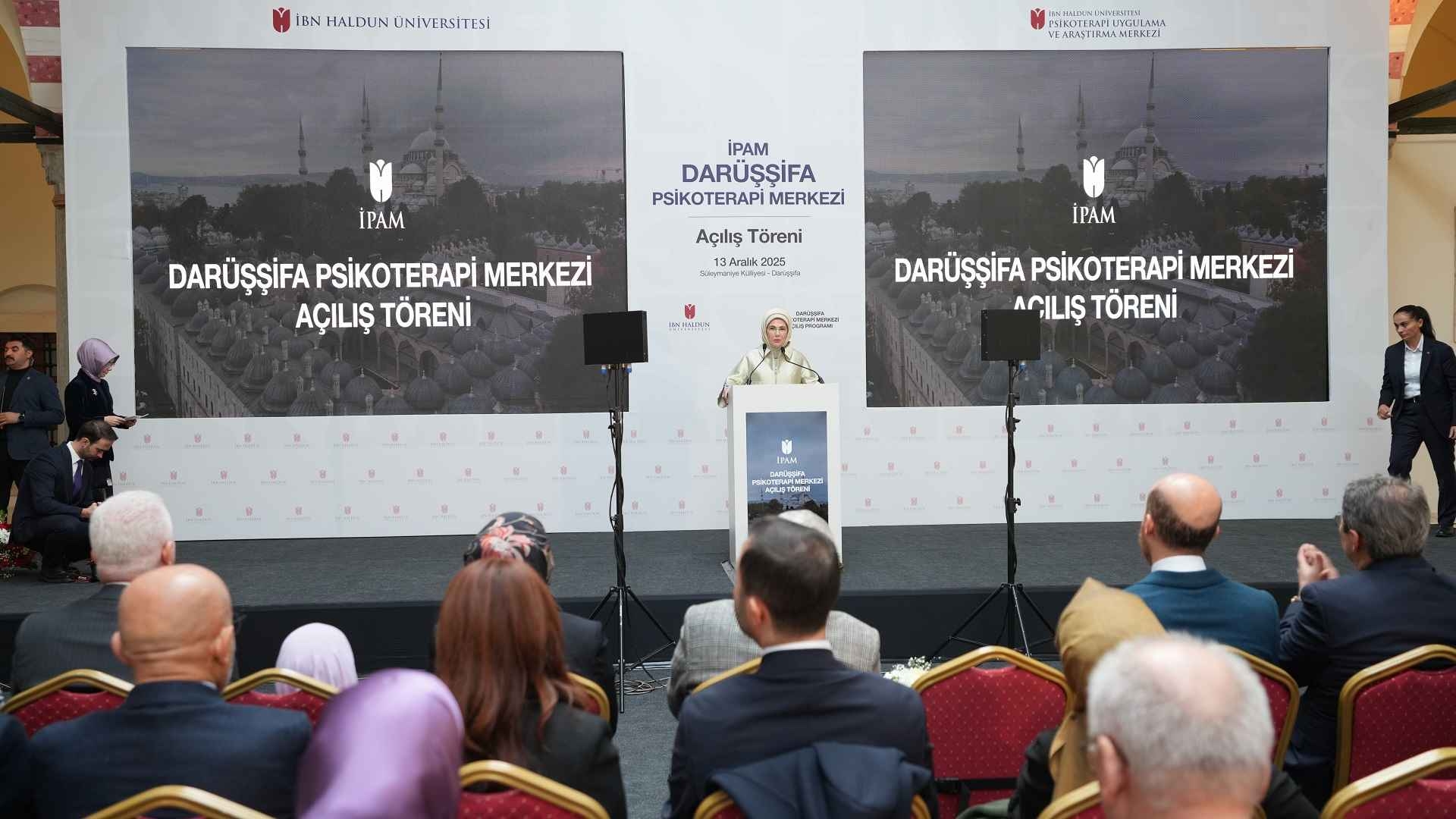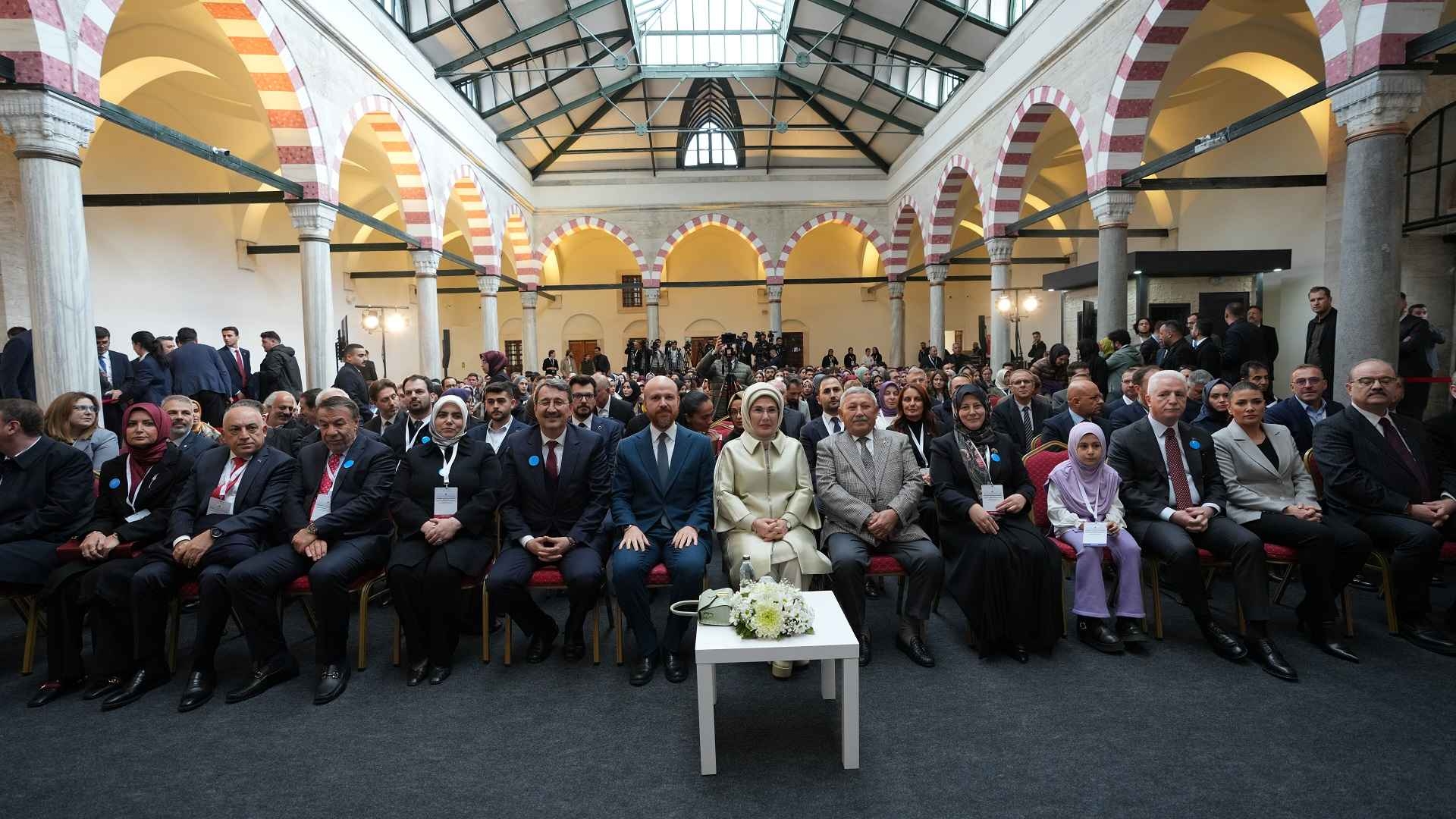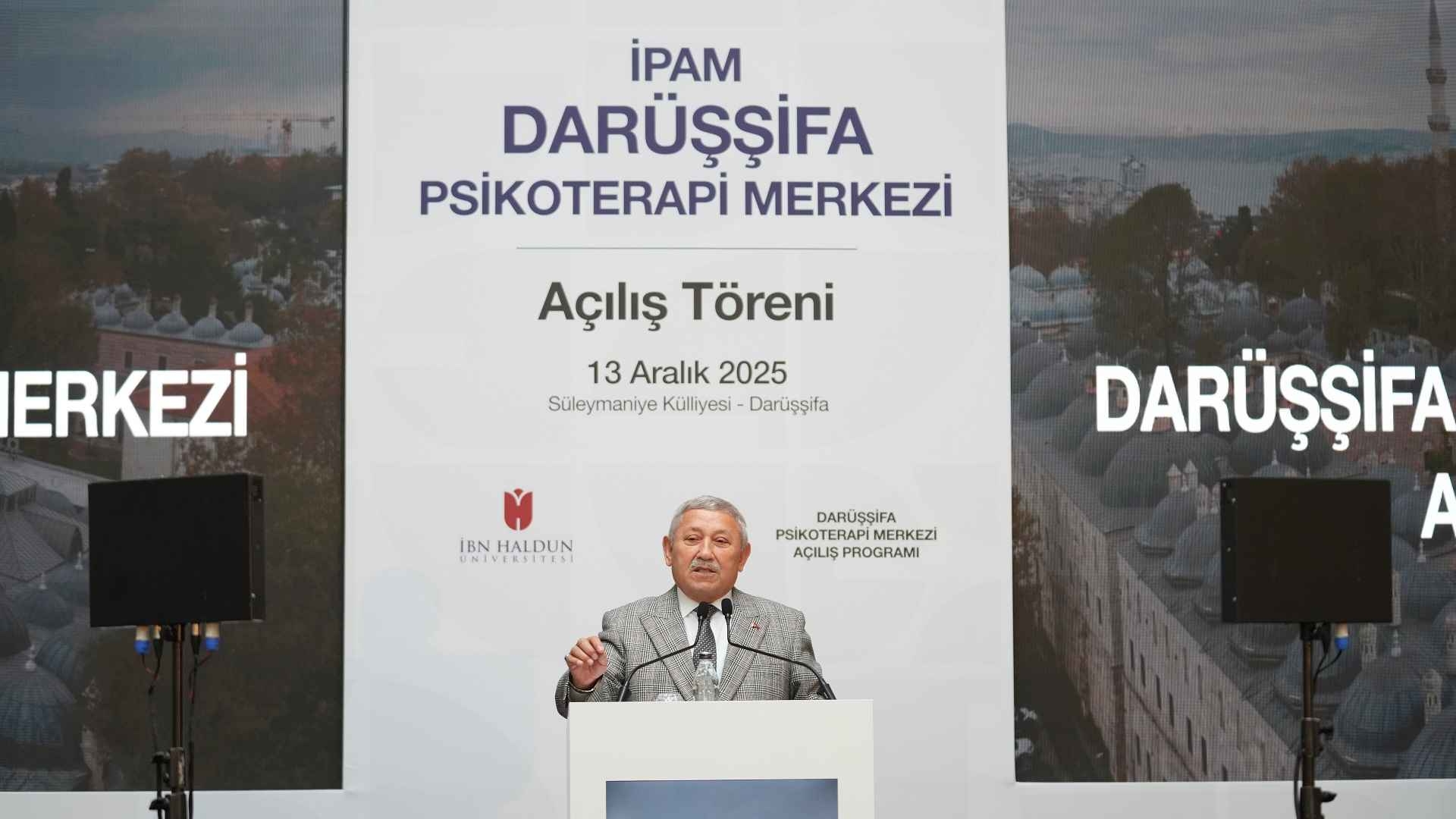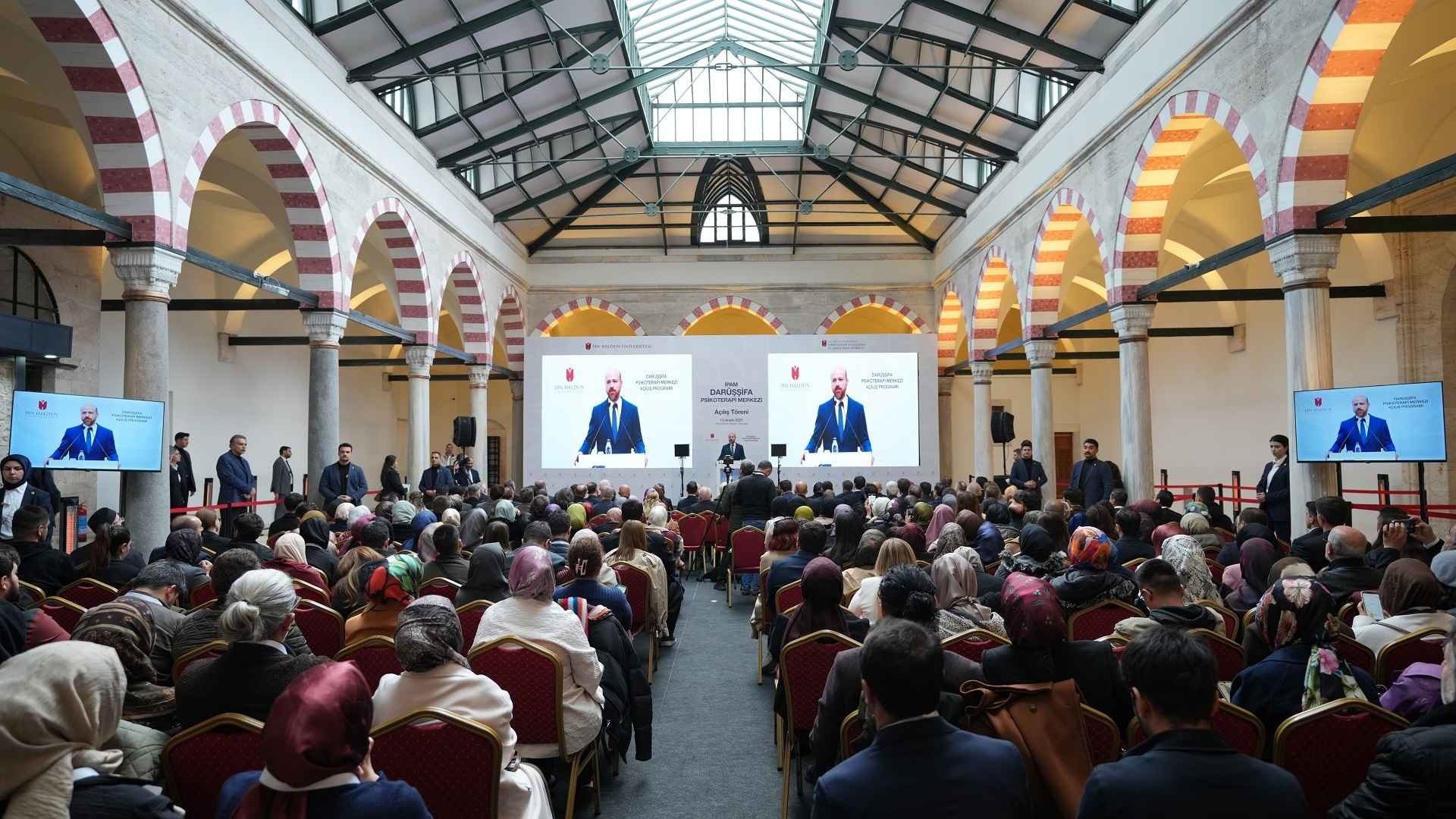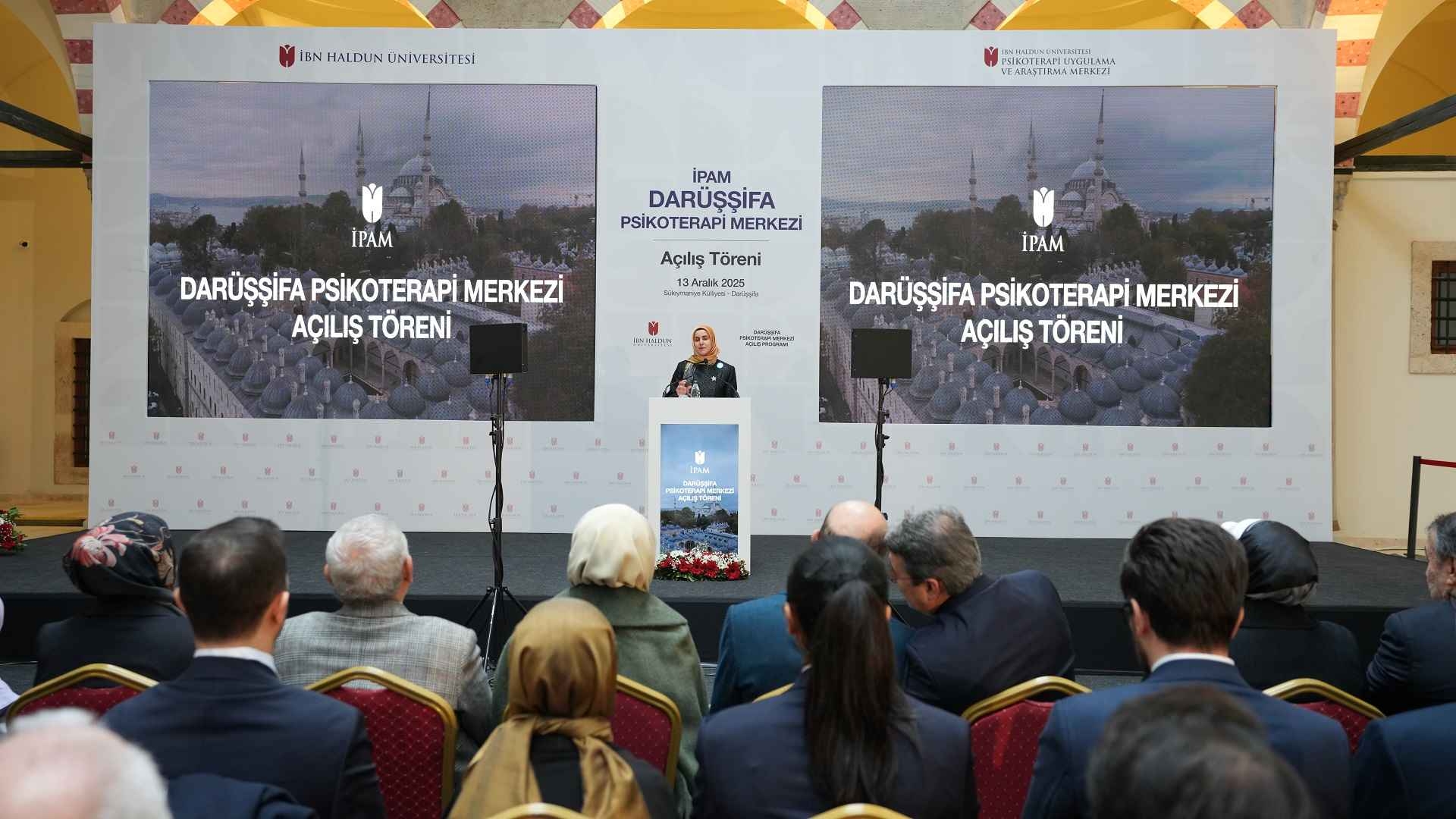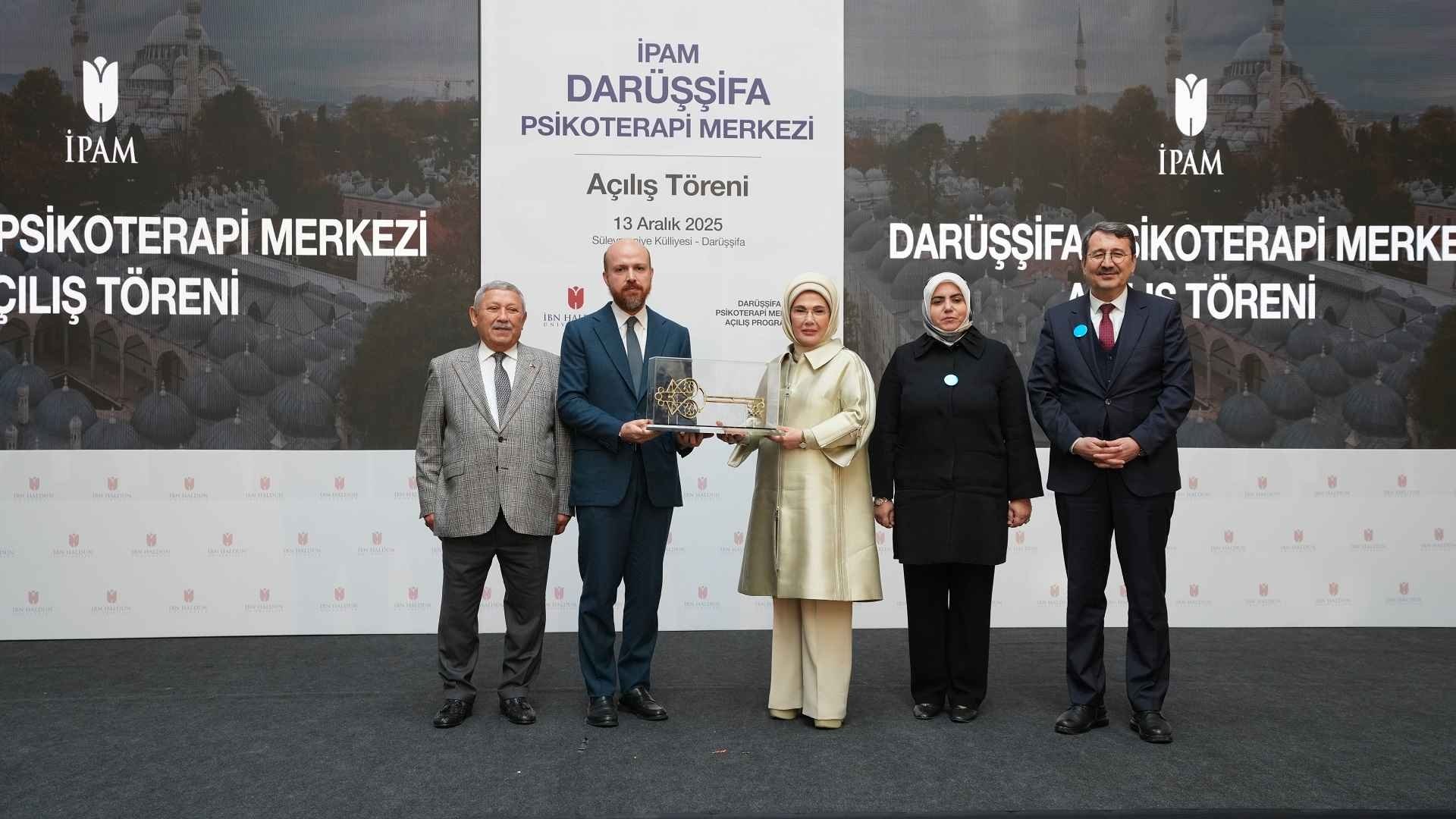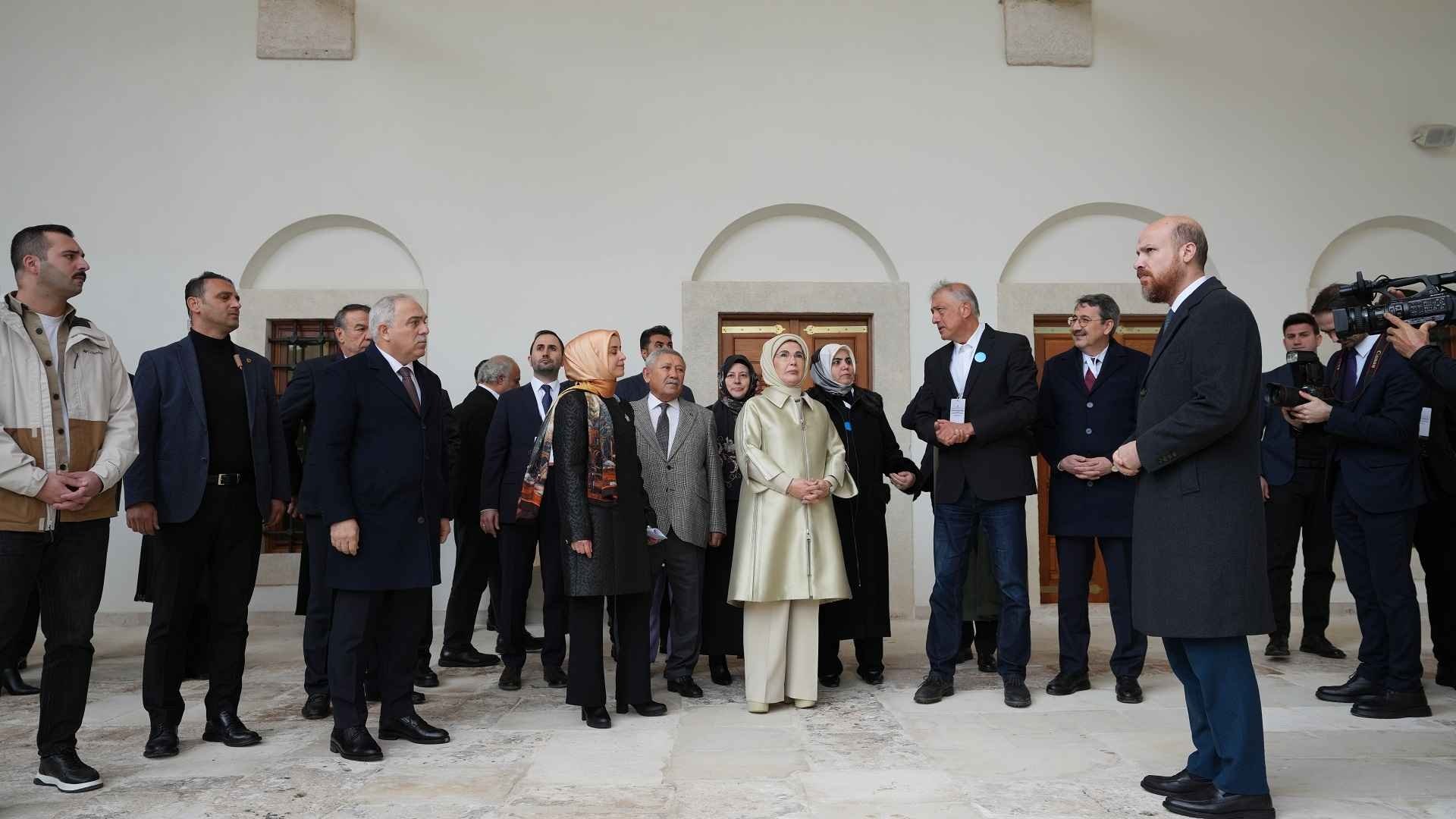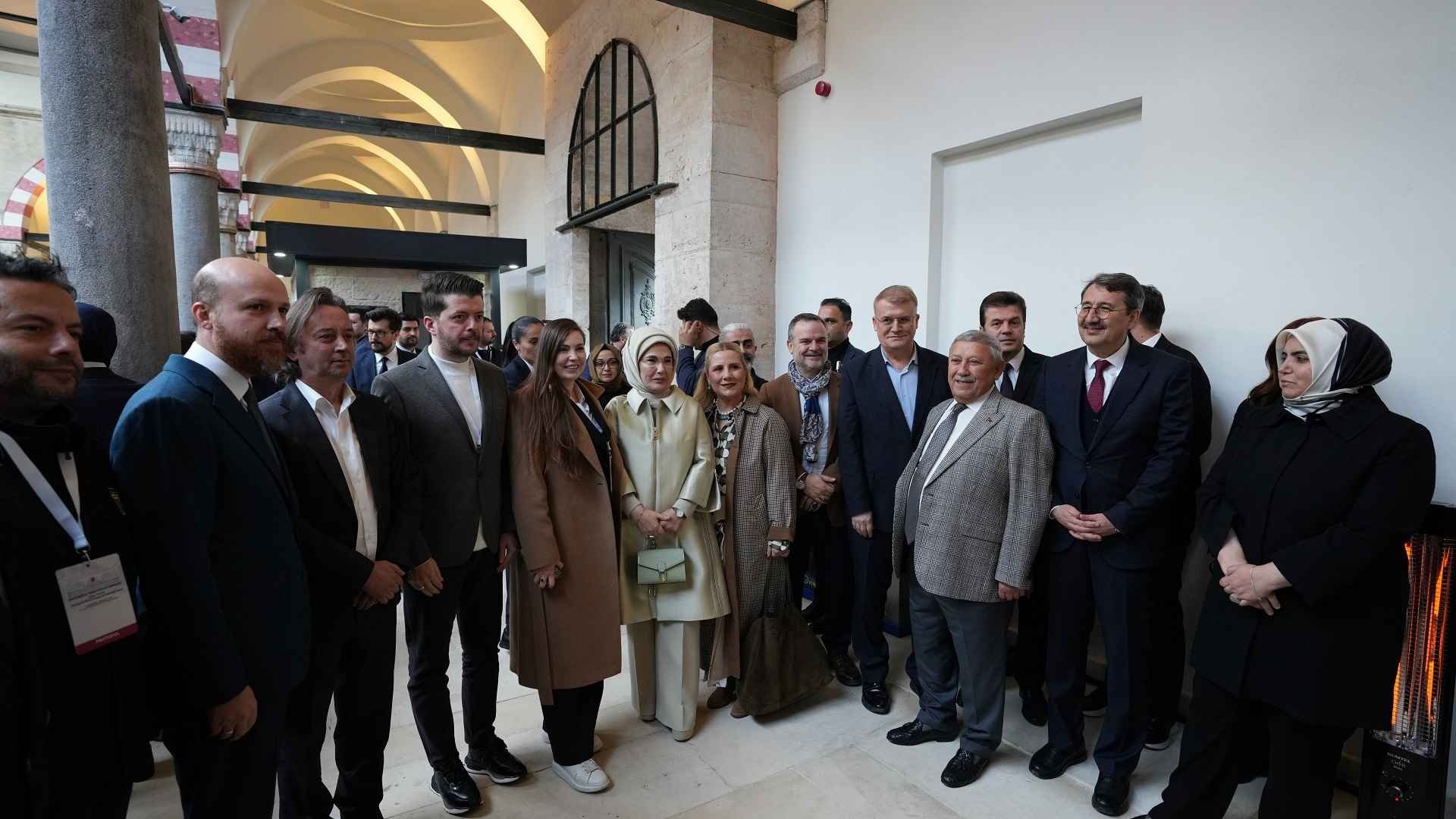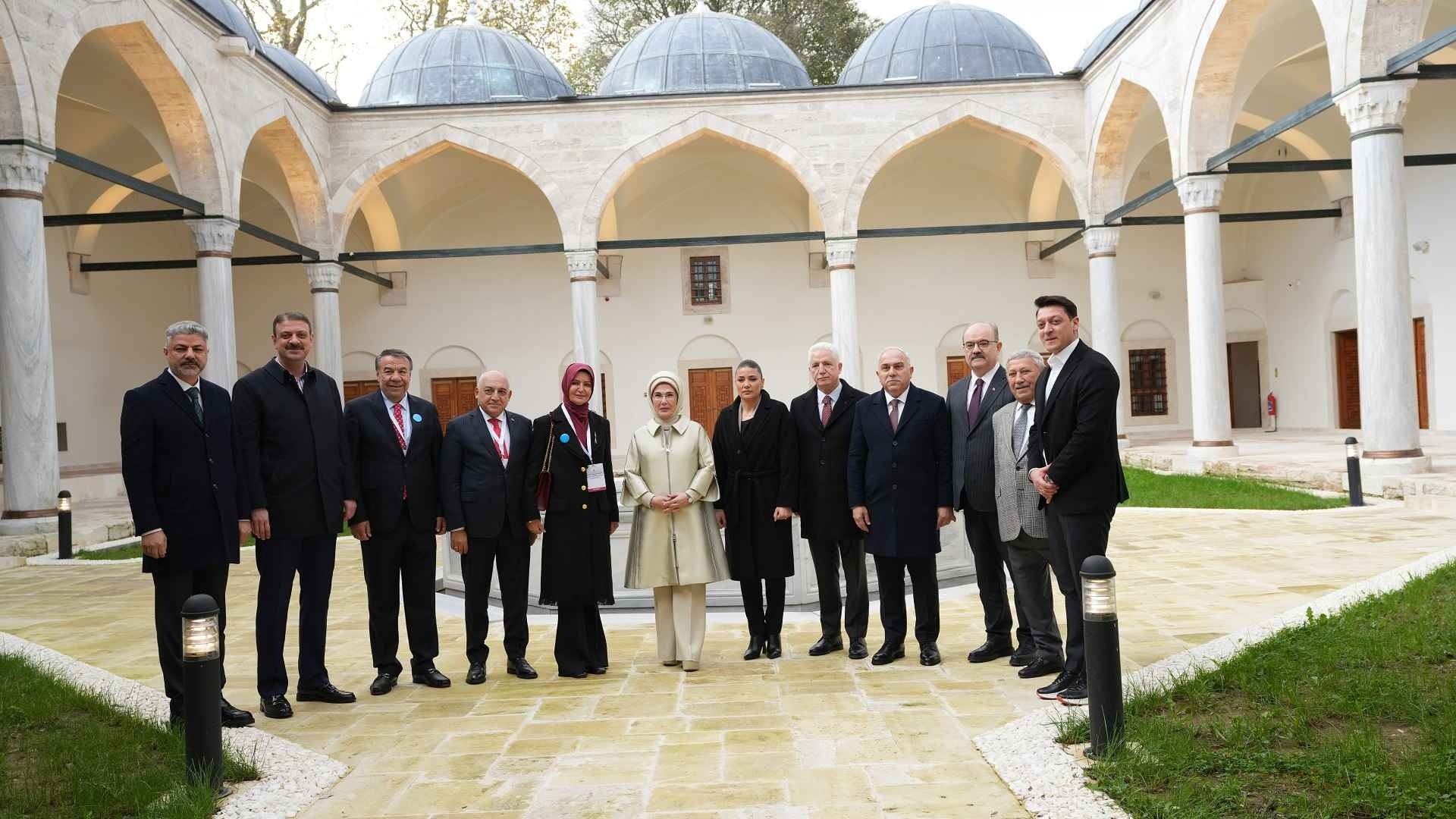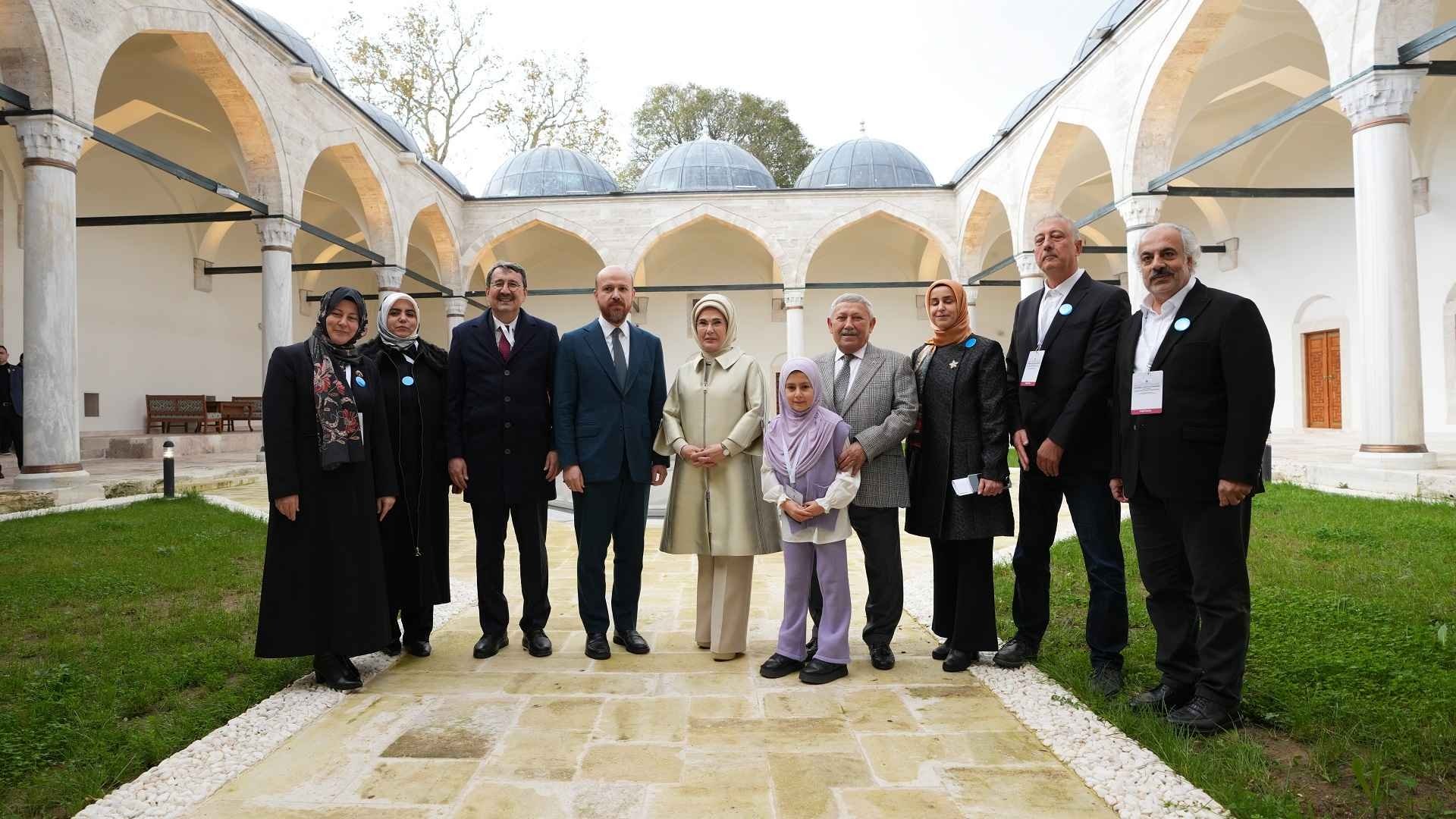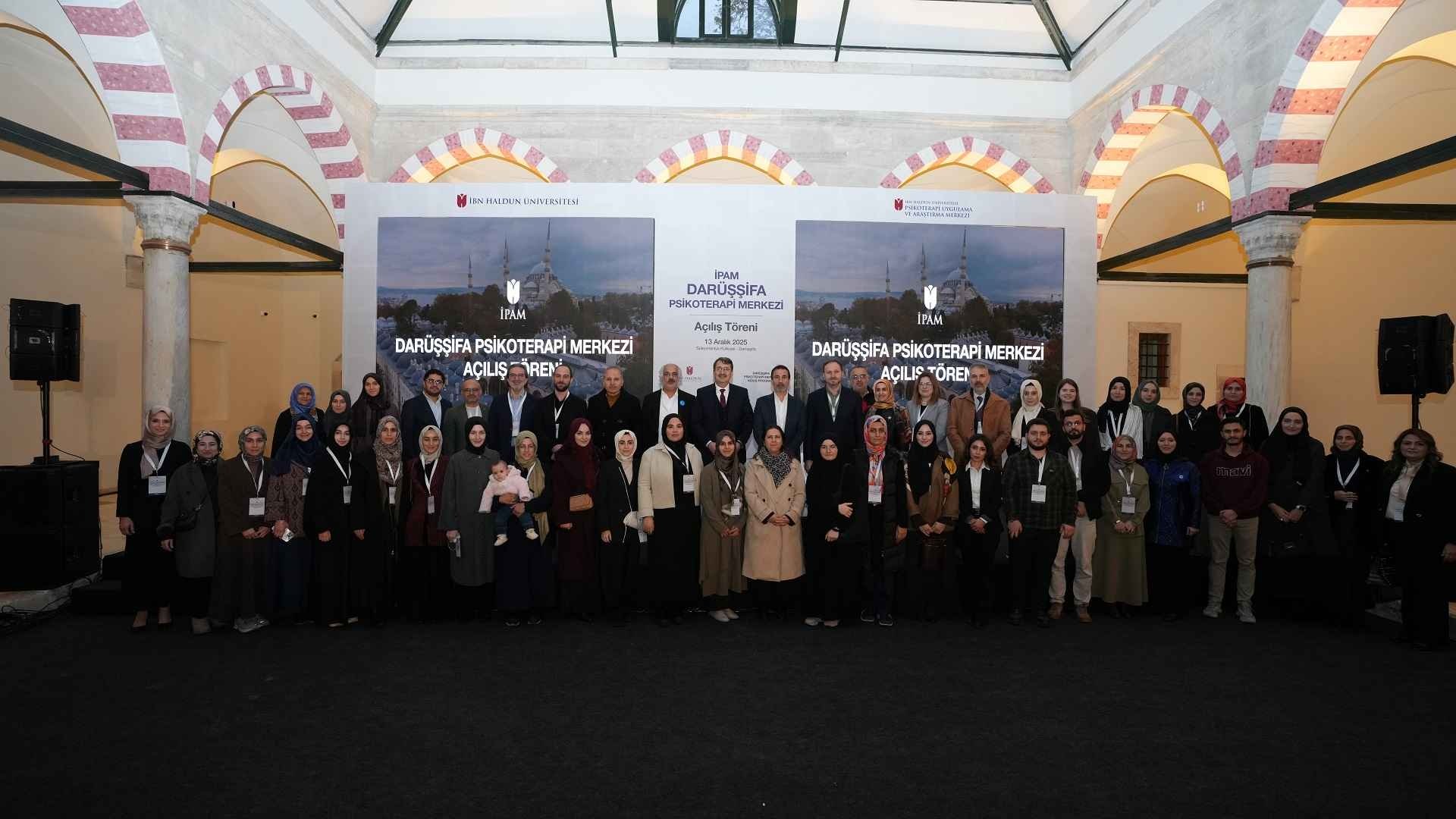
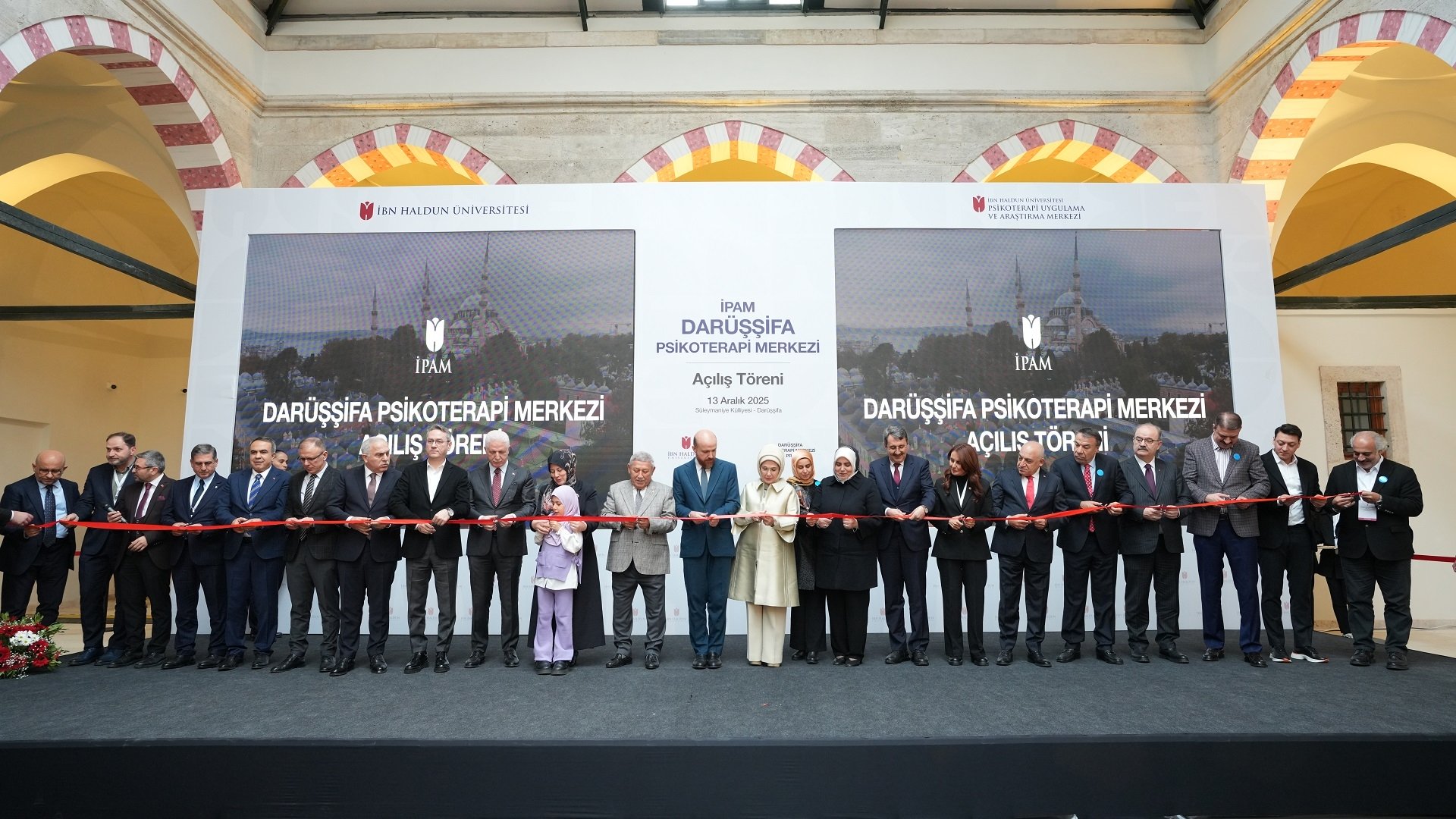
The opening ceremony of the IPAM Darüşşifa Psychotherapy Center was held on Saturday, December 13, 2025, at the Darüşşifa building on the Süleymaniye Campus of Ibn Haldun University, with the gracious presence of Mrs. Emine Erdoğan. In addition to members of the Board of Trustees, academics, and students of our University, the ceremony was attended by Istanbul Governor Davut Gül, Deputy Minister of Culture and Tourism of the Republic of Türkiye Serdar Çam, Chair of the Board of TÜRGEV, Attorney Hatice Akıncı Yılmaz, Director General of Foundations Sinan Aksu, Mayor of Fatih M. Ergün Turan, as well as numerous members of the press and invited guests.
The program began with the recitation of the Holy Qur’an and continued with opening speeches.
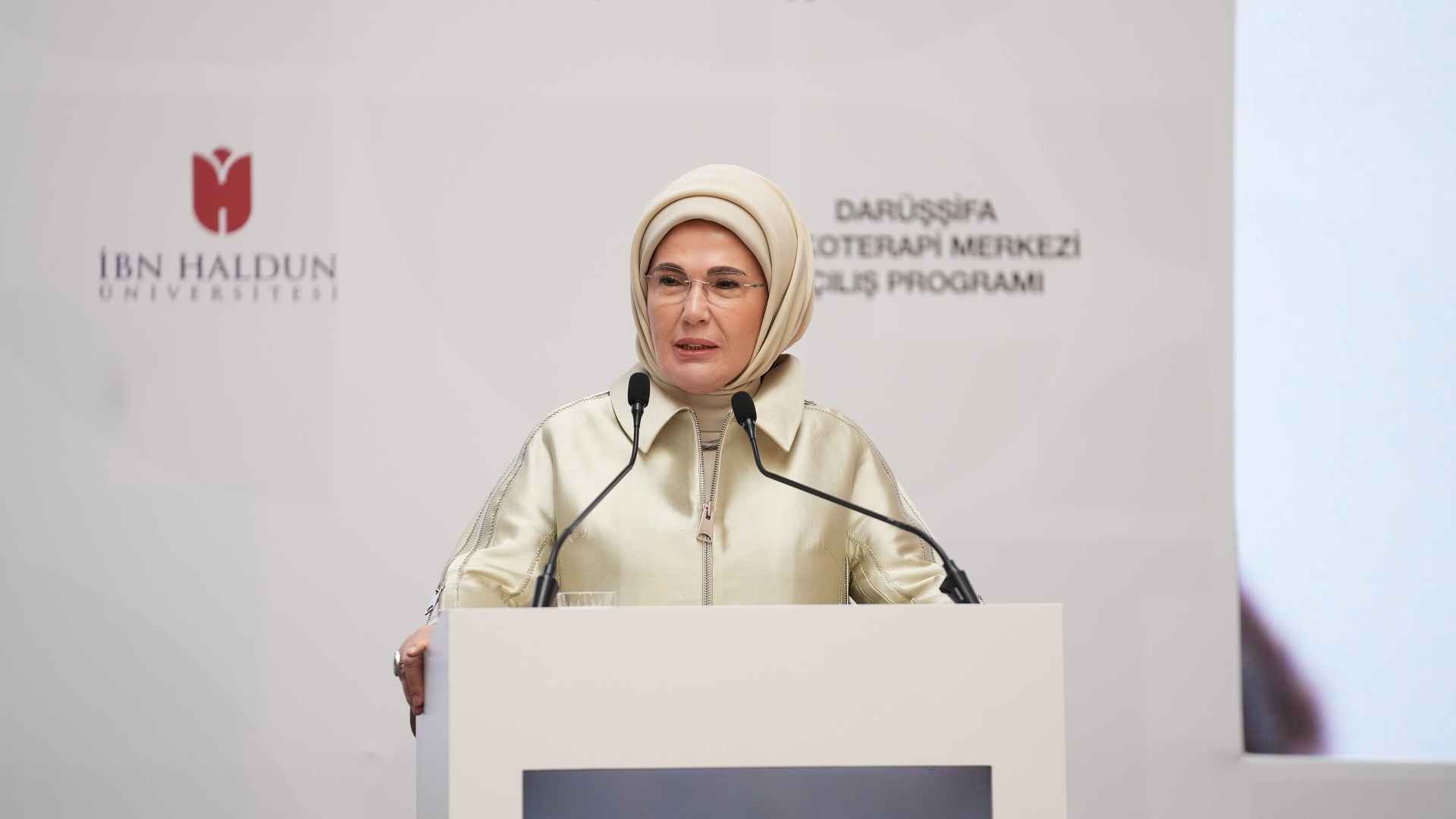
In her address at the opening ceremony, First Lady Emine Erdoğan expressed her gratitude to all institutions that undertook the restoration of this exceptional site, envisioned by Sultan Süleyman the magnificent and brought to life by the hands of Mimar Sinan. Emphasizing that darüşşifas are monuments of compassion in Anatolia, Mrs. Emine Erdoğan stated that these structures are unique spaces where science meets conscience and love for humanity, and where a civilizational vision takes concrete form. Drawing attention to Anatolia as a geography in which humanity’s collective memory has been accumulated, she noted that this historical legacy has also continued in the field of mental health.
Mrs. Emine Erdoğan underlined that Anatolian medicine developed refined and holistic treatment methods that did not succumb to the darkness of the Middle Ages, placing human dignity at the center of care. She added that the mental health unit of the Süleymaniye Darüşşifa stands as an important symbol of this human-centered approach. Pointing out that modern society has rendered individuals insensitive to suffering due to reductive and impersonal approaches detached from the human essence, she stressed that lasting healing cannot be achieved through methods produced by the cultural codes of other civilizations. True healing, she emphasized, is only possible through personalized approaches nourished by a civilization’s own values.
Expressing her belief that the IPAM Darüşşifa Psychotherapy Center will become one of the pioneering institutions of a civilization-centered understanding of science, Mrs. Emine Erdoğan concluded by noting that strengthening an individual’s inner resilience enables them to better withstand the challenges of life, and that IPAM’s continued efforts through accessible psychotherapy services are of great importance in this regard.
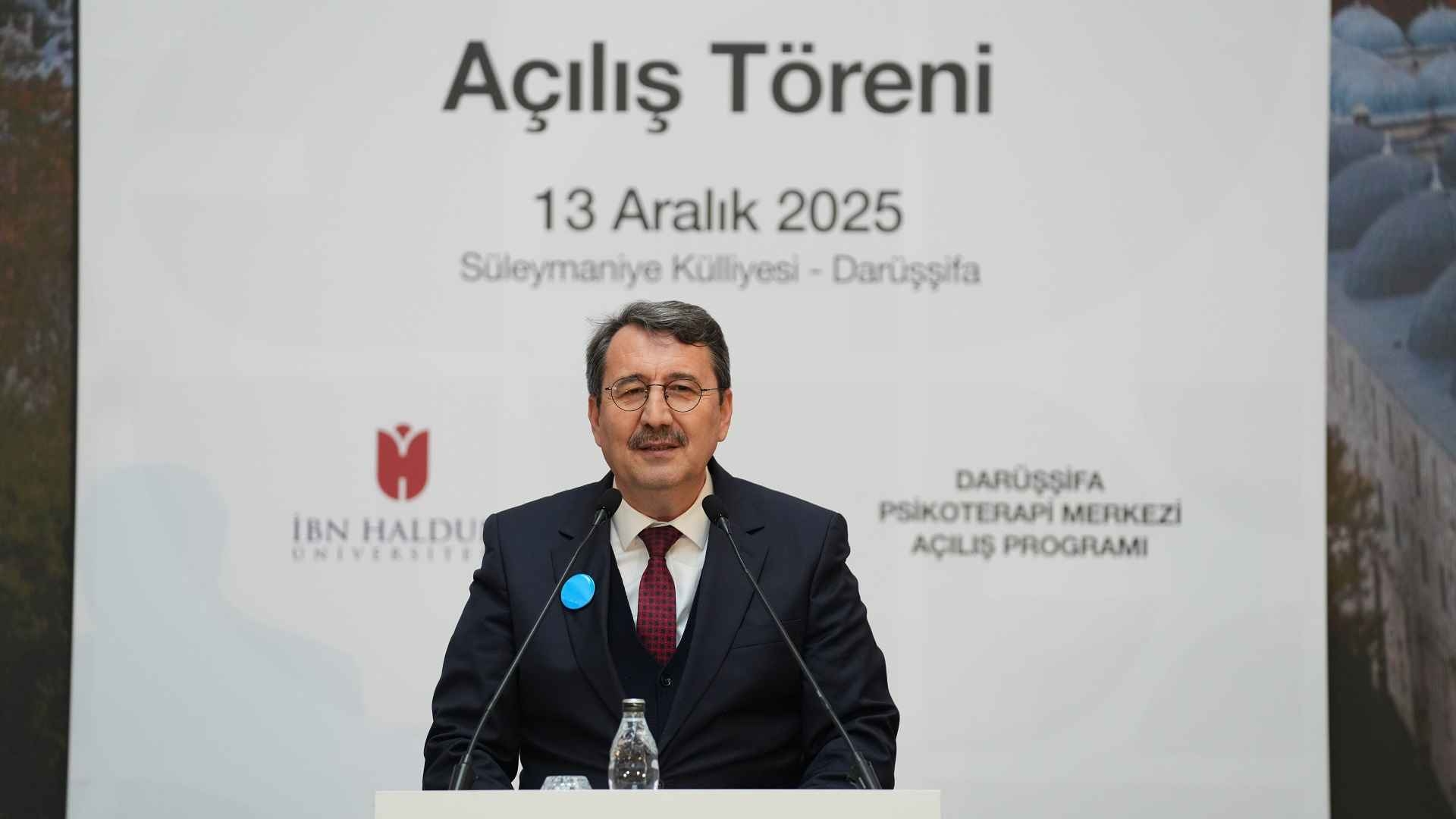
Our Chairman of the Board of Trustees, Prof. İrfan Gündüz, began his remarks by expressing his gratitude to all institutions and stakeholders who contributed to the restoration process of the Darüşşifa. He stated that true civilization-building occurs when a thought does not remain confined to the mind but gains an institutional identity and produces healing for the wounds of society. He emphasized that every idea contributes to civilization to the extent that it generates meaningful values.
Drawing attention to tekkes and darüşşifas as integral components of this holistic civilizational vision, Prof. Gündüz noted that the Darüşşifa, particularly in the field of mental health, would pursue a mission encompassing both material and spiritual dimensions. Referring to the principle that “whoever saves one life, it is as if they have saved all of humanity,” he concluded by stating that the Darüşşifa Psychotherapy Center represents a long-term process with deep and lasting impact and stands as a powerful contemporary manifestation of a civilization-centered, human-focused understanding.
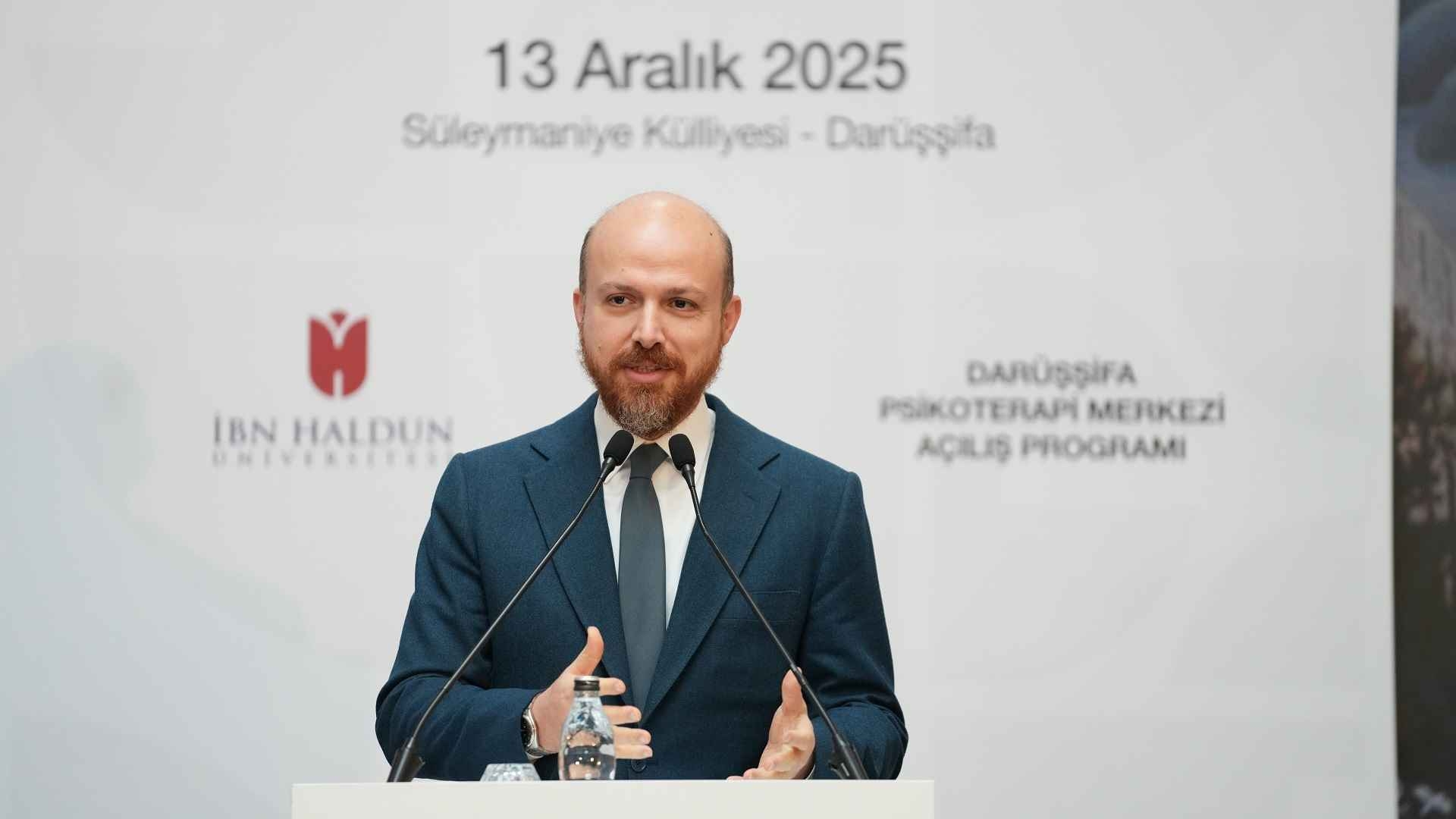
Deputy Chairman of the Board of Trustees, Necmeddin Bilal Erdoğan, began his remarks by emphasizing that revitalization efforts are not merely a physical restoration but also an intellectual and institutional reconstruction. He stated that the severing of ties with the past has led to social crises and traumas, particularly among younger generations. Noting that building the intellectual foundation of the “Century of Türkiye” vision is a significant responsibility, Erdoğan highlighted that one of the main pillars of the revitalization efforts is the reactivation of the Süleymaniye Madrasas. In line with this perspective, he explained that the historic educational spaces within the Süleymaniye Complex have been refunctionalized to meet modern needs. Describing this process as “taking over the watch of civilization,” Erdoğan stated that it is possible to raise new generations through this inherited legacy.
In his welcoming remarks, our President Prof. Atilla Arkan expressed his pride in being present at this exceptional site inherited from our ancestors and thanked all those who contributed to the construction of the building. Emphasizing the responsibility of reactivating a historical structure around the axes of knowledge and healing, Prof. Arkan stated that, under the leadership of IPAM, they aim to carry this heritage sustainably into the future. Highlighting that family-oriented studies will be a priority at the center, Prof. Arkan noted that new approaches aligned with historical, social, and cultural accumulations will be developed, and that visibility will be enhanced through academic work at both national and international levels. He also stated that IPAM, which contributes to mental health support activities during times of disaster, will continue to advance its work by taking into account modern practices and emerging opportunities such as artificial intelligence.
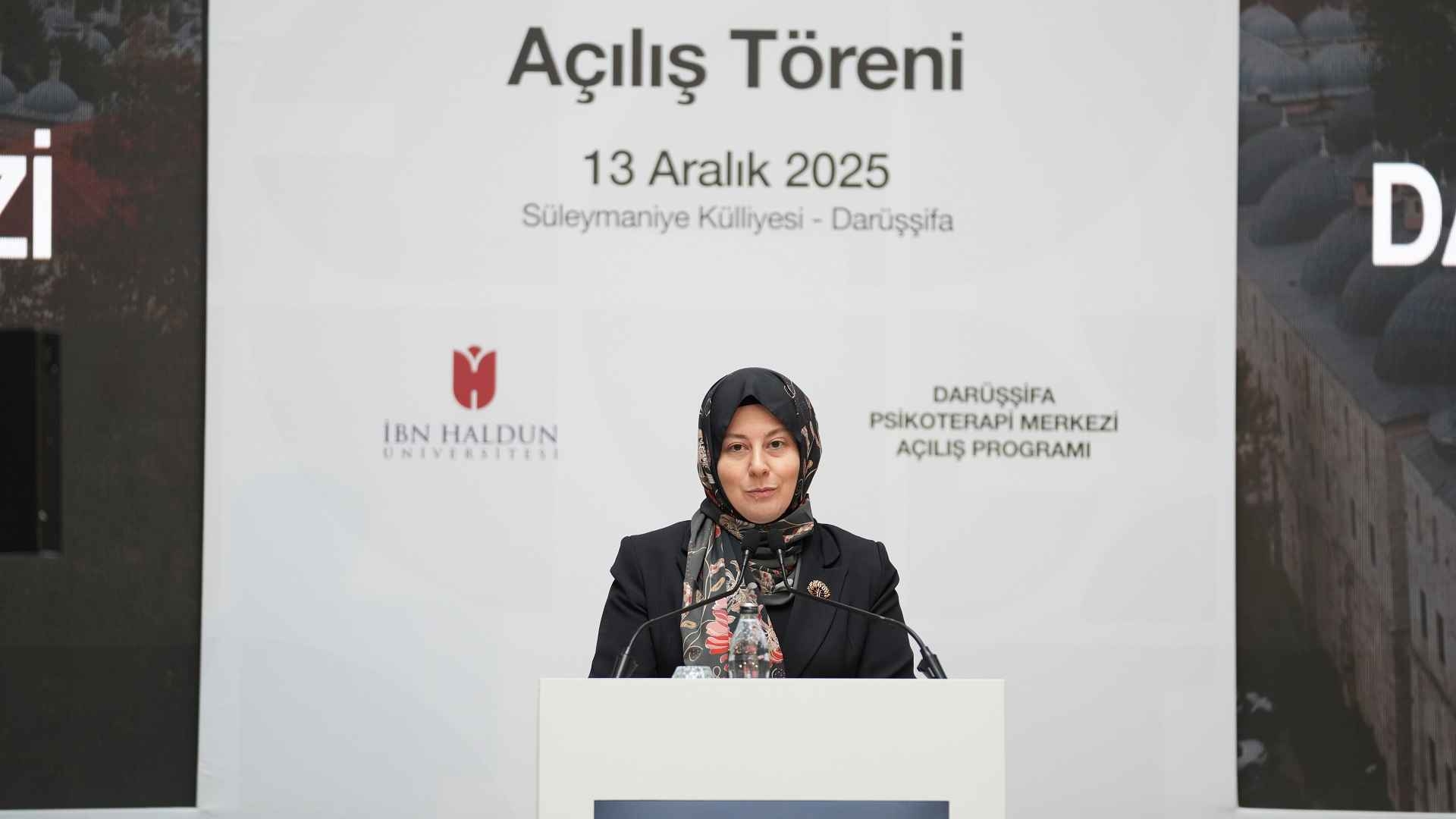
Speaking at the ceremony, TÜRGEV Board Chair Attorney Hatice Akıncı Yılmaz emphasized that humanity’s effort to take root in life is grounded in a deep and enduring tradition, noting that the darüşşifa concept is a significant reflection of a civilizational vision that regards human beings not merely as subjects of treatment, but as entrusted beings, in line with the understanding of eşref-i mahlûkat (the noblest of creation). Highlighting that the newly opened Darüşşifa Psychotherapy Center adopts a holistic approach that addresses the multi-layered nature of the human being through modern methods, Mrs. Yılmaz underlined that this perspective does not isolate the individual from family and society. Stating that the Center will make meaningful contributions toward the goal of fostering strong individuals, strong families, and a strong society, Mrs. Yılmaz expressed her hope that it will serve as a center of healing for both today and the future, and extended her thanks to all those who contributed to its establishment.
Assoc. Prof. Burcu Uysal, Director of IPAM, in her remarks on the psychotherapy services provided within our University, drew attention to the significance of being in this distinguished venue where historical and scholarly heritage intersect, emphasizing that the Süleymaniye Darüşşifa stands as one of the most prominent examples of the importance attributed to mental health during the Ottoman period. Reminding that darüşşifas offered not only medical treatments but also psychological approaches, Assoc. Prof. Uysal stated that IPAM, established in 2018, fulfills a significant mission through its therapy services, public education programs, academic studies, and internship opportunities. Noting that ongoing work in the fields of trauma, family, Islamic psychology, and mental health will be further developed within this historic setting, Assoc. Prof. Uysal emphasized their aim to carry this entrusted legacy into the future by integrating traditional knowledge with modern approaches and by bringing together knowledge and compassion. She concluded her speech by thanking all academic and administrative staff and therapists who contributed to the process.
Following the welcoming speeches, the ribbon-cutting ceremony was held, and a gift was presented to First Lady Emine Erdoğan.
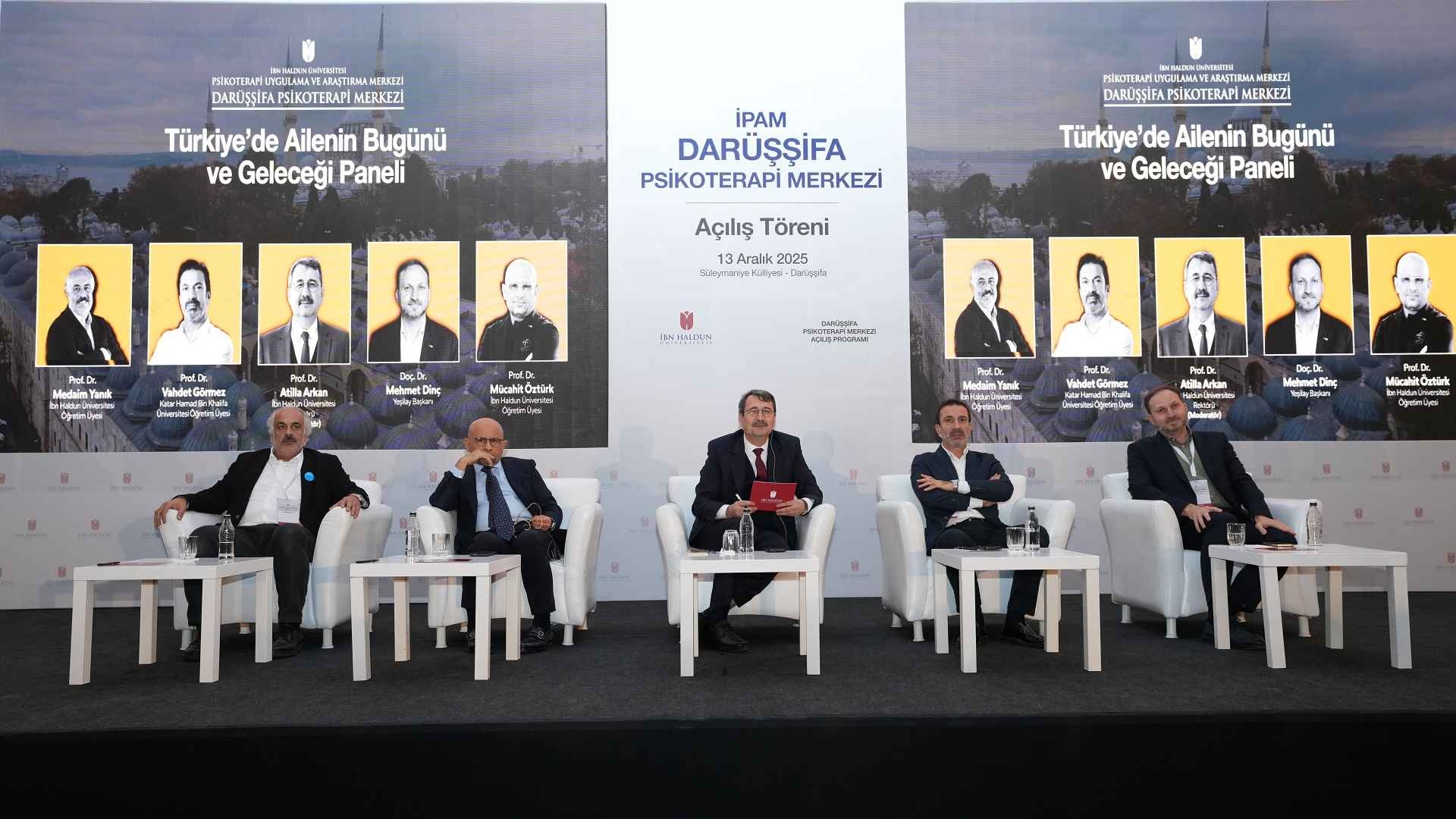
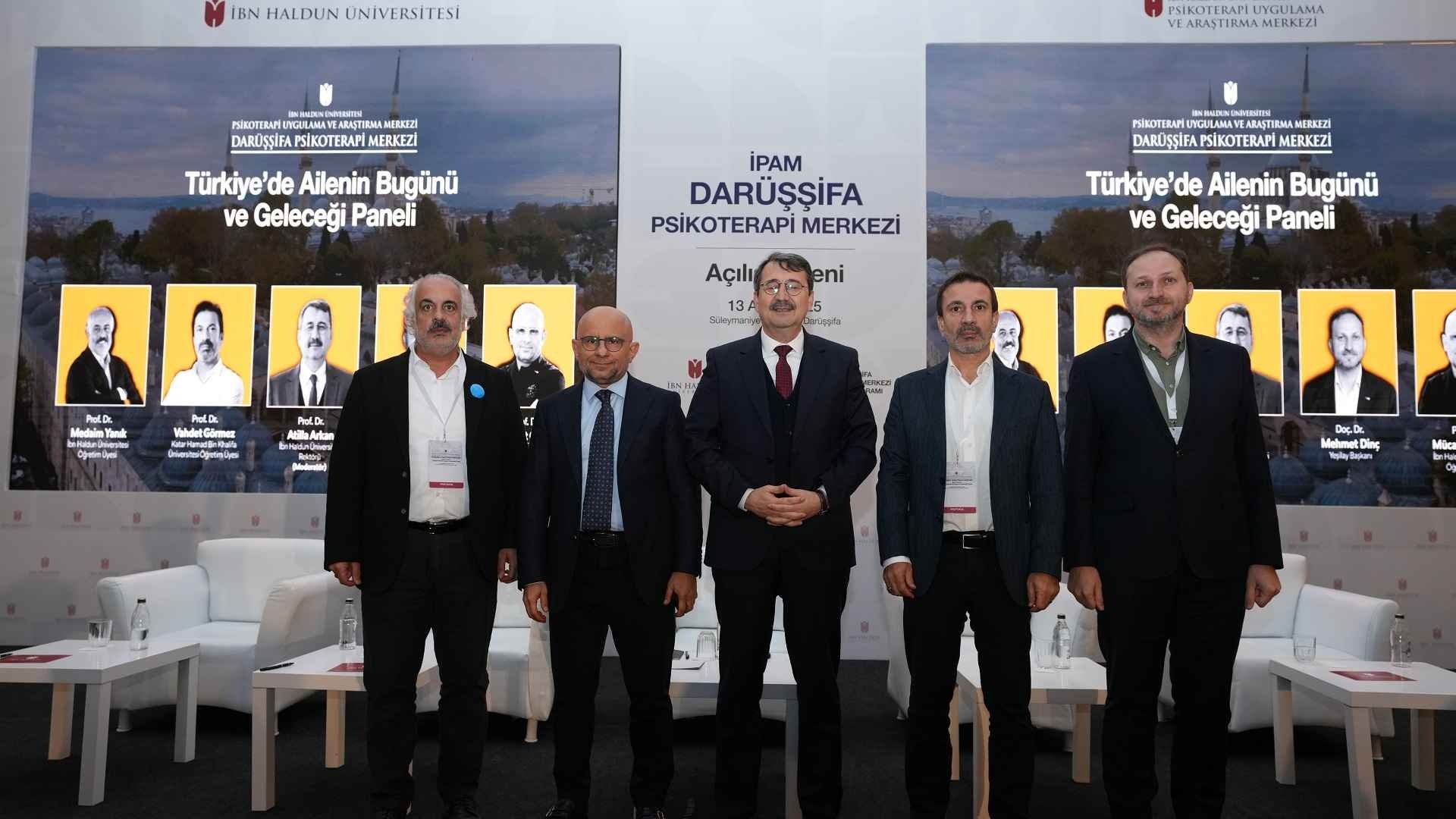
As part of the opening program, a panel titled “The Present and Future of the Family in Türkiye: Problems and Solutions” was also organized. Moderated by our President, Prof. Atilla Arkan, the panel featured contributions from Ibn Haldun University faculty members Prof. Medaim Yanık and Prof. Mücahit Öztürk, as well as Prof. Vahdet Görmez from Hamad Bin Khalifa University in Qatar and Assoc. Prof. Mehmet Dinç, President of Yeşilay. The panelists addressed contemporary challenges facing the family structure and discussed possible solutions from various perspectives.
The opening ceremony concluded following the panel.