Certificate of Online Teaching
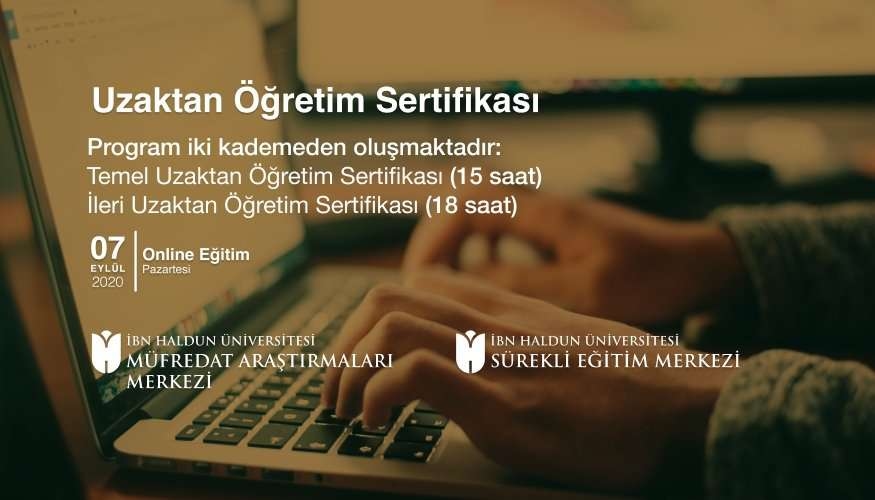
The Certificate of Online Teaching Program aims to make an effective contribution to the teaching practices and experiences offered in the online environment.
(Click for program details in Arabic)
About the Program
The Certificate of Online Teaching Program aims to make an effective contribution to the teaching practices and experiences offered in the online environment. The effects of the rapid development of information and communication technologies in the past decades have been directly seen in many other areas as well as in the world of education.
This new learning and teaching model, which is used under various names such as e-learning, digital learning, online learning, distance learning differs from traditional classroom and face-to-face learning and teaching models with its own set of practices, approaches and techniques. Educational institutions on a global scale, particularly at higher education level, have launched many undergraduate and graduate programs that are run in fully-online, hybrid, web-enhanced, synchronous (simultaneous), asynchronous (non-simultaneous) formats. It is anticipated that the number of these programs will keep increasing. Due to this, it is inevitable for educators to apply new methods that will be pedagogically efficient in online education models as much as they have been with the traditional teaching models. The content of the Certificate of Online Teaching Program prepared by Ibn Haldun University will be run in a fully-online fashion, and aims to contribute to the participants in the aspects of online education pedagogy, effective cognitive-affective communication and interaction with the learner, instructional design, course design, assessment and evaluation, and last but not least a new learning and teaching culture with reflections on current teaching methods.
Program Goals
- To get familiarised with the techniques to create a positive e-learning environment and communicate effectively with the learner
- To complete an effective course design and planning process in any academic discipline
- To gain hands-on experience in e-learning platforms, learning management systems and digital educational tools.
- To be able to design curriculum and syllabus contents that are aligned with learning objectives and outcomes.
- To learn about the formative and summative online assessment and evaluation methods that are aligned with learning objectives and outcomes
- To ensure effective participation of learners within the philosophy of ‘learning by doing’
- To enrich the philosophy of education with e-learning, which has its own unique approaches.
Who Should Attend?
This online program is prepared for innovative individuals, who are open to professional development at educational institutions and want to improve their teaching methods and skills from every discipline. Competencies that the program aims to bring to the participants;
- Effective Instruction which includes active learning and teaching techniques,
- In addition to traditional pedagogical knowledge, presenting new age, technology-enriched learning applications and tools,
- Effective lesson preparation, teaching instruments, lesson and course design and applications at any educational level,
- Technical and scientific approaches to improve teaching competence,
- Student motivation, assessment and evaluation, syllabus and curriculum alignment and item building competencies and practices in online education.
Program Duration and Schedule
The program consists of 2 levels: Basic Certificate of Online Teaching and Advanced Certificate of Online Teaching Basic Certificate of Online Teaching Program (15 Hours) Advanced Certificate of Online Teaching Program (18 Hours)
Content of the Program
| Basic Certificate of Online Teaching : | ||
| Module 1 (3 Hours) | The Fundamentals of E-learning | Types of E-learning |
| Creating an interactive online classroom | ||
| Ways to engage students online | ||
| Module 2 (2 Hours) | Instructional Design for Online Courses | Course Design |
| Syllabus Design | ||
| Outcomes and Accountability | ||
| Module 3 (4 Hours) | Instructional Tools for Online Courses | Course Design Practices |
| Lesson Design Practices | ||
| Digital Tools in Practice | ||
| Module 4 (3 Hours) | Online Assessments | Formative, Summative, Authentic Assessments |
| Rubric Development | ||
| How to Write Effective Items | ||
| Academic Honesty in Online Assessments | ||
| Module 5 (3 Hours) | Learning Management Systems | |
| Learning Platforms | ||
| Instructional Functions of LMS | ||
| Advanced Certificate of Online Teaching | ||
| Module 1 (3 Hours) | Teaching Enrichment Methods | In-class Practices |
| Extracurricular Practices | ||
| Module 2 (3 Hours) | Psychology of Online Education | Self-regulation, Self-discipline, Social and Affective Engagement |
| Module 3 (3 Hours) | Curriculum Preparation for Online Courses | Course Design Applications |
| Module 4 (3 Hours) | Advanced Instructional Tools | Advanced Instructional Technology Applications |
| Fair Accessibility (Universal Design Principles) | ||
| Module 5 (3 Hours) | Advanced Assessment Applications | Item Analysis and Test Development |
| Types of Evaluation Criteria : Norm vs Criterion Based Evaluation | ||
| Formative Assessment : Understanding what students know | ||
| Module 6 (1 Hours) | Legal Aspects of Online Education | Copyright |
| Student Rights | ||
| Instructor Rights | ||
| Module 7 (2 Hours) | Outcomes of Online Teaching | Best Practices and Reflections |
Ibn Haldun University Program
First participants of the Certificate of Online Teaching program are Ibn Haldun University lecturers. On September the 7th, first group of lecturers will start the program. All lecturers in our university will be attending this program until September the 18th in 6 groups. Each module will last 3 hours a day with a total of 15 hours throughout program. All sessions will start at 10:30 AM. Groups will be established due to the choices of lecturers. You may find the schedule below; starting from 7th of September and continuing with 6 consecutive groups. All lecturers will choose a convenient group for themselves by filling out a submission form which will be sent to them before the placement. Each group will be limited to maximum 18 participants. Once the group reaches the limit of 18, late submissions will be placed to another group.
| Date | Group 1 | Group 2 | Group 3 | Group 4 | Group 5 | Group 6 |
| 07 Sep 2020 | Principles of E- learning | |||||
| 08 Sep 2020 | Instructional Design | Principles of E- learning | ||||
| 09 Sep 2020 | Instructional Tools | Instructional Design | Principles of E- learning | |||
| 10 Sep 2020 | Online Assesments | Instructional Tools | Instructional Design | Principles of E- learning | ||
| 11 Sep 2020 | Learning Management Systems | Online Assesments | Instructional Tools | Instructional Design | Principles of E- learning | |
| 14 Sep 2020 | Learning Management Systems | Online Assesments | Instructional Tools | Instructional Design | Principles of E- learning | |
| 15 Sep 2020 | Learning Management Systems | Online Assesments | Instructional Tools | Instructional Design | ||
| 16 Sep 2020 | Learning Management Systems | Online Assesments | Instructional Tools | |||
| 17 Sep 2020 | Learning Management Systems | Online Assesments | ||||
| 18 Sep 2020 | Learning Management Systems |
Photos


Related Content
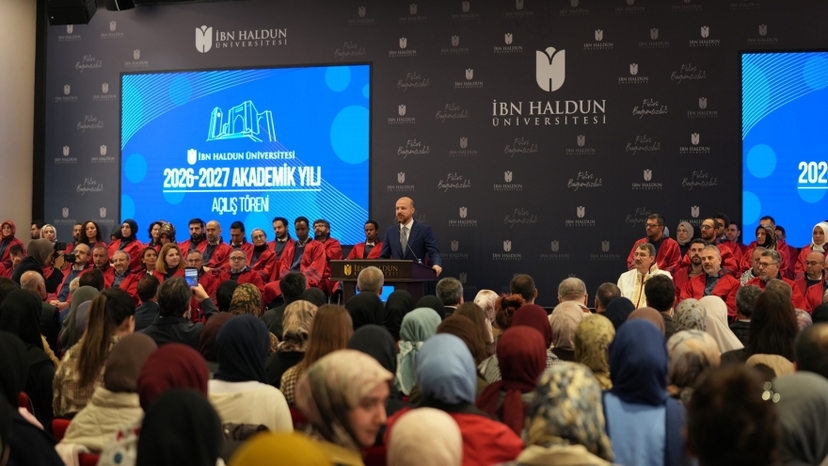
The 2026–2027 Academic Year Opening Ceremony Was Held with Broad Participation
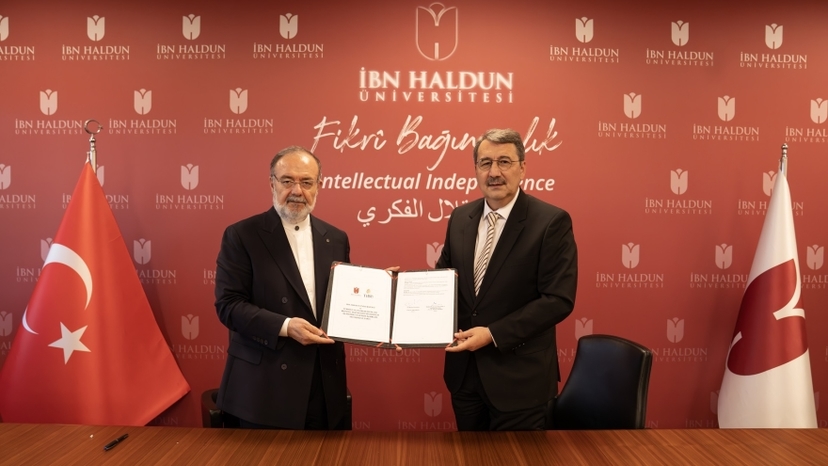
Memorandum of Understanding on Academic and Educational Cooperation Signed Between Ibn Haldun University and Türkiye International Islam Science and Technology University
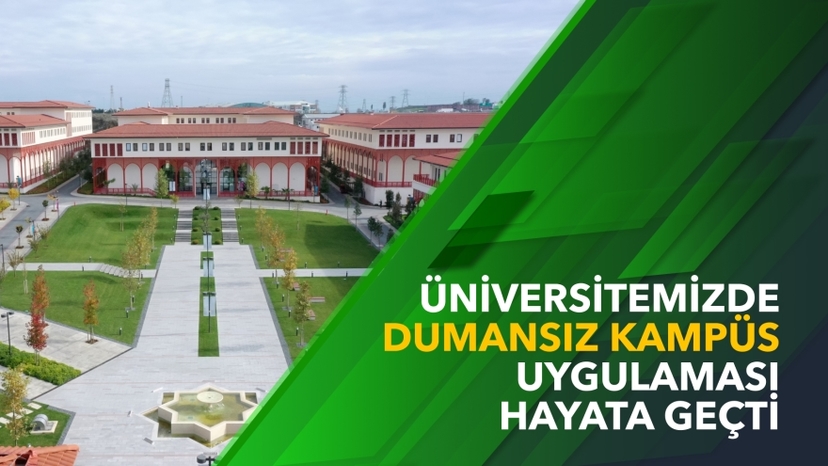
Our University Implements the “Smoke-Free Campus” Policy
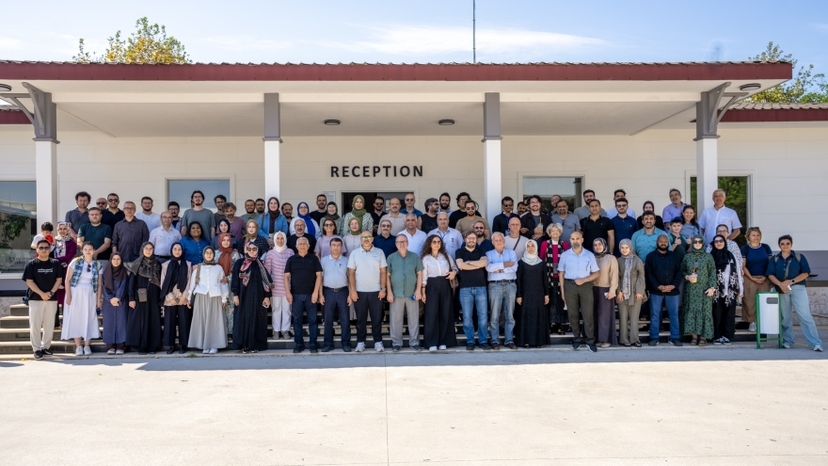
Our Academics Gathered at the 2026 Consultation and Evaluation Camp
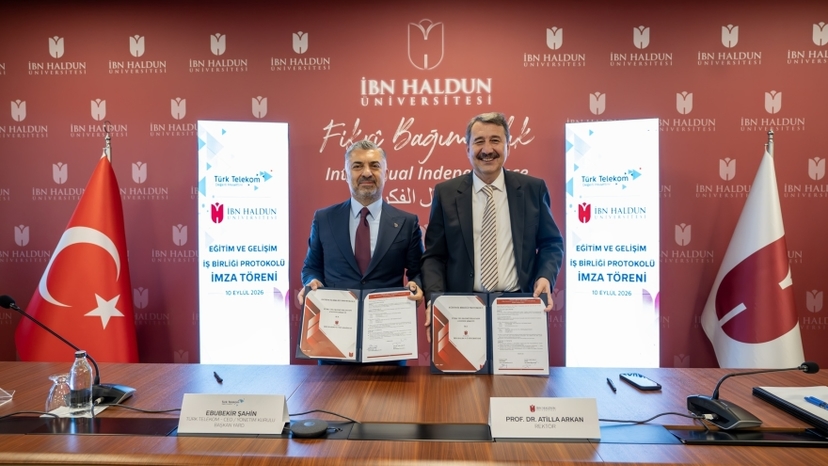
Educational Cooperation Protocol Signed Between Our University and Türk Telekom
Our Administrative Staff Gathered at the 2026 Consultation and Evaluation Camp
Our University is a Centre of Excellence in Postgraduate Education: Applications to Our Postgraduate Programmes Have Increased by 63%
“International Union of Muslim Scholars Academics Camp” Launch Hosted by Our University